Market Data
March 23, 2026
US construction starts slow in February, nonbuilding activity cools markedly
Written by Laura Miller
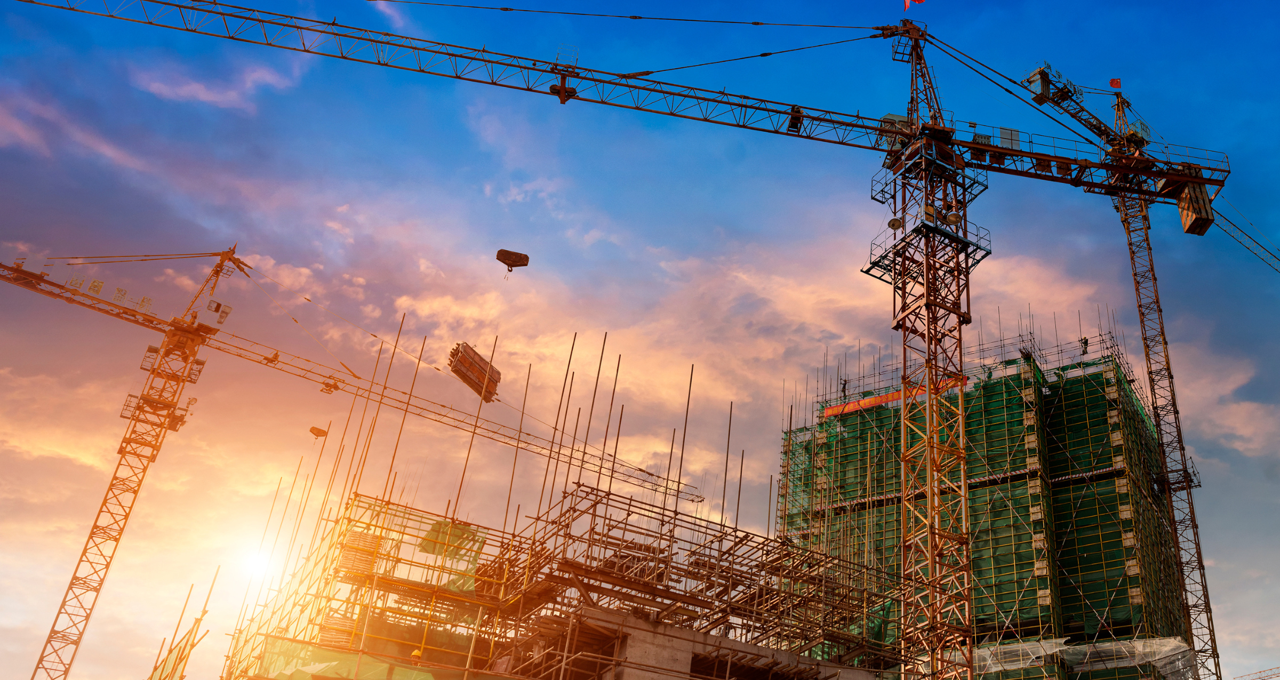
A precipitous decline in nonbuilding starts led to an overall slowdown in total construction starts from January to February, even as the nonresidential and residential sectors showed marked improvement.
The Dodge Construction Network (DCN) reported US construction starts fell 13.2% month over month (m/m) to $1.08 trillion on a seasonally adjusted annual rate (SAAR) in February. Nonbuilding starts plummeted 49.4% m/m, while residential starts improved 8.3% and nonresidential starts rebounded 17.8%.
DCN Director of Forecast Sarah Martin noted the slowdown in nonbuilding activity had normalized from elevated levels in January. Electric power/utilities construction starts saw the greatest normalization; after 200% growth in January, February starts dropped 90.1% m/m to a SAAR of $265 billion.
Within nonbuilding, there were m/m upticks in highways and bridges (+18.8%) and environmental public works (+4.8%).
On the nonresidential side, m/m growth of 159.6% within offices and data centers pushed commercial starts 48.5% higher. Institutional starts expanded 8.7% m/m, DCN said. Also notable is a 54.1% m/m pull back in manufacturing construction starts after a strong January.
While residential building starts increased 8.3% from January to February, they have decreased 12.4% year-to-date. YTD single-family starts are down 17.5%, and multifamily starts are down 2.8%.
What it might mean for steel
February’s construction starts data suggest highways, bridges, and data centers remain strong sources of US steel demand.
However, something to keep in mind is the rising cost of construction materials, including metals, which could slow construction spending and starts.
As the Association of General Contractors of America (AGC) points out, the producer price indexes for steel mill products and aluminum mill shapes jumped by 20.9% and 39.1%, respectively, from February last year to February this year, representing “the largest year-over-year increases since the supply chain disruptions of early 2022.”
“There is a limit on how many price increases the market can absorb before owners put projects on hold,” warned AGC CEO Jeffrey D. Shoaf.
“Reducing uncertainty around tariffs and stabilizing supply chains would go a long way toward helping contractors keep projects moving forward,” he added.