
Nucor aims for a $60/ton bump on plate prices, opens November orderbook
Nucor said on Thursday evening it plans to increase plate prices by $60 per short ton (st) as it opens its November order book.


Nucor said on Thursday evening it plans to increase plate prices by $60 per short ton (st) as it opens its November order book.

Sheet and plate prices continued to inch higher on a combination of scarce spot tons, long lead times, lean inventories, and stable demand.
Nucor said its consumer spot price for hot-rolled coil will be $1,220 per short ton (st) for the week of Sept. 28. That's a 10/st increase from a week earlier.

US sheet buyers have grappled with supply scarcity in both the spot and contract markets throughout 2026. Now the supply squeeze is spilling over into 2027, according to market participants.

Recycler forward expectations swung toward oversupply in September as inventory drawdowns eased and export demand lost August’s improving responses.

Steel market chatter this week Earlier this week, SMU polled steel buyers on an array of topics, ranging from market prices, demand, and inventories to tariffs, imports, and evolving market events. We are sharing a selection of the comments we received below, in each buyer’s own words. Before diving in, we reviewed all of the responses collected and compiled these key takeaways: • Most buyers continue to expect higher prices in the near future and report that demand is stable to improving. • Inventories are moving faster than they were this time last year for most respondents, attributed to limited availability and leaner supply chains. • Imports are attractive for many buyers on both price and availability, though quotas, long lead times, and quality concerns continue to limit their appeal. • Buyers were split on whether tariff policies are helping their businesses, while a slight majority reported some evidence of manufacturing reshoring, though many said it is still too early to tell. Want to share your thoughts? Contact david@steelmarketupdate.com to be included in our market questionnaires. How do you expect prices to trend over the next three months? “I expect prices to rise at a fairly rapid pace for at least the next two to three months because inventories will continue to decrease.” “Upward, capacity remains tight.” “Climbing for several months.” “Trending toward $1,300/st HRC, only because one small player is driving prices up with no one else selling spot.” “Higher, the Q1 bump is not showing in the futures market.” “We expect things to keep going up from here. Next year could get ugly, but we're not there yet.” “Still trending up. There are some soft spots getting softer, but still steady demand and a shortage of supply.” “Continue to rise slowly.” “Slow increases like they have been doing.” “Upward due to continued demand and mill maintenance outages.” “Will remain high but steady due to demand and tariff implications.” “Plate prices most likely will be flat to up over the next three months.” Is demand improving, declining or stable? “Demand is stable (if anything, overstated), with inventories so lean, late mill deliveries, and contract prices increasing next year.” “Demand is fairly consistent with the rest of the year.” “Stable, but very strong for our products.” “Stable as many projects are trying to get ahead of potential additional price increases.” “Stable due to the ‘slow season’ in our market.” “Plate demand is stable to improving.” “Demand is good to improving. We'll take it!” “Improving, but still not to 100% capacity.” Is inventory moving faster or slower than this time last year? “Faster... once it arrives (late), it goes right back out.” “Faster due to lack of availability and bullwhip buying.” “Inventory is moving faster this year than last because demand is stronger than last year and many of our competitors don't have as much steel to offer.” “Inventory is moving faster with supply chains so lean.” “Inventory is moving at a good clip. Just based on costs/spends, we're stocking less sheet, coil and plate though.” “Plate inventory is moving at a much faster pace year over year due to several factors.” “Faster due to a shortage of supply plus added demand.” “About the same.” Are President Trump's tariff policies helping your business? Buyers were split this week, with 44% believing the tariffs are helping their business and 44% saying they are not. The remaining 11% were unsure how the policies will impact them. Comments included: “Yes for now. Prices are very high, which causes people to buy before prices get higher.” “Yes, I credit Trump's policies and data centers for improving demand.” “Yes, inventory values continue to go up.” “They are helping on the sell side and hurting on the buy side.” “No, they are creating shortages and increasing the cost of steel.” Are you seeing evidence of manufacturing reshoring to the US because of Trump's tariffs? The slight majority of respondents (39%) reported they have seen some evidence of reshoring, a higher rate compared to recent surveys. A third said it is too early to say, and 28% answered they are not seeing any signs of reshoring. Comments included: “Yes. Perhaps reshoring has added to the increased demand in 2026.” “Yes, with machining and turning.” “Yes, capacity versus demand in North America is creating pressure to reshore products.” “Too early to say. There have been a lot of announcements, but steel availability has limited immediate moves.” Are imports more attractive than domestic material? “Imports are more attractive on a pricing front and an availability standpoint, but lead times are extended.” “Imports are attractive in both price and because they offer additional availability. Whether or not they show up and or as offered is another issue.” “Imports are certainly attractive. They're coming in in earnest, so this run will peter out early next year.” “Attractive due to price and availability.” “Attractive, domestic tons are unavailable.” “Yes on light gauge painted.” “Without quotas, yes, the price is more attractive. But if you get caught with the quota, pricing is very high.” “Not to us, but we are hearing more about affordable imports.” “Plate imports are only slightly more attractive than domestically produced plate.” “Not yet, shipping lag is still too large.” “No due to tariffs.” What's something that's going on in the market that nobody is talking about? “What is the latest on SDI/BlueScope? I had heard it was back on the ‘front burner’ but all is quiet now. Maybe that means a deal is getting close?” “Will the US bring a trade case against South Korea over imports spiking?” “Busheling scrap prices are flat, while hot roll continues to rise. The scrap gap is increasing.” “How will the next administration handle tariffs that have so limited our steel supply?” “Mill discipline in production capacity.” “Coke pricing levels due to demand and supply.” “Shipbuilding.”

Sheet and plate prices continued to tick mostly higher this week amid a supply squeeze that shows no signs of loosening its grip on the US market.
Nucor said on Monday, Sept. 21, that its consumer spot price (CSP) for hot-rolled (HR) coil will be $1,210 per short ton (st) this week, a $10/st increase from a week earlier.
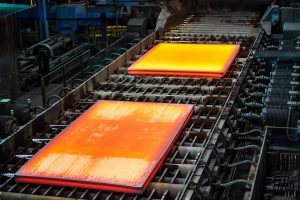
The domestic plate market is showing few signs of relief for steel buyers. Lead times are stretching well beyond seasonal norms, spot availability has all but evaporated, and mills are drawing hard lines on contract volumes heading into 2027 negotiations. And the supply squeeze will likely intensify in a market that some industry sources say is structurally undersupplied because of stringent US trade and tariff policies. Imports have been arriving in larger volumes, and the expectation is they will continue to tick higher into 2027. The big question is whether those foreign tons will arrive in volumes sufficient to provide the relief steel consumers want.

SSAB Americas announced immediate changes to pricing extras on select products, according to a letter sent to customers Friday morning.

Nucor Plate Group said it will be increasing its fuel surcharge to $20 per short ton for next month, effective on all shipments beginning Oct. 1.
Nucor said its consumer spot price for hot-rolled coil will be $1,200 per short ton (st) the week of Monday, Sept. 14. That's a $10/st increase from a week earlier.
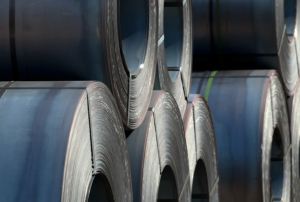
The US sheet market is really feeling the squeeze. It’s not just spot tons that are a concern. Contract tons are increasingly scarce too.
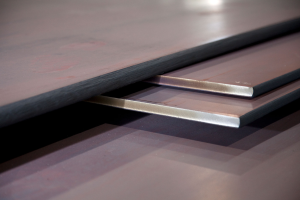
The US plate market is increasingly challenging. Spot tons remain constrained as demand gains momentum and lead times continue to stretch out—double what they were a year ago.

The spread between domestic hot-rolled (HR) coil and prime scrap prices continued to widen in September. It is now up for a 12th straight month, and at the widest gap since January 2022.
Sheet and plate prices continue to push higher on increasingly tight supplies and solid demand, market participants said. The domestic market remains characterized by both limited spot availability and limited contract availability. Buyers continue to report having difficulty finding spot material and being held below their contract maximums and sometimes to their contract minimums.
Nucor said on Tuesday, Sept. 8, that its consumer spot price (CSP) for hot-rolled (HR) coil will be $1,190 per short ton (st) this week, a $5/st increase from a week earlier.

If you’re looking for a deal on steel, this last week wasn’t the one to find one. (Nor was the week before that. Or the week before that.) Meanwhile, contract negotiations are heating up in one of the tightest markets since at least 2021. I've heard discounts will be lower, min-max ranges will be tighter, and there will be less freight equalization and waiving extras.
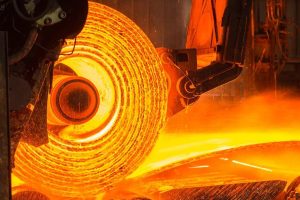
Most steel buyers responding to our latest market survey reported that mills continue to hold a firm grip on prices. Negotiation rates remain low on all sheet and plate products. In late August, the share of buyers reporting that mills were negotiable fell to the lowest rate seen in almost five years, and that rate was unchanged through this week.
Flat-rolled steel prices inched higher again this week, continuing a trend that has characterized the market for most of this year. SMU’s hot-rolled (HR) coil price now stands at...
Nucor raised its CSP for HR coil to $1,185 per short ton for spot orders placed this week, a $5/st increase w/w.
Nucor said on Friday its Plate Group plans to maintain base plate prices with the opening of its October orderbook.

Steel buyers expect prices to keep rising in the near term and report steady-to-improving demand and lean inventories. Imports remain competitive despite risks.
SMU’s average price for domestic hot rolled (HR) rose to $1,200 per short ton (st) week on week (w/w). In offshore markets, prices also rose, outpacing stateside gains.
Sheet prices mostly ticked upward again this week on a series of factors long familiar to the market: long lead times, limited spot availability, and solid demand.
SSAB Americas plans to increase plate prices by at least $40 per short ton (st), according to a letter sent to customers on Monday.
Nucor said on Monday, Aug. 24, that its CSP for hot-rolled coil will be $1,180 per short ton (st) for the week, a $10/st increase from a week earlier.
SMU’s average price for domestic hot rolled (HR) rose to $1,195 per short ton (st) week on week (w/w). In offshore markets, prices saw a more controlled rise.

CRU: Global finished steel prices have diverged in August, with longs softening while sheet and plate firmed in most regions. Weak construction demand persisted across most longs markets, with the US the notable exception. Higher sheet prices were driven by tightening supply in the US and reduced import attractiveness in Europe, even as APAC sheet prices declined. Plate prices were mostly firmer across APAC, stable to down in Europe, and continued climbing in the US.
A potential trade deal with Canada and a possible reduction in Section 232 tariffs has rocketed back into the news just a few weeks after it seemed like negotiations between Washington and Ottawa were kaput.