Analysis
January 29, 2026
Worthington CEO sees Kloeckner deal as slam dunk
Written by Ethan Bernard
Note that Worthington’s Geoff Gilmore will be joining Kloeckner Metals CEO John Ganem for a fireside chat at SMU’s Tampa Steel Conference next month.
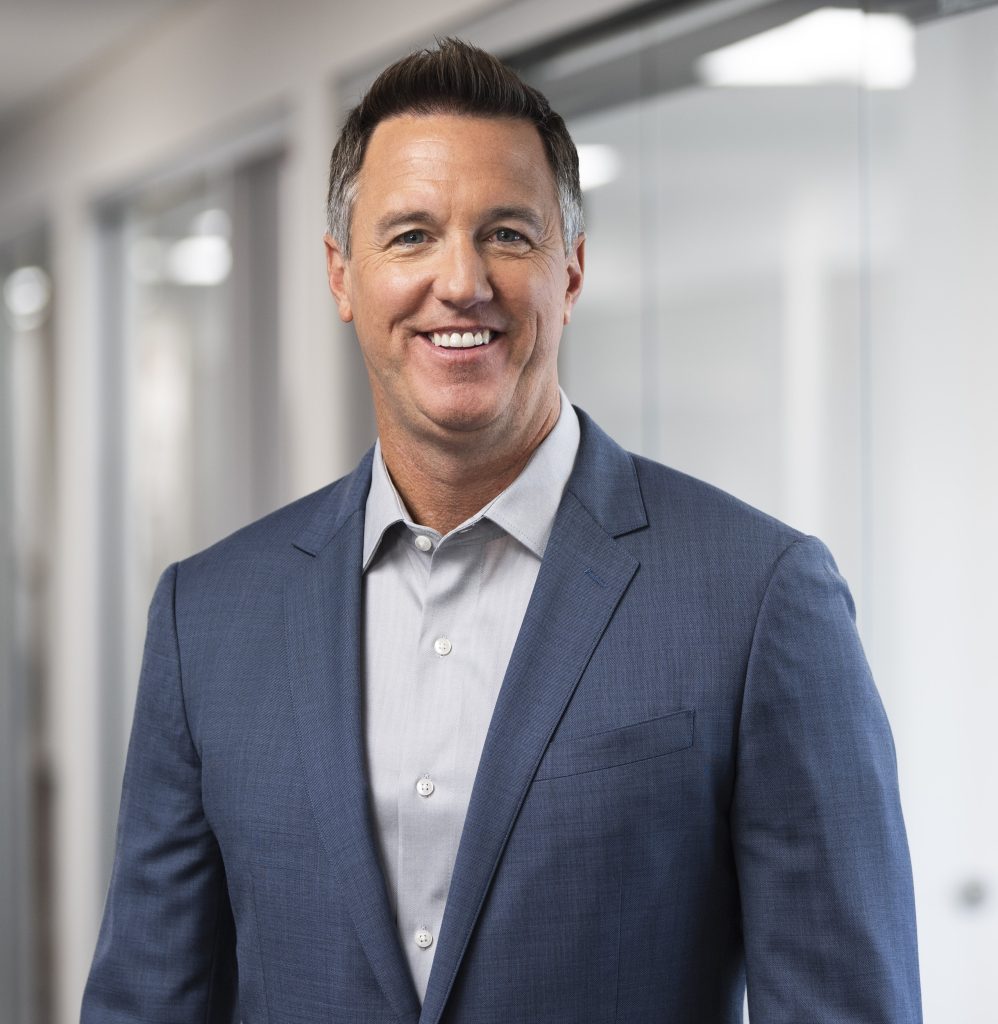
Worthington Steel President and CEO Geoff Gilmore learned the value of teamwork as a Division One basketball player in college. Whatever the ups and downs, the camaraderie of the team lifted everyone individually. Well, Worthington Steel’s team has recently celebrated a big win with the announced acquisition of international service center group Kloeckner & Co. SMU recently sat down with Gilmore to discuss the buy.
“I like the fact that business has four quarters, just like basketball,” Gilmore said. “I see how we’re performing each quarter, and then adjust our game plan as necessary.”
He added that whether the market is up or down, it’s always continuing, “it’s always going forward.”
Big news
Worthington, a Columbus, Ohio-based service center group, first announced the possibility of buying Kloeckner back in December. And then the deal, with an implied enterprise value of $2.4 billion, was inked earlier this month, subject to customary closing conditions.
Kloeckner is a service center group and metal distributor headquartered in Düsseldorf, Germany. It also has a significant presence in North America under its Roswell, Ga.-headquartered Kloeckner Metals Corp. subsidiary. Worthington has pointed out that the union of the two companies will form the second-largest service center group in North America.
Rationale behind the deal
Worthington Steel was spun off from Worthington Industries into its own publicly traded company just over two years ago. The other company is now called Worthington Enterprises, which designs and manufactures building and consumer products, as well as sustainable energy solutions.
And, of course, as a separate company, Worthington Steel has its own capital structure.
“Myself and the rest of the leadership team felt strongly that we’d never be more well-positioned to grow than now, and a big piece of our strategy was acquisitions,” Gilmore said.
He’s consistently noted the environment has been right to consolidate in the service center space. And there were going to be plenty of opportunities for it.
“I felt like the steel mills have done a lot of that over the years,” and other service center groups as well, he said. For example, back in October, service center groups Ryerson Holding Corp. and Olympic Steel announced a blockbuster merger.
In this environment, “we went through a very rigorous process of the 10 companies that we thought would be good acquisition targets,” Gilmore revealed.
Then they narrowed it down to five.
“And there’s a lot that goes into that. It’s crossover, extension to geographies, markets,” he said, adding, “Is it a good company, and does it have a strong culture and a strong leadership team?”
“We don’t want to acquire turnarounds,” Gilmore said. “And Kloeckner just continued to be number one on the list.”
Common cause
Some synergies existed between the two companies, as Kloeckner has shifted its business strategy.
“They wanted to move away from distribution and lower margin business, and they wanted to focus on high value add,” stated Gilmore. “And that’s our strategy as well.”
Additionally, Kloeckner’s North American presence was a contributing factor.
“They’re traded on a German exchange, but 75% of their shipments are in North America,” Gilmore noted.
More broadly, the acquisition expands Worthington’s portfolio with adjacent products, including stainless and aluminum, long products, and downstream fabrication. It also exposes Worthington to more end markets.
“I think it takes the volatility out of our earnings through the cycle, the more diversified the portfolio is,” Gilmore said. “So that was highly appealing.”
Continued North American focus
Although Kloeckner is a European company, Gilmore affirmed Worthington’s commitment to the North American market.
“By far and away, the most appealing part of the acquisition was the North American piece,” Gilmore stated.
He explained that probably 99% of the synergies will be in North America.
“Europe is an area we weren’t necessarily looking to grow beyond electrical steel,” Gilmore said.
For example, Worthington Steel recently acquired a controlling equity stake in Italy’s Sitem SpA, a producer of electric motor laminations.
In the US, Gilmore said Worthington locations are currently clustered in the Midwest and a little bit north.
Meanwhile, Kloeckner has a significant presence in the South, “and that’s a growing area, along with the markets they’re in, and we felt strongly we wanted to have a larger footprint in the South,” said Gilmore.
And Worthington didn’t want to do that through greenfield sites and adding more capacity.
“That defeats the purpose of our strategy, so we wanted to do it through an acquisition, and then Kloeckner has a strong presence in Mexico as well,” Gilmore said. “We’re excited about that.”
Finally, this deal doesn’t signal the end of Worthington’s M&A hunt.
“This really sets us up for further growth through acquisitions, because we have that strong overlap in flat-rolled carbon,” Gilmore said. “We certainly will have opportunities to continue to consolidate through larger deals.”
And, just think, the whistle hasn’t even blown on the first quarter of 2026!