Final thoughts
There are markets where the headlines and the prices are both crazy. This does not appear to be one of them, at least not yet.


There are markets where the headlines and the prices are both crazy. This does not appear to be one of them, at least not yet.
Wheatland Tube, a subsidiary of Zekelman Industries, is closing a tube facility in Chicago, with nearly 240 workers being laid off.
Washington loomed large in our surveys this week. Two things actually: the upcoming presidential election and the trade case against imported coated products from 10 nations.
By most accounts, the issues that are most important for voters in this election are the economy, immigration, and abortion. International trade policy plays a key role in at least two of those three (the economy and immigration). Both presidential candidates recognize that trade and tariffs are an important focus. And “America first” is a rallying point for both candidates.

On Thursday, the Department of Commerce announced it would initiate investigations into coated steel imports from ten countries.
Worthington Steel’s earnings tumbled in its fiscal first quarter of 2025. The company cited a drop in selling prices and tons sold for the sales dip for the three months ended Aug. 31.
Barry Zekelman, chairman and CEO of Zekelman Industries, says the import data unquestionably supports the fact that imports of Mexican conduit have been surging into the US market.
SMU's prices ranges for flat-rolled steel were mostly sideways on Tuesday even as futures market shot higher. I got some questions as to why hot-rolled (HR) coil futures shot higher. As best as I can tell, it might have been in response to news that China plans to roll out stimulus measures. We have details on those measures here thanks to our colleagues at CRU. The chart below gives you some idea of just how sharply upward the move in HR futures was earlier on Tuesday:
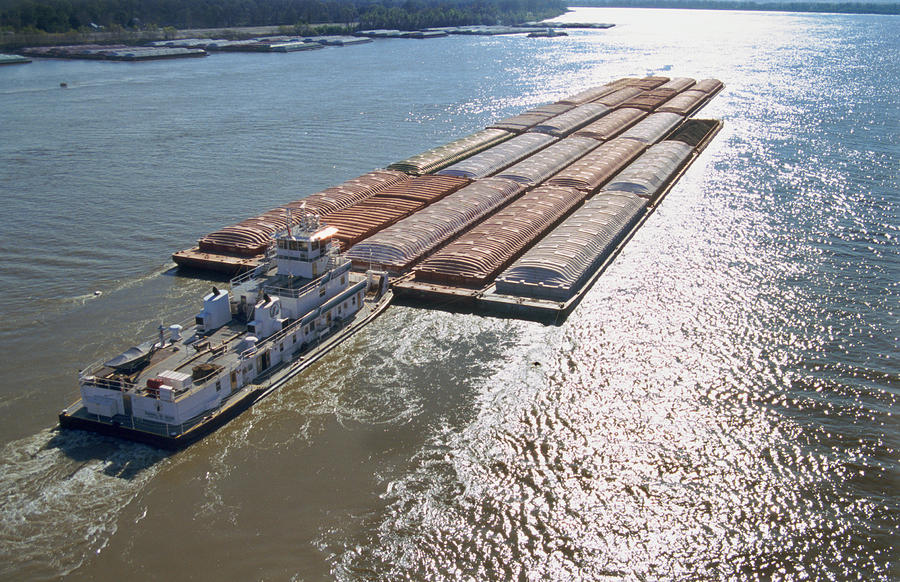
A potential labor strike is threatening to disrupt supply chains up and down the Atlantic and Gulf Coasts beginning next week.

Former President Donald Trump has said he will place a 200% tariff on John Deere products imported into the US if the company makes good on previously announced plans to move some production to Mexico.
It’s officially fall. And here’s a funny thing about steel prices in the fall over the last few years – they tend to move in the opposite direction of the leaves. SMU’s hot-rolled (HR) coil price averaged $676 per short ton (st) in September 2023. That figure increased to $1,035/st in December 2023, a gain of 53% percent. (You can follow along with our pricing tool.)

US presidential campaigns frequently sport an “air of unreality.” No more so than the 2024 campaign, where superlatives fly around like mosquitos. Steel trade has been a feature of political discourse for at least half a century now. Just last week, it proceeded to a new level of “unreality.” Four senators - Bob Casey (D-Pa.), Sherrod Brown (D-Ohio), Marco Rubio (R-Fla.), and Mike Braun (R-Ind.) - wrote a “bipartisan” letter attacking Mexican exports of steel to the United States. They framed it as a “surge” in US steel imports from Mexico. To address this “surge,” the Senators urge the imposition of 25% tariffs on all steel imports from Mexico.
Continued highly competitive steel exports from China, amid weakening global demand, have triggered a wave of trade protectionism across major markets.

They say failure can lead to success. Such was the case for Nate Lerman. While liquidating the inventory of his failed toy truck business, he realized the profit potential in steel, which ultimately led to the creation of Steel Warehouse. Since its founding over 75 years ago in South Bend, Ind., Steel Warehouse has remained […]
We got a little flack for adjusting our sheet momentum indicators to neutral last week. To be clear, we didn’t adjust them to lower. Part of the reason we moved them to neutral was because there are some unusual cross-currents in the current market. On the news side, you could make a case that there should nowhere to go but up.
SMU has compiled a list of key dates to watch out for in the expansive trade case filed last week targeting corrosion-resistant steel imports.
Steel Warehouse Chief Commercial Officer Marc Lerman will join Steel Market Update for a Community Chat webinar on Wednesday, Sept. 18, at 11 a.m. ET. You can register here. The live webinar is free for all to attend. A recording will be available only to SMU members.
US light-vehicle (LV) sales improved to an unadjusted 1.42 million units in August, up 7.6% from a year ago, the US Bureau of Economic Analysis (BEA) reported.
We’re starting to see some impacts of the big trade case filed last week against imports of coated flat-rolled steel from 10 nations. Namely, we’ve heard that a range of traders have stopped offering material from Vietnam. An alleged dumping margin of nearly 160% will do that. Especially amid chatter of critical circumstances.
Ternium USA Inc. has requested a host of Section 232 tariff exclusions since the US reimposed the duties on Mexican steel earlier this summer. Domestic steelmakers, however, are pushing back.
Following May’s five-month low, US steel exports ticked higher in July, according to the latest US Department of Commerce data. The amount of steel exiting the country rose 6% month on month (m/m) to 818,000 short tons (st). This is back in line with trade levels seen in recent months.
Domestic steel producers and the United Steelworkers (USW) union filed a barrage of trade cases last week. This is hardly news. Ever since the Commerce Department ruled that Vietnam is still treated as a nonmarket economy (NME) for antidumping purposes, many in the business expected new cases on the product that Vietnam excels at—“corrosion-resistant steel.” Nor is it a surprise that these cases roped in nine countries in addition to Vietnam: Australia, Brazil, Canada, Mexico, the Netherlands, South Africa, Taiwan, Turkey, and the United Arab Emirates. All these countries rank in the top ten exporters of corrosion-resistant steel to the United States. These petitions are a broadside against coated flat-rolled steel imports.
July represents the second-lowest monthly rate for steel imports so far this year.
Domestic mills have alleged substantial dumping margins in the trade case targeting imports of corrosion-resistant steel.

This month’s column on the markets could be a response to the question of last month, “Are the forward curve prices on Aug. 7 high enough to price in trade case risks?" The market’s answer has been a pretty resounding YES so far, I think.
Global crude steel production fell by 4% month over month (m/m) in July, led by a major drop in Chinese output, which fell 9% m/m.
Sheet prices didn’t roar back after Labor Day. But steel market news sure came out of the gate strong (or maybe chaotically is the better way to put it). First, the nearly $15-billion proposed sale of U.S. Steel to Nippon Steel exploded into the news. And when I say exploded, I mean that all sides seem to be escalating things now.
US mills have filed or soon will file a sprawling trade petition against imports of coated flat-rolled steel from 10 countries. The petition seeks anti-dumping margins against Canada, Mexico, Brazil, the Netherlands, Turkey, the United Arab Emirates, Vietnam, Taiwan, Australia, and South Africa. It also seeks countervailing duty margins against Canada, Mexico, Brazil, and Vietnam. That’s according documents dated Sept. 5 and addressed to Commerce Secretary Gina Raimondo and International Trade Commission (ITC) Secretary Lisa Barton.
Trade is always front and center in an election year. And 2024 is no different. There is no shortage of issues, with questions like the sale of U.S. Steel to Japan’s Nippon Steel, potential cracks in the USMCA, and Chinese overcapacity dominating the headlines. But how do you distinguish between issues that might just last until November, and what are the crucial questions that could affect your business for years to come?
We had a wonderful time at last week’s Steel Summit Conference, seeing so many familiar faces and catching up with friends within the industry.