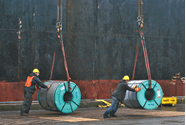
Steel imports remain low in January and February
Steel imports remained close to multi-year lows in January and February, according to US Commerce Department data released this week.


Steel imports remained close to multi-year lows in January and February, according to US Commerce Department data released this week.

With the Iran war approaching its third week, the future course and scope of the conflict remain uncertain. Even so, while the human costs are the most immediate and tragic, the global economic implications have already proven to be significant.

A year after being blindsided by hefty tariffs from its top trading partner, Canadian steelmakers are renewing their call for tariff-free trade between the US and Canada.
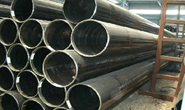
An administrative review of the anti-dumping duty (AD) order on heavy-walled rectangular pipe and tube from Mexico has found evidence of continued dumping by Mexican companies.
Since the Supreme Court struck down President Trump’s use of IEEPA tariffs, a judge at the Court of International Trade (CIT) has ordered refunds of all IEEPA tariffs. Still, Trump is trying again with a Section 122 global tariff.

CVDs and anti-dumping duties matter when importing steel. Korea often offers very competitive import rates. The importer of record is responsible for paying any ADs, CVDs, or tariffs.

Tariff-related litigation in the US and around the world reflects the willingness of the president to act without consulting Congress or our trading partners. We're seeing the impulse to act without congressional approval in international relations too.

December supply increased 7% from November to the third-lowest monthly rate of the year.
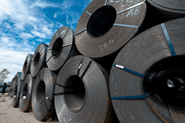
Trade for many of the sheet and plate products we follow has fallen to multi-year lows through December.

With domestic steel prices rising steadily and mill lead times pushing out, import offers are becoming more attractive to US buyers.
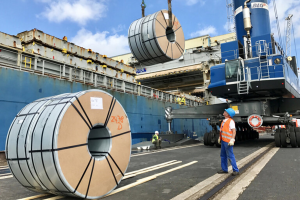
Steel imports slowed further in December and January to some of the lowest volumes recorded in recent years.
The US Department of Commerce is adjusting the countervailing duties (CVDs) on steel plate imports from Korea.
The wait for an answer is finally over (sort of). In a six-to-three decision, the Supreme Court invalidated the Administration’s use of the International Emergency Economic Powers Act (IEEPA) to impose tariffs.
On Friday, the Supreme Court released its long-awaited decision on the IEEPA (International Emergency Economic Powers Act) tariffs imposed by president Trump beginning last April. As most of you already know, by a six-to-three majority, the Court ruled against the president.

As referenced in Michael Cowden's last Final Thoughts, Mexico has opened a formal investigation into cold-rolled steel imports from the US, China, and Malaysia. Here are the details.

The extreme cold we've seen over the last month or so might be passing. But it's still stormy out there when it comes to trade issues. The latest trade matter that’s led to more pings than usual on my phone and in my inbox: Ternium México filed a trade petition against imports of cold-rolled (CR) coil from China, Malaysia, and the United States.
November steel exports tumbled 15% from October to the lowest monthly export rate since July 2020.
Steel imports remain weak in November and December according to recently released final US Commerce Department data. Many of the sheet and plate products we follow slipped to multi-year lows.

The US Department of Commerce has found that certain steel pipe rolled in Oman using Chinese hot-rolled coil is illegally circumventing anti-dumping and countervailing duties (AD/CVDs).

What do SMU's latest survey results show about the current market take on tariffs and where HRC prices are going?

If forced to choose between Canada and Mexico, many manufacturers are likely to prioritize Mexico as the more important manufacturing hub.

US steel imports have fallen sharply under the new 50% Section 232 tariff regime. Jerry Richardson, general director of CSN LLC, discussed on an SMU Community Chat this week how the market is now structurally tighter and more volatile than at any point in the past decade.
Last week, the government of China reported a trade balance of $1.12 trillion in 2025, the largest merchandise trade surplus in history. And this surplus was despite massive tariffs imposed by the United States and other countries, partly in an effort to rein in China’s trade juggernaut.

The amount of finished steel that entered the US market contracted from September to October, driven primarily by slowing domestic mill shipments, according to SMU’s analysis of Department of Commerce and American Iron and Steel Institute (AISI) data

The Commerce Department has released preliminary countervailable subsidy rates in the ongoing rebar trade case.
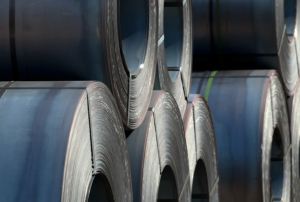
The volume of steel shipped outside of the country increased 11% from September to October 2025 to a seven-month high of 662,000 short tons (st), according to recently released data from the US Department of Commerce.

Members of the Congressional Steel Caucus met in Washington on Wednesday to assess the state of the domestic steel industry. Lawmakers and industry leaders discussed the importance of Section 232 tariffs, strong trade enforcement, and continued investment in American steelmaking.

According to recently released final US Commerce Department data, US steel imports rebounded 11% month on month (m/m) in October 2025 after falling to a multi-year low one month earlier. The latest license figures suggest imports eased back by 3% in November and by another 2% in December, with trade again nearing historical lows.
As we move into 2026, it’s time to look forward. While the “Donroe Doctrine,” Venezuela, and Greenland absorb significant press attention, important trade developments will also continue to make headlines this year. The unprecedented changes we saw in 2025 will continue in 2026, particularly in the areas of IEEPA and tariffs, USMCA, and the WTO.

The formation of the domestic scrap market for January shipments is underway and only partially settled as of this article's publication. The main point of contention is the price of #1 busheling and bundles.