Analysis

February 5, 2026
Ferrous scrap market chatter this week
Written by Ethan Bernard
Every month, SMU polls participants in the ferrous scrap market on a variety of topics. These include prices, business conditions, and tariffs, among others.
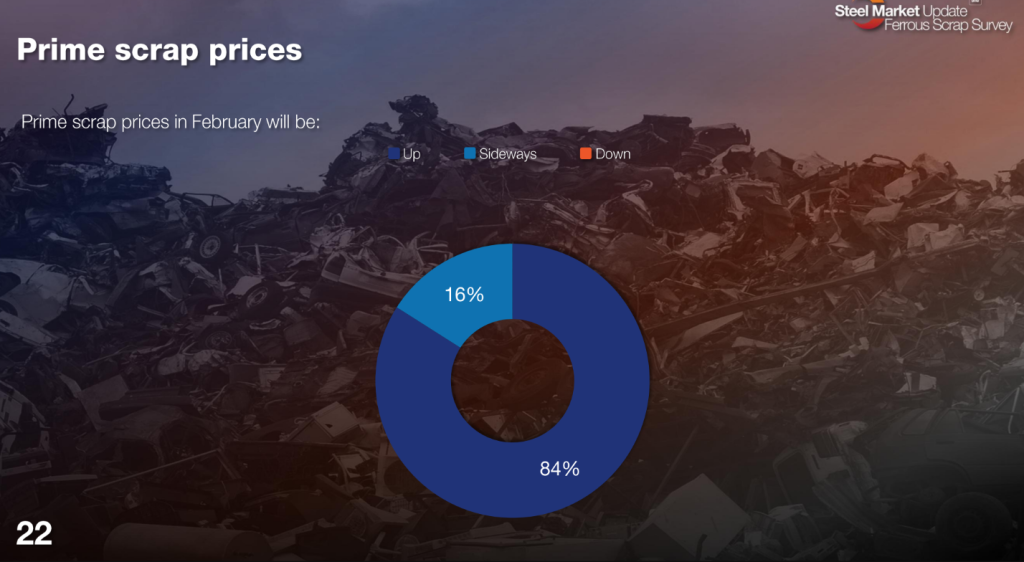
This month’s responses arrived as the February scrap market was still settling. Initial reports to SMU show prices rose this month. And that was the general consensus among our most recent survey respondents. Of those, 84% expected February prices for prime grades to increase, while 16% expected them to be sideways.
Let’s take a look at what else these participants are seeing on demand, tariffs, and pricing. We’ll post the slides, followed by the respondents’ comments.
Want to share your thoughts? Contact david.schollaert@crugroup.com to be included in future market questionnaires. (For Premium subscribers, the full results are available here.)
How is demand for ferrous scrap?
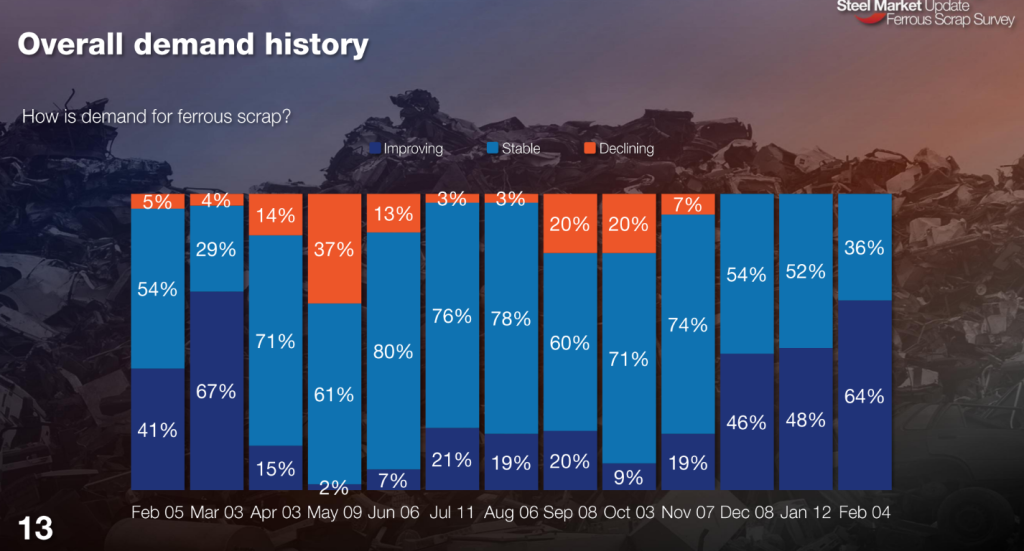
“Weather is helping to improve.”
“Rising prices with slow flow.”
“Greater demand and bad weather.”
“Fundamentals are in place for slight upticks.”
“Plenty of demand at strong prices.”
“Weather is creating the demand.”
“Domestic mill operating rates higher, and scrap supply is very tight.”
Where will busheling prices be in February?
“Demand is stable, but mill pricing increases have allowed for scrap to increase.”
“Weather and exports pushing pricing.”
“Still oversupply of prime scrap in the market.”
“Pricing is stable, along with demand being stable.”
“Upward pressure.”
“Bad weather drives scrap prices higher.”
“Shredded will drag these prices up.”
“Demand is improving, and weather is also factoring in.”
How do you see ferrous scrap pricing behaving over the next 60 days?
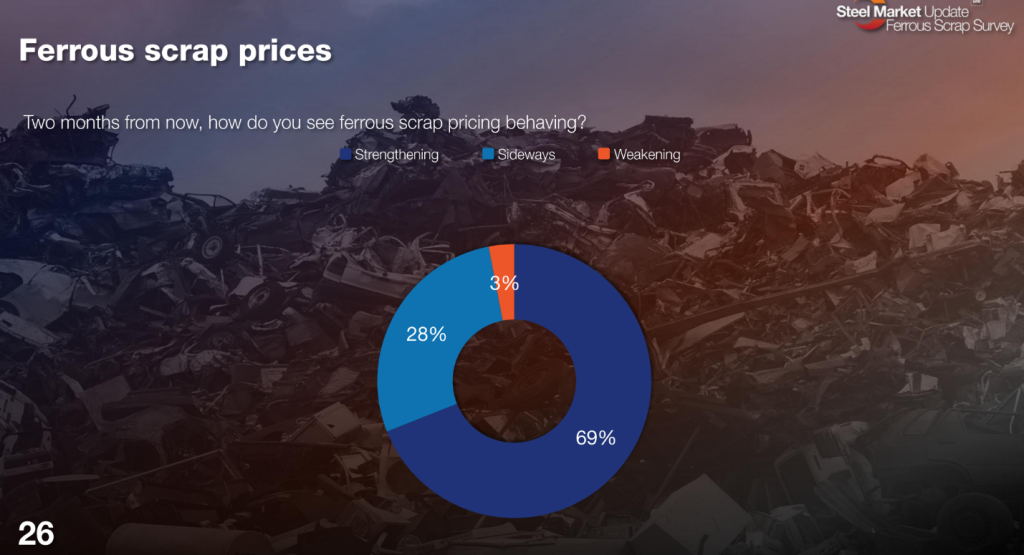
“Demand is stable, but Q2 looks soft in demand.”
“Sideways to strengthening+.”
“Weather and flow.”
“Greater demand and bad weather.”
“After the winter is behind us, shredders will be able to catch up, and tons meant for export are still coming inland.”
“Up in February, sideways in March. Decline in April.”
What impact have President Trump’s tariffs had and why?
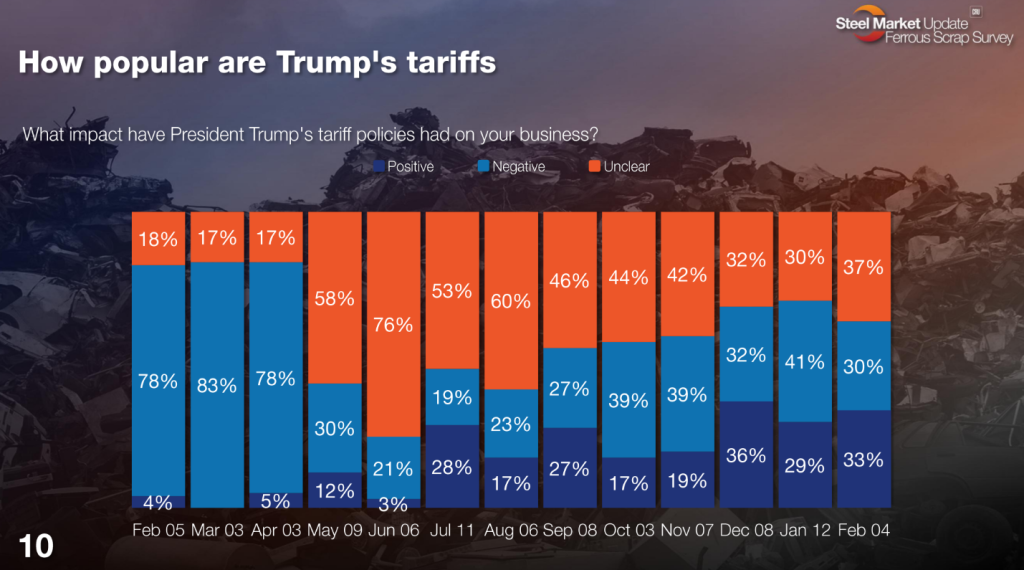
“Pushing cost up overall.”
“Tariff on finished products.”
“Raised price dangerously high over the world market. The original 232 was good. Current appears to be too much.”
“So much uncertainty.”
“Uncertainty abounds.”