
Global steel output slowed in February
Global raw steel production declined 3.7% from January to an estimated 141.8 million metric tons (mt) in February, according worldsteel data. Output was one of the lowest totals over the past three years.


Global raw steel production declined 3.7% from January to an estimated 141.8 million metric tons (mt) in February, according worldsteel data. Output was one of the lowest totals over the past three years.

Domestic mill production was estimated at 1.78 million short tons last week, near the four-year high set one month ago.

Nucor raised its consumer spot price (CSP) for hot-rolled (HR) coil to $1,025 per short ton (st), up $10/st from last week.

The ongoing Middle East conflict, the resurgence of broad-based tariffs under Section 122 of the Trade Act of 1974, and the looming US midterm elections are not isolated developments. Rather, they form a kind of feedback loop in which each issue influences, and is influenced by, the others.
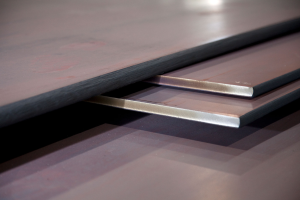
Plate market sources say the week has been quiet, but that overall, business remains consistent.
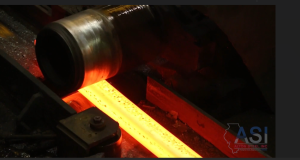
As spot prices for hot- and cold-rolled coils edge higher, mill capacity utilization rates hover below 80%, raising concern among some market participants.

Steel mill lead times extended to multi-year highs on both sheet and plate products this week.

Zekelman Industries reported paying out CA$30,000 (~US$21,845) in rewards to Canadians who reported the use of foreign steel in public works projects.
Nucor expects first-quarter 2026 earnings to be higher both sequentially and on-year, with its steel mills segment logging the largest increase.
Japan’s Nippon Steel has received loans totaling 900 billion yen ($5.6 billion) from Japan Bank for International Cooperation (JBIC) and other Japanese lenders to repay the loan for its buy of Pittsburgh-based U.S. Steel.

Longview, Texas-based Friedman Industries announced it will increase the building's size and add fabrication capabilities, including laser-cutting equipment.

US service centers’ flat-rolled steel supply declined for a second consecutive month in February, with shipping days of supply slipping to 52.2 on an adjusted basis, according to SMU data.

Heating and cooling equipment shipments declined in January to the second-lowest rate recorded over the past nine years.
U.S. Steel has issued a bid solicitation for the site of its new $4 billion mini mill, and Michigan is in the running, the company’s top executive recently told Crain’s Detroit Business.
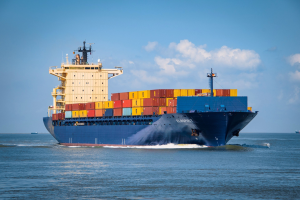
The UK will reduce steel import quotas and raise outside caps to 50%.

Steel Dynamics Inc. expects a sharp jump in first-quarter earnings, driven by stronger steel and recycling margins, steady fabrication results, and continued progress at its aluminum mill.
The Steel Manufacturers Association’s (SMA's) Philip K. Bell believes President Trump’s steel tariffs have been effective so far, and thinks we should remain “solution-focused” regarding the upcoming USMCA review.

Klockner & Co.'s North American business closed 2025 with its strongest fourth quarter on record, even as pricing and currency effects weighed on revenue. The update comes as Worthington Steel moves close to securing control of the German distributor through an ongoing public takeover bid.
Raw steel production declined last week for the third-consecutive week but remains historically strong, per AISI.
Steel imports remained close to multi-year lows in January and February, according to US Commerce Department data released this week.

The office of the US Trade Representative has opened a major Section 301 investigation into structural excess capacity across global manufacturing, with steel and aluminum at the center of the inquiry.
This week sources said spot prices on hot-rolled coils increased modestly.

With the Iran war approaching its third week, the future course and scope of the conflict remain uncertain. Even so, while the human costs are the most immediate and tragic, the global economic implications have already proven to be significant.

The market has been naturally fixated on the disruption of aluminum exports from the Persian Gulf. However, there is another shipping problem that also may have repercussions on the movement of manufactured goods originating in the Pacific. That is extreme congestion at the Panama Canal.

A month ago, the steel market was defined by stability. Prices had firmed and held, and the HRC futures curve appeared to be absorbing strength and follow-through rather than rejecting it. Since then, that stability has evolved into something more meaningful, repricing.

A year after being blindsided by hefty tariffs from its top trading partner, Canadian steelmakers are renewing their call for tariff-free trade between the US and Canada.
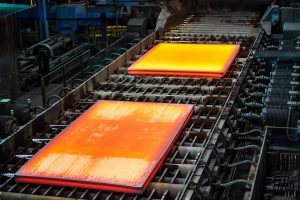
Domestic plate market participants expressed confidence in the overall improvement of market conditions this week.

Algoma Steel said the Section 232 tariff shock continues to shape its business model. The 50% US duty effectively shut the company out of its largest export market, forcing a structural pivot toward Canada.
Nucor Plate Group notified customers it is increasing prices on all rolled products by $40 per short ton (st) and $60/st on all heat treat products.
Algoma Steel Inc. added to its mounting losses during the fourth quarter. Sales and shipments plummeted as ongoing trade tensions between Canada and the US force the Sault Ste. Marie, Ontario-based steelmaker to reconfigure its entire business model.