Canadian agency launches OCTG import probe
Canada has launched an investigation into the alleged dumping of imports of oil country tubular goods (OCTG) by five countries – Korea, the Philippines, Turkey, Mexico, and the United States.


Canada has launched an investigation into the alleged dumping of imports of oil country tubular goods (OCTG) by five countries – Korea, the Philippines, Turkey, Mexico, and the United States.
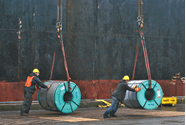
The volume of steel shipped outside of the country in June fell 3% from the prior month to 618,000 short tons (st), according to recently released data from the US Department of Commerce.
Following January’s pre-tariff surge, imports have remained low since February compared to post-pandemic volumes
A recent conversation with Tanners shows that many of us in this industry often end up here by accident but end up staying.
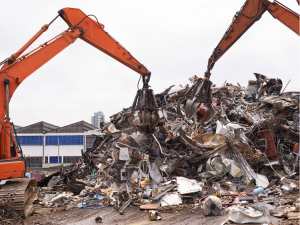
The ferrous scrap market for August appears to be settling sideways as the threats posed to the market in July have not materialized.

Truchas works in Lazaro Cadenas, Michoacan, western Mexico. Repairs may take up to six months.

We’re in the dog days of summer, and the question is whether the market will improve as lead times stretch into September. Your answer to that question might depend on where you are in the supply chain. And producers, it seems to me, are a lot more optimistic than consumers at the moment.

The cautious neutrality and summertime blues we discussed just a few weeks ago have evolved into something decidedly more bearish.
ArcelorMittal expects less demand growth across most of the markets it operates in, including the US, because of President Donald Trump’s tariffs. But the Luxembourg-based steelmaker also thinks it stands to benefit from an increasingly regionalized world thanks to investments like the new EAF at its mill in Calvert, Ala.
Latin American steel producer Ternium delivered a solid performance in the second quarter of 2025. Performance was driven primarily by higher realized steel prices in Mexico, even as shipment volumes declined slightly across its regional portfolio.
North American auto assemblies declined in June, down 10.6% vs. May. And, according to GlobalData, assemblies were 3.1% down year on year (y/y).
Attorneys representing domestic petitioners and foreign respondent companies have been busy filing case briefings and making rebuttals as the corrosion-resistant steel unfair trade investigations begin to wind down.
With 30 years of experience at Steel Dynamics, Barry Schneider reflects on the company and the state of the steel industry.
Algoma Steel applied to Canada’s federal Large Enterprise Tariff Loan (LETL) program for $500 million to support its long-term operations.
US tariff expansion to stainless material in imported downstream products will not be enough on its own to incentivize capital investment

Is there any clarity to be hoped for on the tariff front?
Steel Dynamics Inc. (SDI) executives called a 50% tariff on Brazilian pig iron “concerning,” but think tariffs will be a “mainstay” of trade agreements going forward.
Galvanized steel prices ping-ponged in the $50/hundredweight range during the month of July, settling in at roughly the same position as in June.
SDI profits slipped in second quarter amid trade policy volatility.
Cleveland-Cliffs lost more than $400 million for the third consecutive quarter but predicted results would improve in the second half of the year. And shares of the Cleveland-based steelmaker surged after company executives said during its Q2 earnings call on Monday that they could make billions by courting foreign investors or selling assets.
What to look out for regarding ferrous scrap ahead of Steel Summit.
Evraz NA and Welded Tube of Canada have lodged an unfair trade complaint against imports of OCTG, including those from USMCA trading partners Mexico and the US.
US steel exports rose 10% from April to May but remained low compared to recent years. This came just one month after exports fell to the lowest level recorded in nearly five years.
President Trump's threatened tariffs on Brazil, USMCA partners, and Europe could shake up the scrap and pig iron markets in August.
The difference: The spat with Turkey was a big deal for steel. This time, the 50% reciprocal tariff for Brazil – if it goes into effect as threatened on Aug.1 – hits everything from coffee and to pig iron. It seems almost custom-built to inflict as much pain as possible on Brazil.

Coming out of the holiday market and long weekend, it seems the HRC futures market has caught some post-vacation blues.
With steel prices drifting and trade flows shifting, CRU analysts provided a grounded look at what's really happening — and what's not — across the metallics supply chain during Wednesday's SMU Community Chat.
Are we on the cusp of sorting out the tariff situation, or is this merely another round in the bout?
Following one of the lowest levels seen in more than two years, US steel imports rebounded from April to May. However, trade remains low relative to recent years. Preliminary license data suggests another fall in June.
CRU Senior Steel Analyst Alexandra Anderson discusses current market and pricing dynamics for long steel products in the US.