Analysis
August 12, 2026
US plate market tightens further, mills restrict tons
Written by David Schollaert
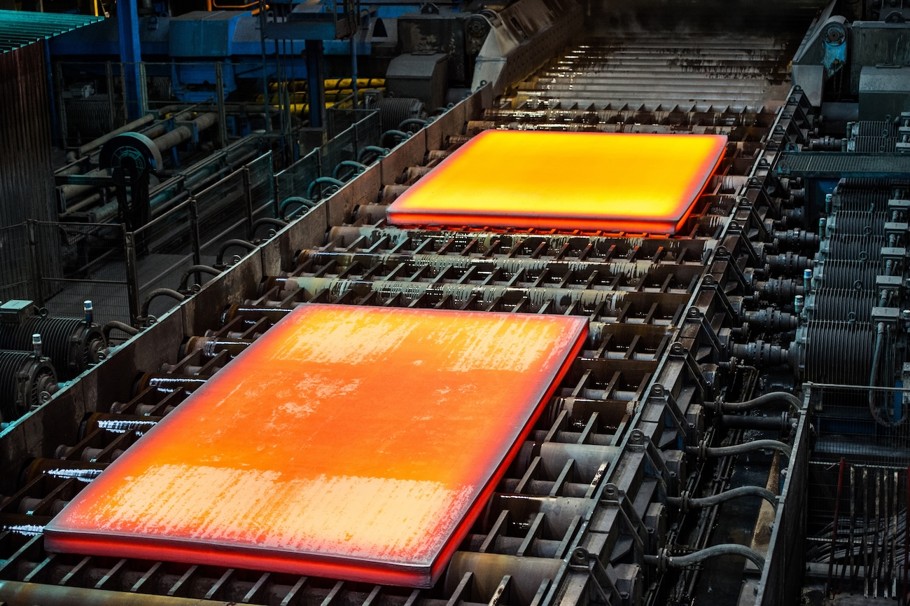
The domestic plate market is increasingly constrained as lead times spill well into Q4 and mills talk allocation.
The skinny



Analysis
August 12, 2026
Written by David Schollaert
The domestic plate market is increasingly constrained as lead times spill well into Q4 and mills talk allocation.

The US Department of Commerce has reduced the anti-dumping duty on corrosion-resistant steel (CORE) for some Mexican producers after a court order. On remand from the Court of International Trade (CIT), Commerce agreed that the record did not show that Galvasid SA de CV’s US customers separately negotiated or paid freight or insurance. The agency therefore removed the adjustment and recalculated the margin. As a result, the agency lowered Galvasid’s coated steel dumping rate to 14.54%, from 24.05%. The all-others rate is now 14.29%, down from 17.42%. Ternium’s rate is unchanged at 14.17%.

Sheet and plate prices continue to push higher as mills charge a premium for what little spot tonnage remains for 2026, market participants said. SMU’s price assessment for hot-rolled (HR) coil now stands at $1,290 per short ton (st) on average, up $10/st week over week. HR price gains averaged $5/st w/w throughout July and August, with no changes in prices some weeks and gains of at most $15/st w/w. In September and October to date, in contrast, prices have increased every week—with the average gain at $11.25/st w/w and w/w gains as high as $20/st. Prices for cold-rolled and coated products continued to increase as well. SMU's price assessment for cold-rolled (CR) coil clocked in at...
Cleveland-Cliffs Inc. expects to earn more from the repricing of contract tonnage than it previously projected. The Cleveland-based steelmaker raised its estimate for the earnings benefit of the repricing to about $850 million from about $500 million. The company also said negotiations for 2027 contracts are progressing better than expected. More than half of the 2027 renewal process was complete as of Cliffs' third-quarter earnings call on Monday morning.
Cleveland-Cliffs Inc. has rescheduled the planned reline of the C blast furnace at its Burns Harbor steel mill in northwest Indiana from mid-2027 to April 2028, company executives said. The delay allows the Cleveland-based steelmaker to keep the furnace, which has annual capacity of ~2.2 million short tons, operating while steel prices and demand remain favorable for mills, they said during the company’s third-quarter earnings call on Monday.

The pig iron trade from Brazil into the US has been lackluster over the last month with minimal activity. Many players in the trade thought activity would increase after the International Iron Metallics Assn (IIMA) meeting in Chicago earlier this month, but it has not materialized so far. Part of the reason could be the US scrap buy for October stretched out longer than usual, as buyers and sellers haggled over price. Now that prices settled upward, there may be different ideas on where pig iron prices should settle.