Final Thoughts
When will we see prime scrap become scarce as the worldwide transition to EAF melting increases, especially for HRC production? It's a question I've been asked a lot.


When will we see prime scrap become scarce as the worldwide transition to EAF melting increases, especially for HRC production? It's a question I've been asked a lot.
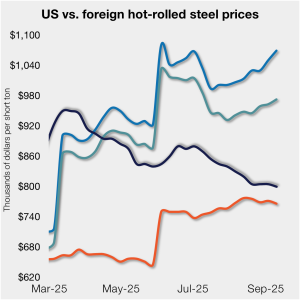
Domestic hot-rolled (HR) coil prices ticked down this week after holding flat since mid-August. Offshore prices largely all moved higher week over week (w/w), widening the margin between stateside and foreign product.
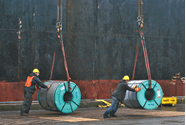
Following a 3% decline in June, the amount of steel shipped outside of the US edged up 1% in July to 623,000 short tons. July was the sixth-lowest monthly export rate since the COVID-19 pandemic, and...

Mexico is considering imposing steep tariffs on imports of steel, automobiles, and over 1,400 other products. Its target? Countries with which it does not have free trade agreements, mainly China, India, Thailand, and other South Asian nations.
ArcelorMittal has partially restarted operations at its direct reduction plant in Lazaro Cardenas, Michoacan. An explosion on Aug. 18 rocked the massive steelworks on Mexico’s Pacific coast, impacting production of direct-reduced iron (DRI).
With US economic indicators all over the map, it’s no wonder the steel market has experienced a whole lot of analysis paralysis this year.

Sheet prices were mixed this week as some mills continued to offer significant discounts to larger buyers while others have shifted toward being more disciplined, market participants said.
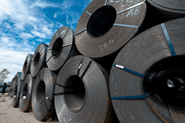
US steel imports declined for the second consecutive month in July, according to recently finalized US Commerce Department data.
If the steel industry professionals who made it to the very final presentation of this year’s SMU Steel Summit were expecting another round of cautious forecasting, they were in for a surprise. Because what they got was a wake-up call.

President Trump’s “reciprocal” tariffs under the International Emergency Economic Policy Act (IEEPA) were struck down again, this time on Aug. 29 by the Court of Appeals for the Federal Circuit (CAFC). The legal and policy mess continues, with the next stop being the US Supreme Court.
Here are highlights of what’s happened this past week and a few upcoming things to keep an eye on.
Drilling activity increased in both the US and Canada last week, according to the latest oil and gas rig count data released by Baker Hughes.
Robert Kopf has been on U.S. Steel's acquiring side and is now part of the steelmaker's partnership with Japan’s Nippon Steel, and he sees bright days ahead for the steelmaker.
SMU’s Steel Buyers’ Sentiment Indices ticked higher this week, according to the latest data from our flat-rolled steel survey.
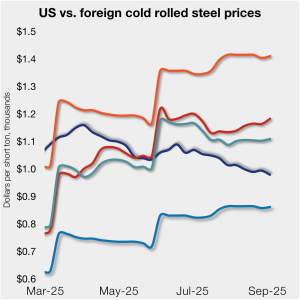
Cold-rolled (CR) coil prices ticked lower in the US this week, while prices in offshore markets diverged and ticked higher.
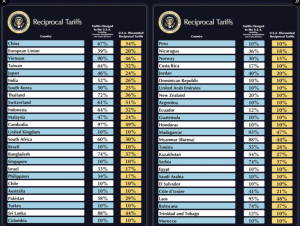
Repealing any reciprocal tariffs placed by President Donald Trump on US imports of direct reduced iron (DRI), iron ore, hot-briquetted iron (HBI), and pig iron would have only a nominal impact on the US steel market, market participants said.

The Brazilian-US pig iron market has remained quiet, market sources told SMU.

he US longs market remained stable this month despite ongoing challenges from tariff-impacted imports, even as end-use demand was relatively unchanged and scrap prices held flat in August.

Let me begin by extending sincere congratulations to the EGA/Spectro Alloys team on achieving their first metal casting at the Rosemount (MN) secondary billet casthouse.
Sheet and plate lead times held steady yet again this week, according to steel buyers responding to our latest market survey, a trend in place since May.
The majority of steel buyers responding to this week’s market survey continue to report that mills are open to negotiating spot prices on sheet and plate products.
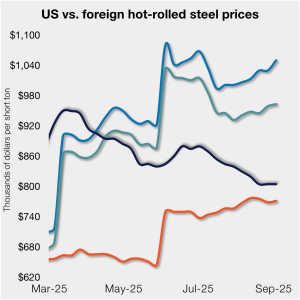
Domestic hot-rolled (HR) coil prices were flat this week for a third straight week. Offshore prices all moved higher w/w, widening the margin between stateside and foreign product.
Private equity firm FalconPoint Partners has acquired SMS, an industrial service provider.

Could an upcoming BRICS meeting spell trouble for President Trump's trade policy?
SMU’s hot-rolled (HR) coil price held steady this week while prices for other sheet and plate products declined.
Ternium CEO Máximo Vedoya predicts that China is going to reduce its steel overcapacity.
The export market is looking for direction based upon the latest scrap purchases from Northern Europe by Turkish steelmakers. The sentiment was looking bearish, but sellers may see it differently.
Oil and gas drilling activity waned in the US and Canada this past week. Ticking own for the second straight week in both regions.
Nucor’s Dan Needham views the steelmaker’s flexibility and diversification as key to pivoting when economic conditions require.
Steel executives packed the main conference hall of the 2025 SMU Steel Summit on Tuesday, Aug. 26, to hear economist Dr. Anirban Basu lay out his blunt view of tariffs, inflation, and demand.