Canada’s steel, aluminum industries call for tariff alignment with US
Canada’s steel and aluminum industries joined forces to call on the government for the imposition of tariffs on steel, aluminum, and electric vehicles.


Canada’s steel and aluminum industries joined forces to call on the government for the imposition of tariffs on steel, aluminum, and electric vehicles.
I asked in a prior Final Thoughts where some of you thought Nucor’s weekly spot HR price would land. One opinion: $720 per short ton (st). That would allow the Charlotte, N.C.-based steelmaker to one up competitor Cleveland-Cliffs and to re-establish its position as a market leader.
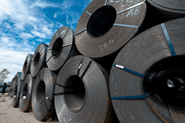
Total US steel exports declined again in June, down 2% month-on-month (m/m) to 773,000 short tons (st) according to the latest US Department of Commerce data.
CRU Principal Analyst Henry Hao discusses China's recently reconfigured policy agenda, which could have significant implications for the global commodity markets.

US drill rig activity recovered last week after slipping the prior week, according to the latest data from Baker Hughes. But Canada’s counts edged down following a five-week run-up. Despite the decline, Canada’s rig count remains near a five-month high. US rigs In the week ended Aug. 9, the number of active drilling rigs in […]

Another month for hot-rolled (HR) coil, and another disappointing one for the bulls. They are still holding onto hope that the bottom is here and still pointing to an imminent uptick in HR prices.
The company is in the process of being acquired by Cleveland-Cliffs in a deal valued at USD$2.5 billion.
Earlier this week, SMU polled steel buyers on an array of topics, ranging from market prices, demand, and inventories to imports and evolving market events.
The construction sector added 25,000 jobs in July, driven by improved wage gains according to the Associated General Contractors of America (AGC).

Following an uptick in mid-July, SMU’s Steel Buyers’ Sentiment Indices both eased this week. Current Buyers Sentiment has been see-sawing for the past few months, now back down to one of the lowest readings recorded since August 2020.
US drill rig activity resumed its downward trend last week according to the latest data from Baker Hughes. Meanwhile Canadian counts ticked higher for the fifth consecutive week. They now stand near a five-month high.
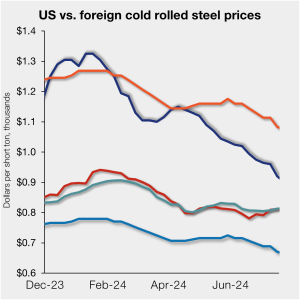
The price gap between US cold-rolled (CR) coil and imported CR tightened marginally after falling to a 10-month low in late July.
Long seen as being dominated by iron ore operations in Western Australia, diversified miner Rio Tinto is at an inflection point in its growth, according to CEO Jakob Stausholm, who referred to a step change from its aluminium business and consistent iron ore production at Pilbara. “We have considerable growth in cash flow from the […]
A roundup of CRU aluminum news from the past week.

Cleveland-Cliffs and Nucor each raised their respective hot-rolled coil (HRC) prices this week. Since last Wednesday’s settlement, the Midwest HRC futures curve has rallied as much as $63 in the September future.
ArcelorMittal’s earnings fell precipitously from a year earlier as the company said current market conditions are unsustainable.
Buyers continue to report very short mill lead times on sheet and plate products, according to our latest market canvass of steel service center and manufacturer executives
Steel buyers of sheet products say mills are still flexible on spot pricing this week, though less so than two weeks prior, according to our most recent survey data.
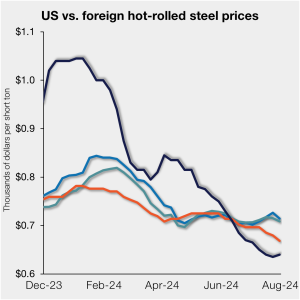
The premium between US hot-rolled (HR) coil and offshore hot band prices narrowed this week as it appears domestic tags might have reached a bottom.
Lower steel prices and expenses from ongoing litigation negatively impacted Ternium’s second-quarter results. On Wednesday, the Luxembourg-based Latin American steelmaker posted a Q2 loss of $743 million on sales that rose 17% from last year to $4.5 billion.
SunCoke Energy Inc.’s earnings improved in the second quarter, with the company citing strong performances in its coke-making and logistics segments.

The Chicago Business Barometer contracted further in July, according to Market News International (MNI) and the Institute for Supply Management (ISM).
Former U.S. Steel executive Kenneth Jaycox is moving from steel to the automotive parts industry.
When we last talked to Jared Rowe in May, he had just been appointed Reibus International's new CEO and chairman of the board. Now two months into the job, SMU caught up with him on our July 24 Community Chat for the latest on the online metals marketplace.
Drilling activity rose in both the US and Canada last week, according to the latest data release from Baker Hughes. US rig activity increased to a six-week high but remains near multi-year lows. Canadian counts continue to improve, now at a 20-week high.
Metalformers expect economic activity to stabilize over the next three months, according to the recently released July Business Conditions Report from the Precision Metalforming Association (PMA).
Summer is here, and a familiar sentiment has hit the hot-rolled coil (HRC) futures market. Prices continue to decline in both the spot market and the futures market, with expectations of sub-$800 prices for the remainder of the year.
The Architecture Billings Index (ABI) ticked up in June following May’s four-year low, according to the American Institute of Architects (AIA) and Deltek. While the index improved this month, it continues to indicate weak business conditions among architecture firms.
Nucor’s top executive expressed concerns over unfair trade practices, highlighting increased steel imports from Mexico and Canada.
On Monday and Tuesday of this week, SMU polled steel buyers on an array of topics, ranging from market prices, demand, and inventories to imports and evolving market events.