
Final Thoughts: The Chicago Briefing
Last week, Steel Market Update and CRU hosted our inaugural VIP Briefing in Chicago ahead of the Scouting America Metals Industry Dinner.


Last week, Steel Market Update and CRU hosted our inaugural VIP Briefing in Chicago ahead of the Scouting America Metals Industry Dinner.

USMCA provides strong support for North American competitiveness. US manufacturing has lost considerable capabilities over the last few decades. “Cheating” by other countries is not the only reason. Nor is it even the most important reason

Core to the negotiations will be the need for a fundamental rebalancing of the relationship between the United States, Mexico, and Canada - especially when it comes to the steel and autos supply chain.

Toyota Motor Corp.’s $1 billion investment in its Kentucky and Indiana plants aims to expand production of aluminum-intensive vehicles, particularly across high-volume models and future battery electric platforms.

If I had to sum it up, I’d say “pain at the pump” is back. AAA says gasoline now averages more than $4 per gallon nationally ($4.08 to be precise) for the first time in for years. Meanwhile, diesel prices average $5.40 per gallon, according to the US Energy Information Administration. That’s up $1.81 per gallon from a year ago.
AMU's March survey results show lead times remaining extended as supply tightness persists, even as import competitiveness declines and logistics costs increase.

North American auto assemblies gained ground in February, up more than 8% vs. January, but still down more than 4% year on year (y/y), according to GlobalData.
The ongoing Middle East conflict, the resurgence of broad-based tariffs under Section 122 of the Trade Act of 1974, and the looming US midterm elections are not isolated developments. Rather, they form a kind of feedback loop in which each issue influences, and is influenced by, the others.
The US steel market is already characterized by high prices and tight supplies, and I wouldn't be surprised if prices move higher and supplies get even tighter – at least in the short term.
With the Iran war approaching its third week, the future course and scope of the conflict remain uncertain. Even so, while the human costs are the most immediate and tragic, the global economic implications have already proven to be significant.
The market has been naturally fixated on the disruption of aluminum exports from the Persian Gulf. However, there is another shipping problem that also may have repercussions on the movement of manufactured goods originating in the Pacific. That is extreme congestion at the Panama Canal.
Pace Industries plans to close two Muskegon die-casting plants following news of the planned shutdown of its Arkansas facility.
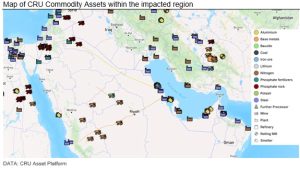
The American Metals Supply Chain Institute (AMSCI) said increasing insurance premiums, potential vessel diversions, and contractual risk evaluations began in the global freight market as geopolitical conflict escalates in the Persian Gulf region.

Crude-oil and natural-gas prices spiked, metals opened higher and some fertilizer benchmarks climbed after the US and Israel launched a “pre-emptive” strike on Iran, killing the supreme leader and plunging the region into chaos.

I grew up in Belo Horizonte, the capital of Minas Gerais in southeastern Brazil, surrounded by the Serra do Curral mountains, and a culture steeped in mining and vast iron ore reserves.
Entering 2026, tin has led a frenzied base metal rally during a historic phase for commodities. Frothy market conditions, driven by volatile investor positioning and shifting macro risk sentiment, pushed several metals—including tin—to record highs in January, before a sharp correction in February.
North American auto assemblies recovered in January, up nearly 12% vs. December, though down more than 2% year on year (y/y), according to GlobalData.
SMU’s Mill Order Index (MOI) rose again in January, maintaining momentum from the month prior. The increase came as service center intake levels ticked up, supported by a jump in shipments, according to our latest service center inventories data.

The chief executives at Worthington Steel and Kloeckner Metals weren’t coy about hitting aggressive near-term financial targets in their fireside chat at the Tampa Steel Conference last week.
A cluster of Airbus announcements reveals how quickly the OEM is tightening and rebalancing its US supply chain.

A colorful serial entrepreneur, NEMO Industries Co-founder and CEO Daniel Liss has done everything from working for Hollywood star Sofia Vergara to building a venture-backed Instagram competitor Dispo. He is new to steel but not short on potentially transformative ideas.
SMU’s Mill Order Index (MOI) surged in October after a notable decline the month prior. The recovery came as service center on order inventory totals picked up, supported by a slight uptick in shipments, according to our latest service center inventories data.
AMU's latest survey of aluminum market participants shows widening gaps in lead times, with extrusions lengthening dramatically.
North American auto assemblies declined in September, down 5.1% vs. August. And assemblies were also down 1% year on year.
On Oct.10, President Trump announced major increases in tariffs on Chinese goods. The trigger was a new regime of export controls on rare earth metals and products using those elements, including magnets, capital equipment, and catalysts for catalytic converters in cars and trucks.
The Institute for Supply Management’s (ISM) latest monthly report on manufacturing reflects a bleak view of American industry in September.
Trade groups cautioned that a prolonged shutdown could strain US industry.
Meanwhile, the nation’s largest rail union said they supported the tie-up between Union Pacific and Norfolk Southern once Union Pacific agreed to secure union jobs.
North American auto assemblies declined in July, down 16.4% vs. August. But, according to GlobalData, assemblies were 2.4% ahead year on year (y/y).
Chief executive of the Institute for Supply Management (ISM), Tom Derry highlighted how reactive buying behavior has shifted the market into a quiet demand period. Derry presented ISM data during the weekly SMU community chat.