Prices
May 3, 2023
Northwest Pipe Upbeat on Year After Challenging Q1
Written by Laura Miller
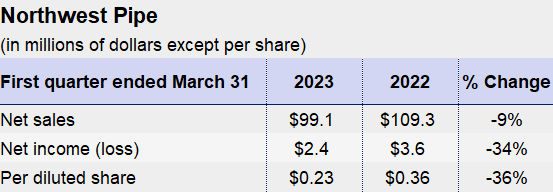
Northwest Pipe reported a drop in first-quarter earnings but is optimistic on the remainder of the year.



Prices
May 3, 2023
Written by Laura Miller
Northwest Pipe reported a drop in first-quarter earnings but is optimistic on the remainder of the year.

"Now, the problem is no longer the price. The problem is having access to steel." That would have made a good lead. But I can’t take credit for it. Those (very quotable) words are from Cleveland-Cliffs Chairman and CEO Lourenco Goncalves during the steelmaker’s quarterly earnings conference call on Monday. For a while, I thought the shortages we'd been hearing about might be mostly a problem for small- and mid-sized buyers. But we’re seeing even some of the biggest steel buyers talking openly about supply problems.
Sheet and plate prices continue to push higher as mills charge a premium for what little spot tonnage remains for 2026, market participants said. SMU’s price assessment for hot-rolled (HR) coil now stands at $1,290 per short ton (st) on average, up $10/st week over week. HR price gains averaged $5/st w/w throughout July and August, with no changes in prices some weeks and gains of at most $15/st w/w. In September and October to date, in contrast, prices have increased every week—with the average gain at $11.25/st w/w and w/w gains as high as $20/st. Prices for cold-rolled and coated products continued to increase as well. SMU's price assessment for cold-rolled (CR) coil clocked in at...

Nucor said on Monday, Oct. 19, that its consumer spot price (CSP) for hot-rolled (HR) coil will be $1,255 per short ton (st) this week, up $15/st from the prior week. The CSP for HR coil from California Steel Industries (CSI) on the West Coast will be $1,320/st, also up $15/st from last week. Nucor still offers lead times of three to five weeks, according to its letter to customers. You can track mill price announcements on our website.

The spread between domestic hot-rolled (HR) coil and prime scrap prices widened for the 13th consecutive month in October, hitting another multi-year high. SMU’s hot-rolled (HR) coil price stands at $1,280 per short ton (st) on average this week, up $10/st from last week and a $40/st increase from a month earlier. Meanwhile, busheling averaged $480 per gross ton (gt) in October, rising $12.50/gt higher from September.
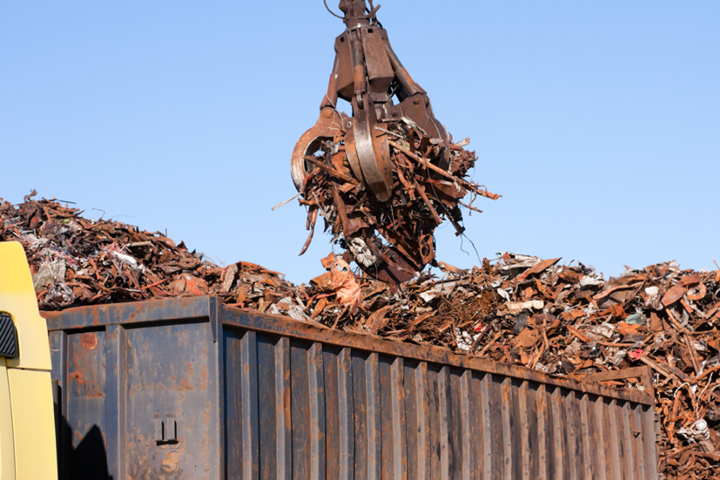
Ferrous scrap prices rose in October as the market grew firmer, scrap sources said. “Overall, the main drivers of this October were strong US mill demand and order books, an export market that had risen over the course of September but has now pulled back slightly, and the season,” one source told SMU. He said at this time dealers and mills anticipate that scrap flows will begin to slow down moving into the end of the year.