Analysis

February 12, 2026
Tampa Steel Conference: ‘Very sticky’ tariffs could lock in high steel prices for years, Tanners says
Written by Laura Miller
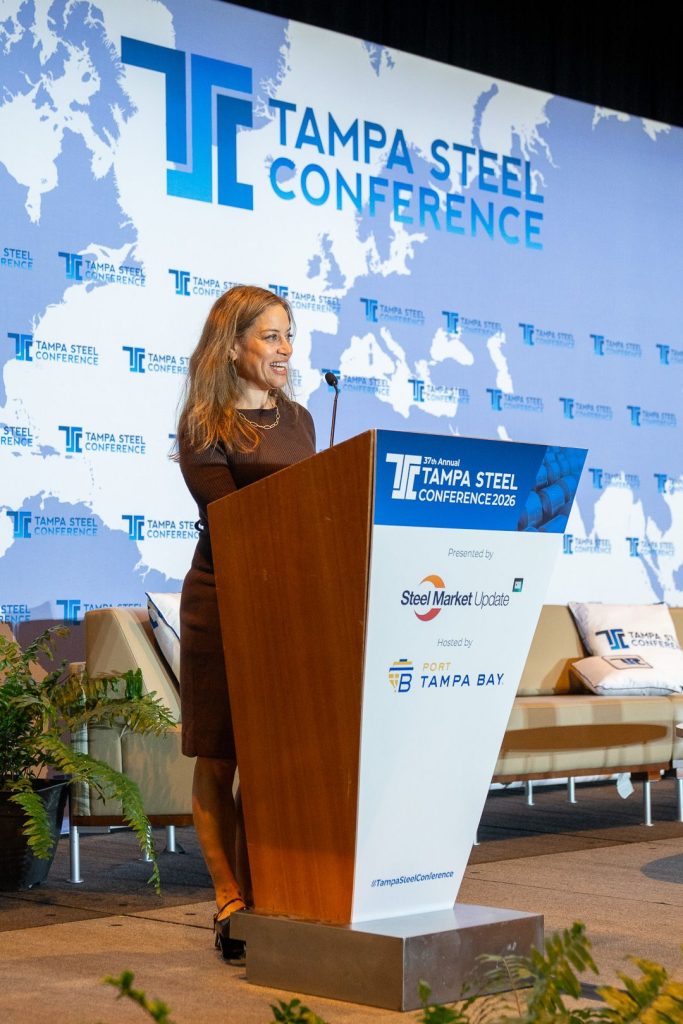
Hot-rolled coil hovering near $970 per ton could push toward $1,000, but Timna Tanners cautioned at the Tampa Steel Conference that anything “much above that” becomes difficult to sustain.
Still, the Wells Fargo equity research managing director argued mills’ slow, disciplined price increases are working in their favor.
“I don’t think this is a demand-led recovery. I think it is supply-led,” Tanners said during her presentation on Thursday.
Inventories remain low, and even modest import pull-through won’t materialize until next year. Despite muted demand signals, Tanners said the market remains tight enough to support strong pricing through the first half.
“Even if demand is just OK… this market is tight, inventories are low,” she remarked.
Tariffs
Tanners’ most provocative call centered on tariffs. She sees a credible case for 50% Section 232 duties remaining in place for another three years.
“Section 232 has proven very sticky… I think that it could stay at these levels for longer,” she said.
Neither Canada nor Mexico is likely to receive meaningful relief, she said. And even if they did, both countries have already imposed their own restrictions on cheap imports, blunting the impact.
“If we went to zero on Canada tomorrow, it’s not going to have the effect it would have had before Canada put its own tariffs on,” she commented.
The political calculus is simple: Tariffs are popular with mills; not controversial with voters; and align with the administration’s narrative of domestic industrial wins.
Imports
Imports are declining sharply. Tanners expects that trend to continue as protectionism spreads globally.
“Two of the largest steel-consuming regions outside China are really pushing back,” she noted. “Expect more protectionism.”
By 2027-28, she believes the US could be nearly self-sufficient in major product categories such as rebar and hot-rolled coil, with only niche items like GOES, tinplate, and light-gauge galvanized requiring imports.
Mills flush with cash
With tariffs supporting margins and new capacity ramping up, mills are generating significant free cash flow. Tanners expects that to translate into more dealmaking.
“There’s going to be more deals… upstream, downstream, and adjacencies,” she stated.
Tanners cited Steel Dynamics’ interest in BlueScope; Worthington and Kloeckner activity; and the possibility of moves into non-steel adjacencies such as concrete pipe or aluminum.
Scrap tightness
After being wrong on scrap tightness two years ago, Tanners was more cautious this year. But she sees early signs of tightening.
“Three months in a row of higher scrap prices could be seasonal, but it could be a sign that the scrap market is tighter,” she noted.
New EAF capacity will increase metallics demand, though imports of scrap and pig iron remain a release valve.
Blast furnaces
Despite expectations that new EAFs would displace older integrated capacity, several blast furnaces remain online, aided by political pressure and automotive exposure.
“I don’t think blast furnaces can fully go away,” Tanners commented. “The right ones should keep running.”
The “golden share” intervention at USS Granite City and reinvestment at Gary Works underscore that integrated assets still have a role, she said, especially in exposed automotive grades.
Demand still lukewarm
Tanners reiterated the current pricing environment doesn’t require a demand boom. Inventory restocking is the biggest driver, while automotive remains steadier than expected, and construction remains tied to interest rates.
Data centers, she warned, are overhyped relative to their actual tonnage impact.
The bottom line
The US steel market is being reshaped by policy, not demand, and that shift is durable, Tanners concluded. With tariffs entrenched, imports shrinking, mills disciplined, and M&A accelerating, she sees a path for HRC to remain in the $900-$1,000 range for an extended period.