
• Skip to main content

    Analysis

    Steel imports grow through April and May

    Written by Brett Linton


    Steel imports recovered further in April and May, according to recently released data from the US Commerce Department. After reaching historic lows late last year, import volumes have increased each month of 2026. Final April figures show an 8% month-over-month (m/m) gain, and May license data show another 10% gain.

    Recall that imports briefly surged to a two-and-a-half-year high at the start of 2025, then began to ease in the middle of the year. From September 2025 through February 2026, imports fell to some of the lowest levels recorded since 2020.

    The final tally for April amounted to 1.91 million short tons (st), a nine-month high. This is up 347,000 st or 22% from the near five-year low set last September. May license data collected through June 7 currently totals 2.10 million st, potentially a 10-month high (Figure 1, left).

    Imports by country

    In April, two-thirds of the steel that entered the country came from just seven countries: South Korea (15%), Canada (14%), Brazil (11%), Mexico (10%), Vietnam (7%), Taiwan (5%), and Germany (4%). Other major suppliers included Japan, China, India, Malaysia, Romania, Spain, the Netherlands, Austria, and Argentina, each contributing 2-4% of the total. Combined, these 16 countries accounted for 87% of April imports.

    To further explore steel import data by country, category, or specific product, visit the International Trade Administration’s Steel Import Monitor.

    Import data can be analyzed as a three-month moving average (3MMA) to smooth out monthly variations and better highlight trends (Figure 1, right). From this perspective, imports trended lower across 2025, bottomed out in early 2026, and have trended back upward since.

    The 3MMA rose to a seven-month high of 1.79 million st in April and is up to 1.93 million st through May licenses, a potential nine-month high. Although up, the recent 3MMA measures remain historically weak in comparison to those of the prior five years.
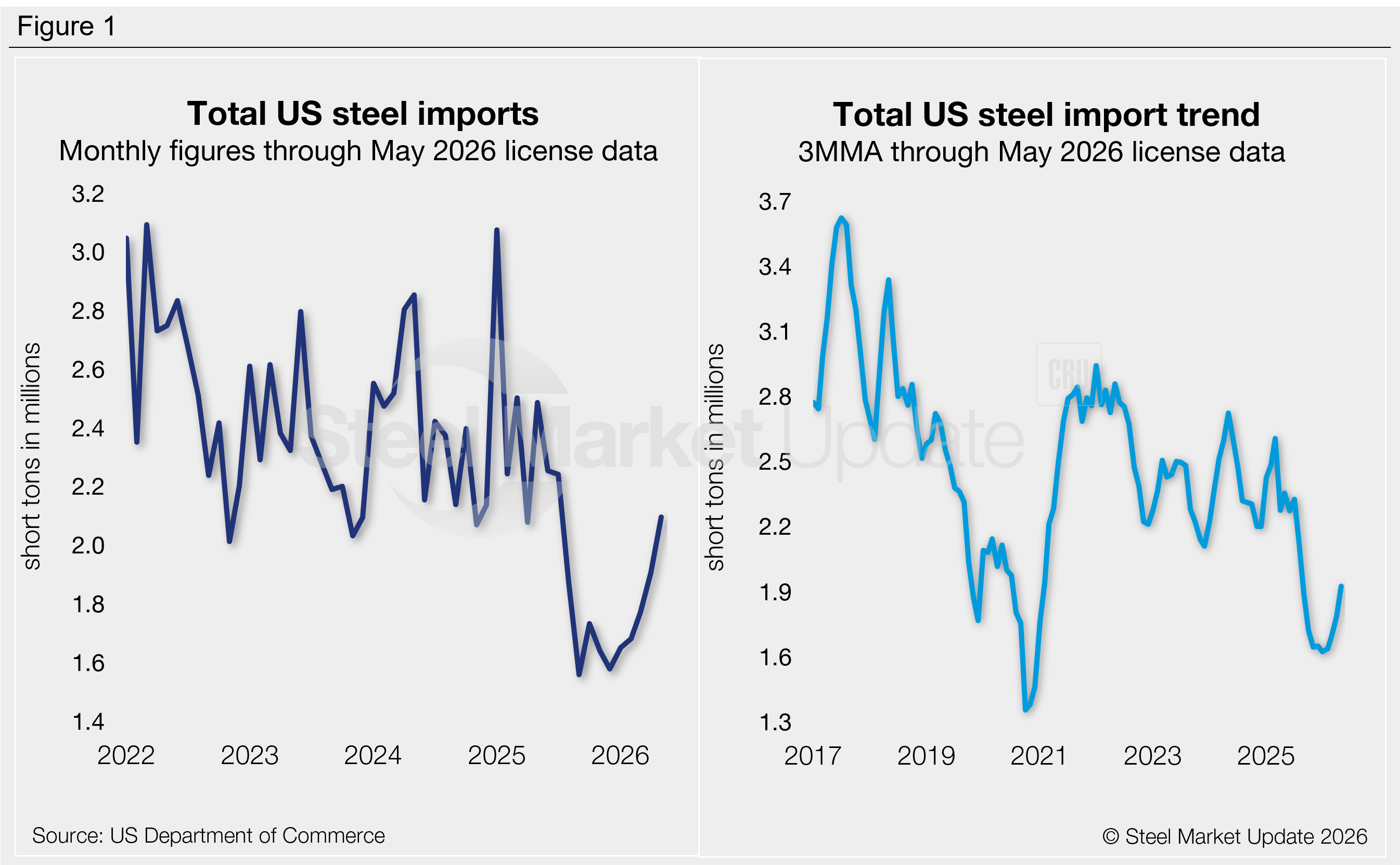
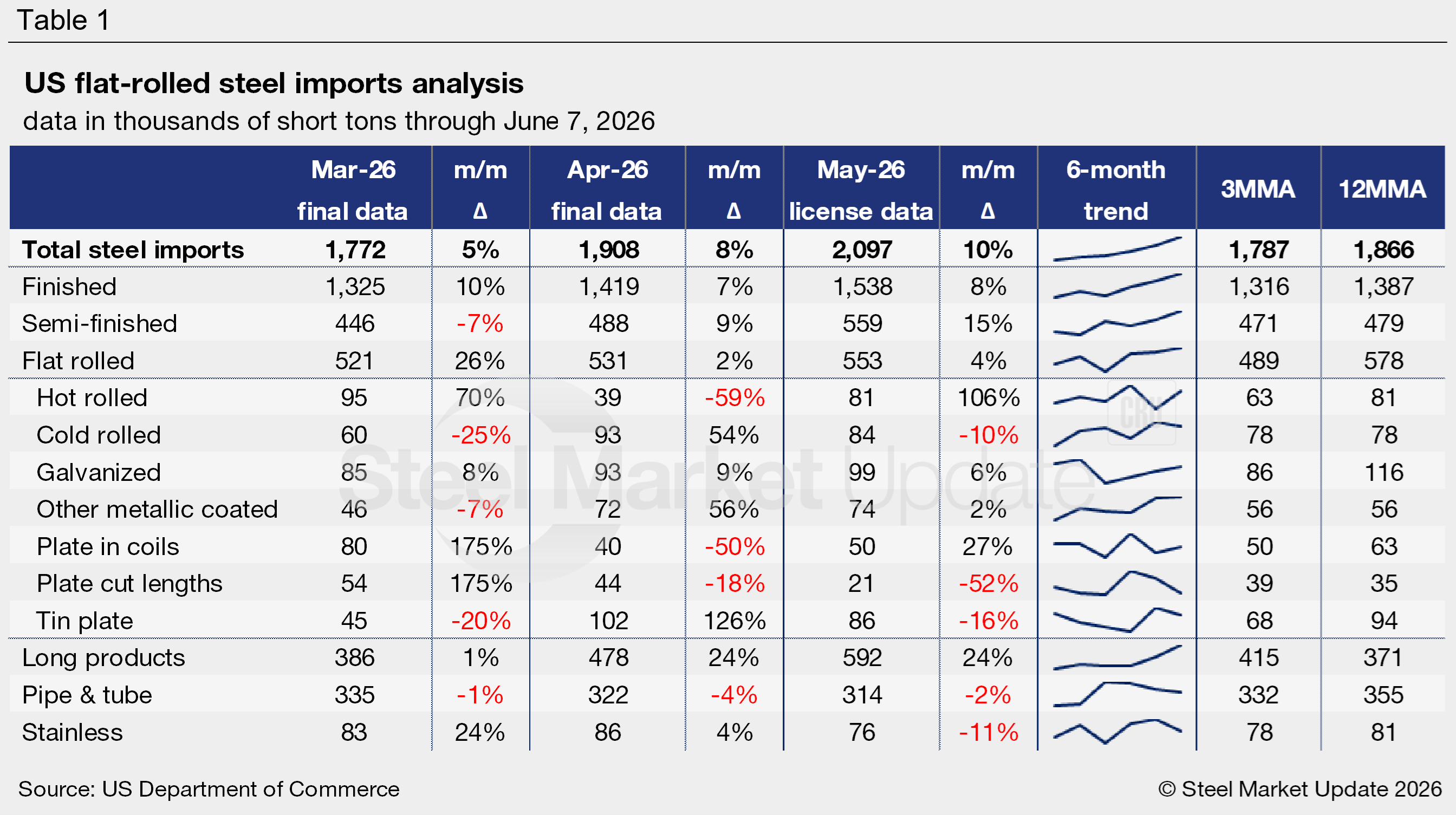
    Table 1 highlights high-volume steel product imports (click to expand). Note that the 3MMA and 12MMA columns are calculated through final April data and do not include May licenses. For deeper analysis, visit our Steel Imports page.
    Finished vs. semi-finished imports

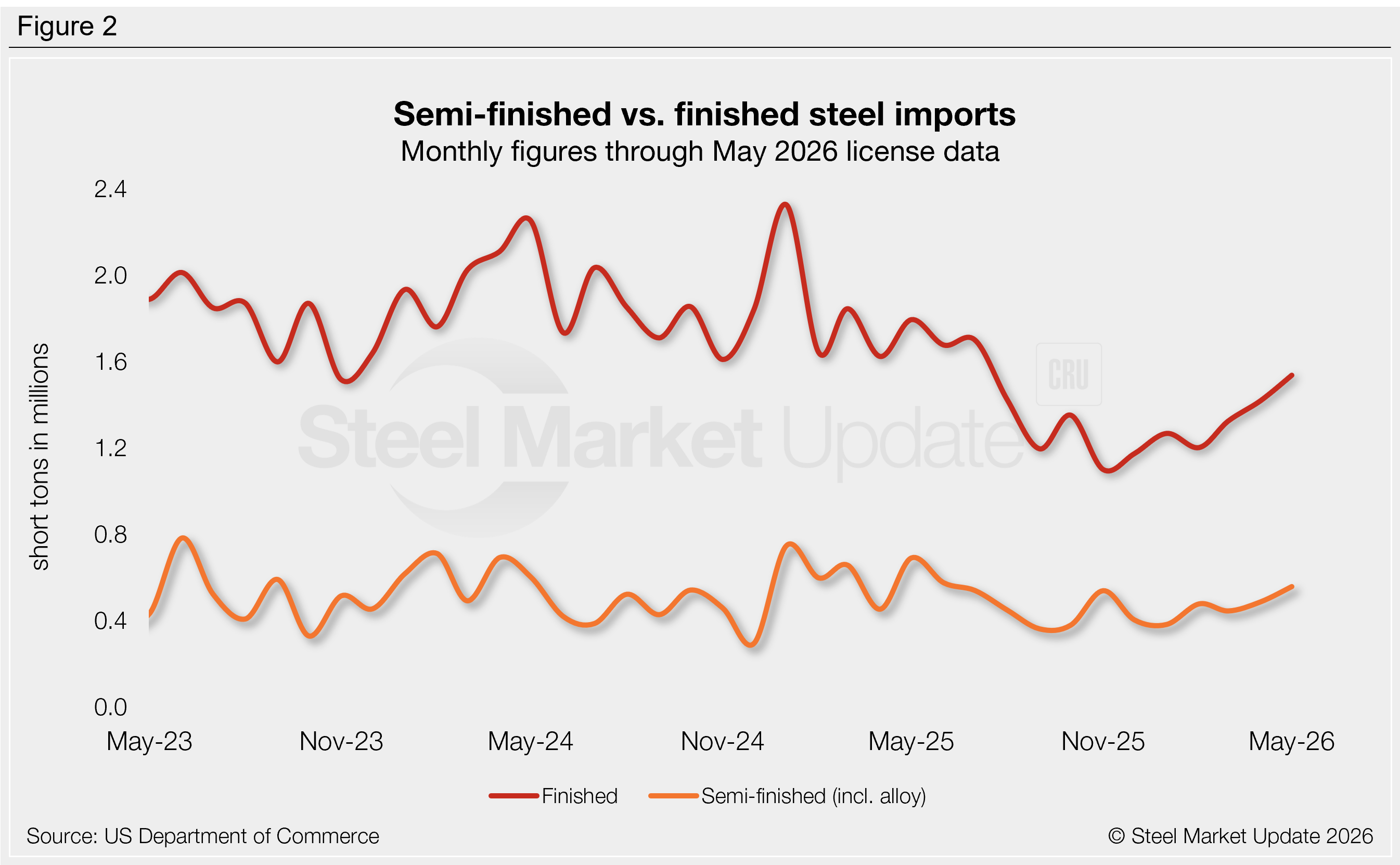
    Imports of finished steel products vs. semi-finished material (mostly slabs to be further processed by a mill) followed similar trends in April and May (Figure 2). This was not the case from late 2025 through early 2026.

    • After falling 7% m/m in March, April semi-finished trade rose 9% to 488,000 st. May licenses are currently up another 15% to 559,000 st (a potential 11-month high).
    • Finished imports recovered 7% m/m in April to 1.42 million st, and May licenses are up another 8% to 1.54 million st (a potential 10-month high).
    Imports by category

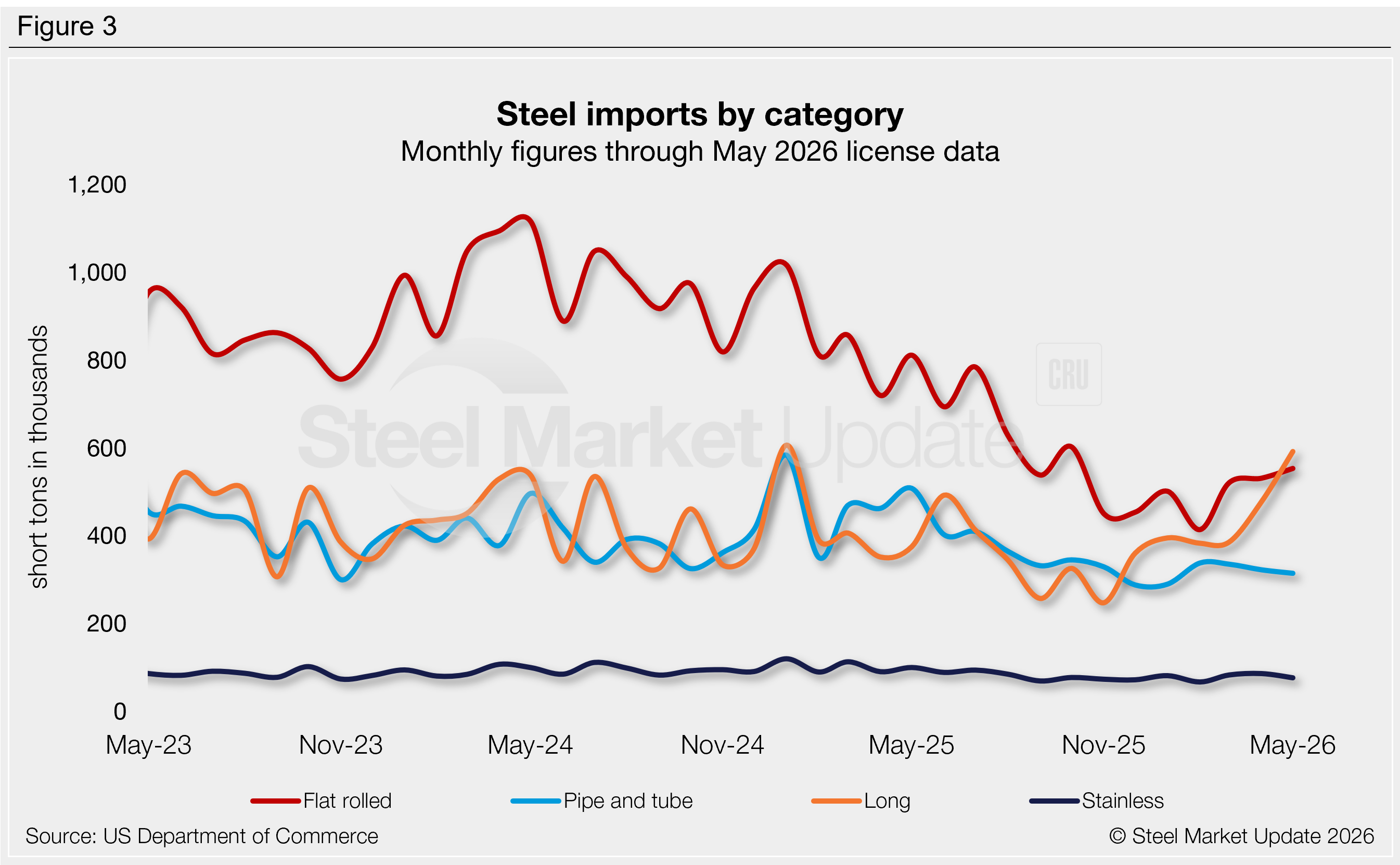
    Figure 3 shows monthly imports of popular steel product categories. Not all groups are performing the same. Notable shifts include:

    • Flat-rolled imports had rebounded 26% in March following February’s multi-year low. They rose 2% further in April and another 4% in May, potentially a seven-month high.
    • Long product imports jumped 24% m/m in April and another 24% in May (potentially the highest level seen in 16 months).
    • Pipe and tube imports peaked in February and have fallen each month since. March was down 1% m/m, April slipped 4%, and May is potentially down 2% further.
    • Stainless imports rose 4% m/m in April to a nine-month high, but May licenses are back down 11%.
    Flat-rolled imports

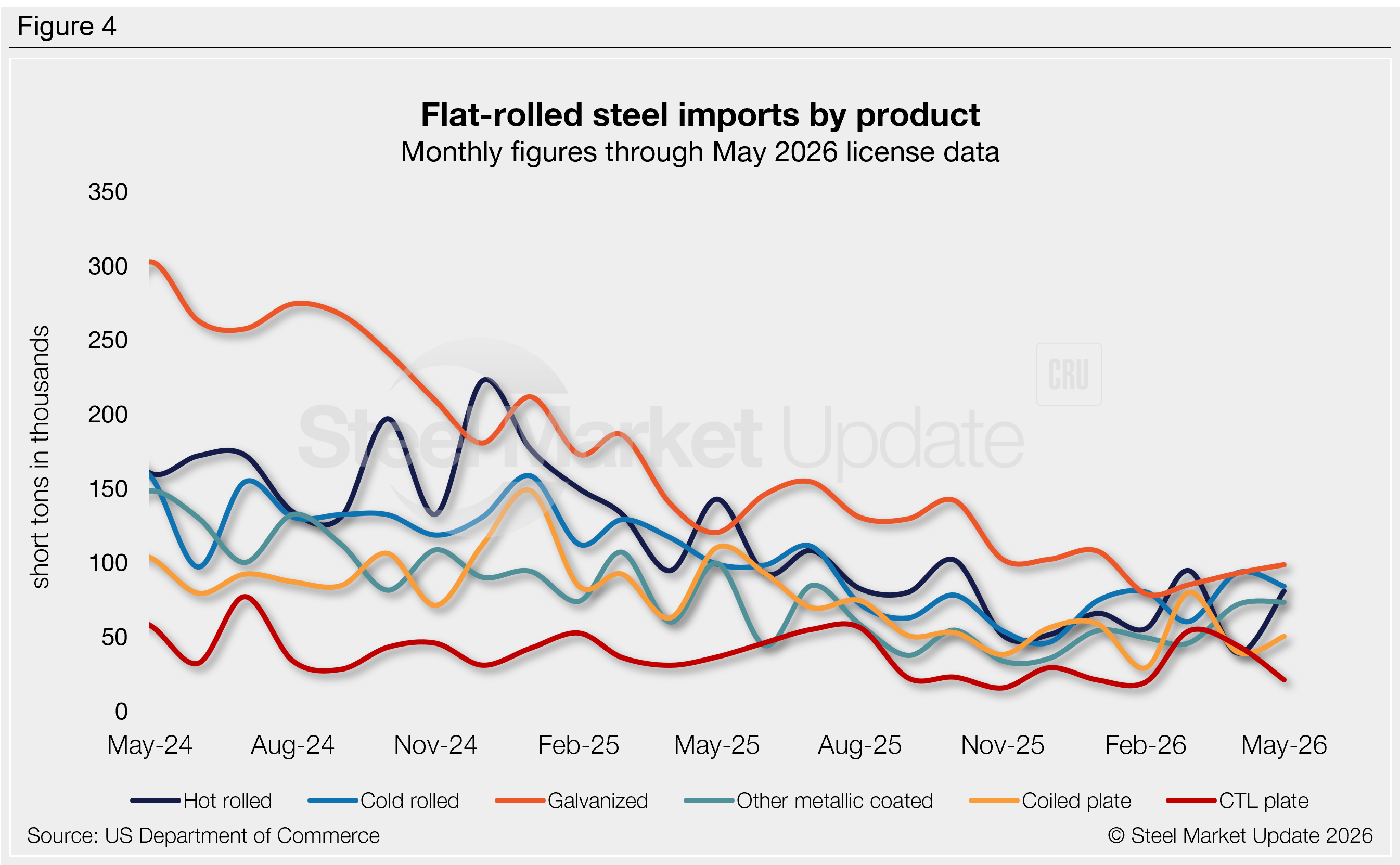
    Figure 4 tracks flat-rolled imports for six popular products. Three products saw gains in April and four are up through May. Key highlights:

    • Hot-rolled coil imports continue to move erratically. Trade jumped 70% from February to March, then fell 59% in April to the lowest level seen in our limited 28-year data history. May figures are currently back up 106%.
    • Cold-rolled coil imports jumped 54% in April to a nine-month high, while May figures are back down 10%.  
    • Galvanized imports increased 9% m/m in April and another 6% in May to a potential four-month high. Recall that galvanized imports fell to a 15-year low back in February, and May licenses are just 20,000 st above that low.
    • Other-metallic coated (mostly Galvalume) imports surged 56% m/m in April and inched up another 2% in May to a potential 10-month high.
    • Coiled plate imports slipped 50% m/m in April, just 11,000 st above the multi-year low seen in February. May licenses are currently back up 27%.
    • Cut-to-length (CTL) plate imports fell 18% m/m in April and are currently down another 52% in May.

    Brett Linton

    Read more from Brett Linton

    Latest in Analysis

    Steel market chatter this week

    Steel market chatter this week Earlier this week, SMU polled steel buyers on an array of topics, ranging from market prices, demand, and inventories to tariffs, imports, and evolving market events. We are sharing a selection of the comments we received below, in each buyer’s own words. Before diving in, we reviewed all of the responses collected and compiled these key takeaways: • Most buyers continue to expect higher prices in the near future and report that demand is stable to improving. • Inventories are moving faster than they were this time last year for most respondents, attributed to limited availability and leaner supply chains. • Imports are attractive for many buyers on both price and availability, though quotas, long lead times, and quality concerns continue to limit their appeal. • Buyers were split on whether tariff policies are helping their businesses, while a slight majority reported some evidence of manufacturing reshoring, though many said it is still too early to tell. Want to share your thoughts? Contact david@steelmarketupdate.com to be included in our market questionnaires. How do you expect prices to trend over the next three months? “I expect prices to rise at a fairly rapid pace for at least the next two to three months because inventories will continue to decrease.” “Upward, capacity remains tight.” “Climbing for several months.” “Trending toward $1,300/st HRC, only because one small player is driving prices up with no one else selling spot.” “Higher, the Q1 bump is not showing in the futures market.” “We expect things to keep going up from here. Next year could get ugly, but we're not there yet.” “Still trending up. There are some soft spots getting softer, but still steady demand and a shortage of supply.” “Continue to rise slowly.” “Slow increases like they have been doing.” “Upward due to continued demand and mill maintenance outages.” “Will remain high but steady due to demand and tariff implications.” “Plate prices most likely will be flat to up over the next three months.” Is demand improving, declining or stable? “Demand is stable (if anything, overstated), with inventories so lean, late mill deliveries, and contract prices increasing next year.” “Demand is fairly consistent with the rest of the year.” “Stable, but very strong for our products.” “Stable as many projects are trying to get ahead of potential additional price increases.” “Stable due to the ‘slow season’ in our market.” “Plate demand is stable to improving.” “Demand is good to improving. We'll take it!” “Improving, but still not to 100% capacity.” Is inventory moving faster or slower than this time last year? “Faster... once it arrives (late), it goes right back out.” “Faster due to lack of availability and bullwhip buying.” “Inventory is moving faster this year than last because demand is stronger than last year and many of our competitors don't have as much steel to offer.” “Inventory is moving faster with supply chains so lean.” “Inventory is moving at a good clip. Just based on costs/spends, we're stocking less sheet, coil and plate though.” “Plate inventory is moving at a much faster pace year over year due to several factors.” “Faster due to a shortage of supply plus added demand.” “About the same.” Are President Trump's tariff policies helping your business? Buyers were split this week, with 44% believing the tariffs are helping their business and 44% saying they are not. The remaining 11% were unsure how the policies will impact them. Comments included: “Yes for now. Prices are very high, which causes people to buy before prices get higher.” “Yes, I credit Trump's policies and data centers for improving demand.” “Yes, inventory values continue to go up.” “They are helping on the sell side and hurting on the buy side.” “No, they are creating shortages and increasing the cost of steel.” Are you seeing evidence of manufacturing reshoring to the US because of Trump's tariffs? The slight majority of respondents (39%) reported they have seen some evidence of reshoring, a higher rate compared to recent surveys. A third said it is too early to say, and 28% answered they are not seeing any signs of reshoring. Comments included: “Yes. Perhaps reshoring has added to the increased demand in 2026.” “Yes, with machining and turning.” “Yes, capacity versus demand in North America is creating pressure to reshore products.” “Too early to say. There have been a lot of announcements, but steel availability has limited immediate moves.” Are imports more attractive than domestic material? “Imports are more attractive on a pricing front and an availability standpoint, but lead times are extended.” “Imports are attractive in both price and because they offer additional availability. Whether or not they show up and or as offered is another issue.” “Imports are certainly attractive. They're coming in in earnest, so this run will peter out early next year.” “Attractive due to price and availability.” “Attractive, domestic tons are unavailable.” “Yes on light gauge painted.” “Without quotas, yes, the price is more attractive. But if you get caught with the quota, pricing is very high.” “Not to us, but we are hearing more about affordable imports.” “Plate imports are only slightly more attractive than domestically produced plate.” “Not yet, shipping lag is still too large.” “No due to tariffs.” What's something that's going on in the market that nobody is talking about? “What is the latest on SDI/BlueScope? I had heard it was back on the ‘front burner’ but all is quiet now. Maybe that means a deal is getting close?” “Will the US bring a trade case against South Korea over imports spiking?” “Busheling scrap prices are flat, while hot roll continues to rise. The scrap gap is increasing.” “How will the next administration handle tariffs that have so limited our steel supply?” “Mill discipline in production capacity.” “Coke pricing levels due to demand and supply.” “Shipbuilding.”