Analysis
August 27, 2026
Steel Summit: Zekelman says S232 certainty is key to new US steel investment
Written by Laura Miller
Barry Zekelman supports durable, predictable steel trade protection—and the Section 232 tariffs in particular—as a foundation for reinvestment in domestic manufacturing capacity.
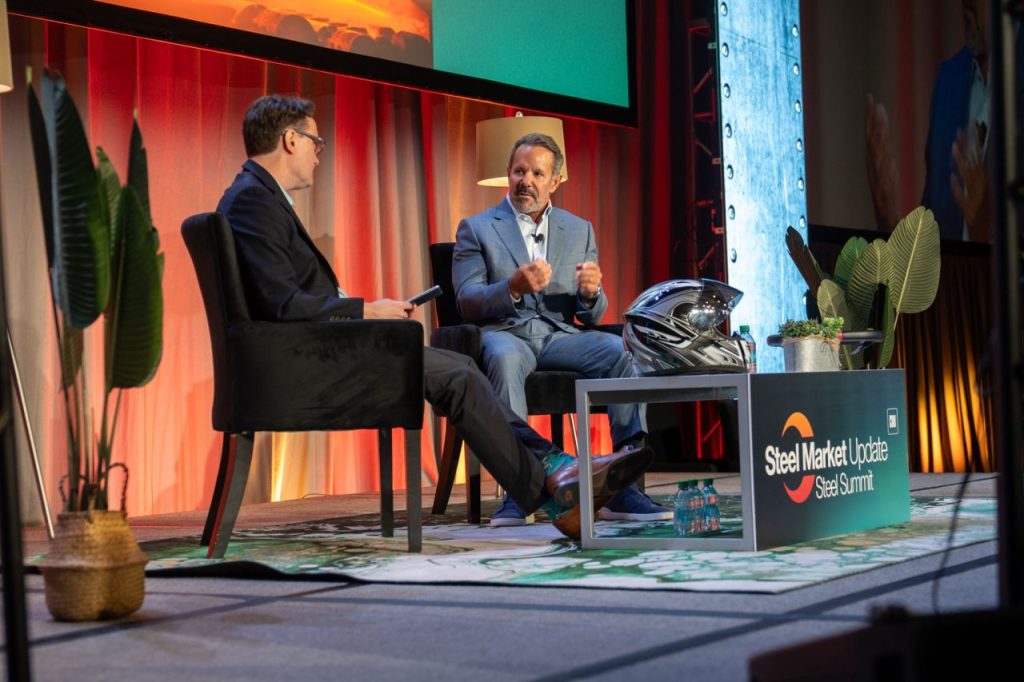
At the SMU Steel Summit in Atlanta on Tuesday, the CEO and executive chairman of Zekelman Industries disputed the view that tariffs broadly damage manufacturers or consumers. He pointed instead to continued profitability among steel-consuming businesses and substantial investment by US steel producers.
Tariff certainty supports capacity investment
In his assessment, a stable policy environment gives mills the confidence to build new facilities and expand processing capacity. On the other hand, a renewed influx of imports would weaken pricing and jeopardize long-term investment decisions.
He believes we’re getting into “a comfortable zone where we’re going to see continued investment. We’re going to see continued reshoring here. We’re going to see continued expansion of manufacturing.” And he said this is all “fantastic.”
Protection comes with supplier obligations
Zekelman additionally stated that domestic mills should not receive protection without obligations. They must also remain dependable suppliers to downstream customers, he noted. He cautioned that shortcomings in service or availability can push buyers toward imported material.
He sees robust downstream manufacturing—from infrastructure and energy to automotive components and data centers—as especially important because it creates substantially more employment per ton of steel than primary steelmaking.
North American trade tensions delay Ontario investment
On North American policy, Zekelman favors maintaining close commercial ties between the US and Canada, while noting Canada has relatively little room to escalate a trade confrontation with its larger neighbor.
The CEO said he wants to commit roughly $80 million to a fully automated warehouse at the company’s Atlas Tube plant in Harrow, Ontario. However, he said he’s holding off because Canada-US trade tensions have left too much uncertainty about the long-term outlook. But once there is sufficient policy and market certainty, “I’m pulling the trigger,” he said.
Call for tougher enforcement on unfair imports
Zekelman called for stronger action against unfairly traded imports, including circumvention, misclassification, and undervaluation, especially involving suppliers outside free trade arrangements. He again called out South Korea as a notable bad actor.
While noting he loves the tariffs on derivatives, he also advocated more targeted tariffs on downstream products rather than relying solely on country-level measures.
Higher prices preferable to oversupply
Zekelman acknowledged that tight supply and higher steel prices, as we’re seeing right now, can create pressure. He knows this is challenging for buyers, including his own company, which he estimates will purchase 3.6 million short tons (st) of steel in 2027. But he considers it preferable to an oversupplied market with weak prices, which he contended would discourage steelmakers from investing in new capacity. He noted that his companies are currently running at record pace.
Commenting on the currently elevated steel prices, he said he expects prices to ease as additional capacity becomes available. But he does not anticipate a return to historic hot-rolled coil levels of roughly $600-700 per short ton (st). He indicated a more sustainable range would be about $850-1,000/st, suggesting inflation and structurally stronger demand support a higher long-term price level.