• Skip to main content

    Analysis

    SMU Community Chat: Zekelman talks demand, data centers, and trade enforcement

    Written by Laura Miller


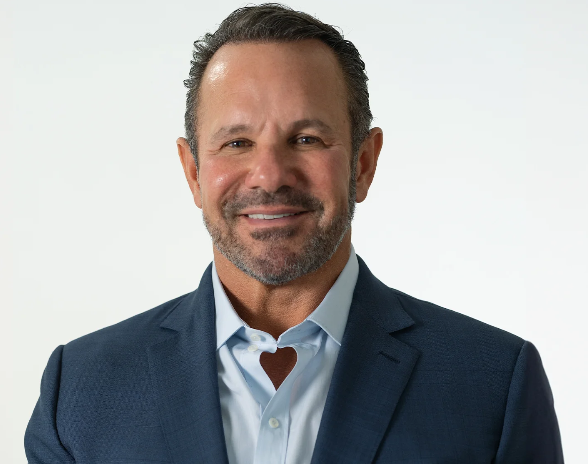
    Barry Zekelman showed up to last Wednesday’s SMU Community Chat as his usual self: energized, blunt, and unapologetically bullish on the US steel industry.

    Record year, rising pressure

    The chairman and CEO of Zekelman Industries opened the conversation by noting that 2026 has become “a really record year for us in shipments,” adding that across his divisions, “we’re stretching as much as we can to make as much product as possible… Pressure is a privilege.”

    Maruichi JV collapse and consolidation

    Zekelman addressed the collapsed Atlas Tube/Maruichi USA joint venture directly, saying the deal “would have been a spectacular deal not only for us but for them,” but ultimately it fell apart over “probably just a bit of a cultural difference.”

    He expects industry consolidation to remain selective, focused on efficiency rather than raw tonnage expansion.

    Commenting on Bull Moose Tube’s recent acquisition of Hanna Steel, Zekelman said, “I like to see consolidation of those lone players. I think that there’s going to be more of that.”

    Demand supercycle

    Demand, Zekelman stressed, remains robust. Data centers alone are driving a “probably a 20% boost” in electrical conduit demand. And he expects deployments to triple next year: “We’ve yet to see the real fruits of what’s going on today. It’s going to be massive.”

    He described pivoting a Z-Modular facility to skid fabrication because “demand is so robust.”

    Traditional markets are also strong. Fabricators “can’t keep up,” and tube lasers are sold out. “If you go out to try and buy a tube laser today, you’re probably 12 to 16 months delivery,” he commented. He tied the strength to “the long-term trade policy that we’re seeing here and things coming back here and reshoring.”

    On the border wall, he said the business is meaningful but lower margin. “There’s only so much of it you want to really take. … But we’re going to make sure that as an industry, we’re going to be able to supply what the administration needs,” he said.

    Imports down, South Korea in crosshairs

    When asked about imports, Zekelman was unequivocal: “I don’t buy imports… I’m going to live and die by that sword.”

    But he alleged that South Korea is “a huge problem,” saying Korean producers are “egregiously abusing our market… cheating on tariff values… ripping off our system.”

    He said to expect more trade cases moving forward: “You’re going to see them get smacked. I’m going to go at them with both barrels.”

    Long-term trade policy

    Zekelman argued that long-term trade policy is reshaping the industry. “This is a 15-year deal. … Imports are going down because we’re making more of it here,” he said. Current enforcement gives mills the confidence to invest for decades.

    He predicted separate bilateral trade deals with Canada and Mexico, saying, “Mexico will make the deal first. … Canada will be kind of forced to follow.”

    He also criticized Canadian trade positioning: “Canada has been too reliant on the US. … You’re not going to take 80% of your exports … and switch that overnight.” Still, he said the two countries “should get to an agreement long term” once “legitimate issues” are resolved.

    On reshoring and inflation, Zekelman argued higher prices are not a problem. “Steel has been the single most deflationary item on the planet. .. Steel deserves to make money.” He added, “I haven’t heard once, ‘Steel’s too high, I’m going to shut her down.’”

    He closed with a sweeping view of trade and energy policy. “It’s much bigger than just cutting out imports. … It’s a game strategy … and it’s playing out perfectly,” he remarked. In his 40 years in the industry, he’s “never seen as much great runway ahead of us.”

    SMU subscribers can watch a replay of the entire Community Chat here. And be sure to catch the Fireside Chat with Barry at the SMU Steel Summit 2026 in Atlanta next month.

    Laura Miller

    Read more from Laura Miller

    Latest in Analysis