
Commerce initiates new tin mill trade case
The agency found sufficient evidence to support the petitioners' allegations of dumping and subsidization and thus took up the case.


The agency found sufficient evidence to support the petitioners' allegations of dumping and subsidization and thus took up the case.
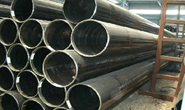
The Trump administration's invocation of the Defense Production Act authorizes the Department of Energy to use DPA tools to accelerate construction, expand domestic manufacturing capacity, and shore up critical supply chains – all areas with direct implications for steel.

SMU’s Mill Order Index (MOI) recovered in March, gaining some momentum after a marginal decline in February.

The prevailing sentiment for May is that #1 busheling and bundles are likely to increase. This may cause pig iron to continue its upward trajectory.

I haven’t done a deep dive into our sentiment data for a little while. And it’s timely to do so now. Why? Because we’re seeing what I’ll call the inverted yield curve of steel buyers’ sentiment.

It's cliche to say it. But spring traditionally brings new hope and green shoots—whether that's looking forward to vacations or increased business activity. While I viscerally share these positive feelings, I can’t help but thinking of three areas where I'm not feeling very hopeful. Namely, the US electrical grid, the national debt, and the Iran war.
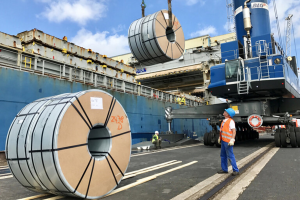
The price gap between US hot-rolled coil (HR) and landed offshore product tightened this week. The dynamic continues even as stateside and import prices diverged a bit vs. the prior week.
SMU’s latest steel buyers market survey results are now available on our website to all premium members.

Long products from Algeria are facing the wrath of the US legal system.

AMU: Ford and GM's results show earnings supported by tariff timing and mix, while volumes, inventory, and cash flow point to a constrained supply and uneven demand.

CRU: 62% Fe iron ore prices remained rangebound in April following the surge in the first half of March.
I attended the SAFE Summit in Washington, D.C., earlier this week. It was an out-of-this world event – and I mean that quite literally. There were serious discussions around building data centers in space.
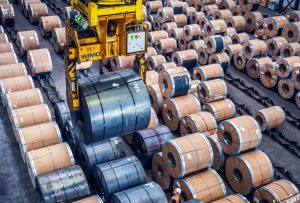
Steel mill lead times continue to hold at or near multi-year highs for both sheet and plate products, territory they have been in two months.

This week we saw low negotiation rates across all products, though coated products are the most negotiable and plate products are the least.

Anti-dumping and countervailing duties on imports of non-grain-oriented electrical steel (NGO or NOES) will stay on the books for another five years.

Last week, Steel Market Update and CRU hosted our inaugural VIP Briefing in Chicago ahead of the Scouting America Metals Industry Dinner.

Nucor executives said US steel demand remains stable, with pockets of strength in data centers, energy, border fence work, and infrastructure.

The US domestic scrap market for May is forming a lightly bullish consensus opinion among the seller community.
Nucor has increased its consumer spot price (CSP) for hot-rolled (HR) coil to $1,065 per short ton (st), a $10/st increase from last week.

Imports of various iron and steelmaking raw materials are eligible. These include pig iron, direct-reduced iron (DRI)/hot-briquetted iron (HBI), iron ore pellets, and ferroalloys, to name a few.
USMCA provides strong support for North American competitiveness. US manufacturing has lost considerable capabilities over the last few decades. “Cheating” by other countries is not the only reason. Nor is it even the most important reason
World crude steel production for the 69 countries reporting to the World Steel Association (worldsteel) totaled an estimated 159.9 million metric tons in March. Production jumped 12.8% from a shorter February, but was down 4.0% from March 2025, according to newly released data.
This piece was first published by SMU’s nonferrous sister publication, Aluminum Market Update. To learn about AMU, visit their website or sign up for a free trial. The aluminum market has spent much of the past month focused on supply risks tied to the Middle East. As more detail has emerged, the conversation has begun to shift away from aluminum […]

Baker Hughes' latest data shows the US rig count inching up by one while the Canadian count held steady in the week ended April 24.
Over the past few years, the slab market has changed significantly – Iran filled the position previously occupied by Ukraine before the war, Brazilian merchant slab supply fell, and the introduction of CBAM drew more interest into slab imports to the EU.
The price gap between US hot-rolled coil (HR) and landed offshore product tightened this week. The dynamic continues as both stateside and offshore prices have largely trended higher.

The countdown continues. 123. That’s how many days before Steel Summit 2026 kicks off on Aug. 24 in Atlanta. And it looks like there will be no shortage of things to talk about.

As the steel market works through the first month of Q2 and the spring outage season, the US HRC futures curve continues to reflect a market adjusting to tightening conditions. The recalibration of near-term expectations sets the stage for how the curve has developed in recent weeks.

The ferrous scrap export market from the US has been poised to rise further amid reluctance of their Turkish customers to increase prices beyond the recent bullish prices they paid earlier this month.
In a Final Thoughts las week, I asked “Got Steel?” And if you’re looking for spot tons in June, the answer still isn’t obvious.