Metalformers see stable to improving business conditions
Metalforming manufacturers in the US and Canada expect stable to improving economic conditions in the next three months.


Metalforming manufacturers in the US and Canada expect stable to improving economic conditions in the next three months.

Domestic raw steel production has strengthened since the start of the year and reached a four-year high in mid-February.

Iron ore shipments on the Great Lakes reached 2 million short tons in January.

Primary metals, machinery, fabricated metal products, appliances and components, and transportation equipment reported growth in February.

Sources in the domestic hot- and cold-rolled coil market said they are beginning to feel prices creeping up this week.

The Chicago Business Barometer continued to rise in February, marking its second month in expansion territory, according to Market News International (MNI) and the Institute for Supply Management (ISM).

Oil drilling slowed in the US and Canada last week, while gas drilling inched higher in the US.

December supply increased 7% from November to the third-lowest monthly rate of the year.

Entering 2026, tin has led a frenzied base metal rally during a historic phase for commodities. Frothy market conditions, driven by volatile investor positioning and shifting macro risk sentiment, pushed several metals—including tin—to record highs in January, before a sharp correction in February.

SMU polled steel buyers on an array of topics, ranging from market prices, demand, and inventories to tariffs, imports, and evolving market events.

Over the last month, incoming macro data was encouraging but did not signal a wholesale change in trajectory from uneven expansion within industrials.

Trade for many of the sheet and plate products we follow has fallen to multi-year lows through December.
The total amount of raw steel produced around the world recovered 5.5% from December to an estimated 147.3 million metric tons in January, according worldsteel.

Total construction starts edged up 0.7% in January to an annualized rate of $1.24 trillion, according to Dodge Construction Network.
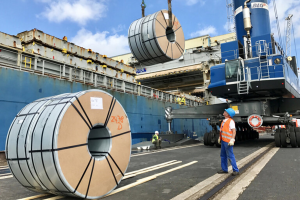
Steel imports slowed further in December and January to some of the lowest volumes recorded in recent years.

SMU’s Steel Demand Index slipped from earlier in the month, but remains above expansion territory, according to late-February indicators.
The amount of raw steel produced by US mills rose to the highest level recorded in over four years, according to AISI's latest figures.
North American auto assemblies recovered in January, up nearly 12% vs. December, though down more than 2% year on year (y/y), according to GlobalData.
The latest Baker Hughes rig count report shows steady drilling for oil and gas in the US, while drilling in Canada improved slightly.

SMU's Steel Buyers’ Sentiment Indices continue to show that steel buyers are optimistic for their businesses’ chances of success.
SMU’s latest steel buyers market survey results are now available on our website to all premium members.
SMU’s Mill Order Index (MOI) rose again in January, maintaining momentum from the month prior. The increase came as service center intake levels ticked up, supported by a jump in shipments, according to our latest service center inventories data.

The galvanized steel market is navigating price increases and longer lead times with a surer footing than in prior months.

The AIA/Deltek Architecture Billings Index (ABI) tumbled in January, as business softened further at architectural firms across the US.
Hot rolled and galvanized lead times are about half a week longer than they were three months ago, while production times for cold rolled, Galvalume, and plate products are one to two weeks longer.

US ferrous scrap prices continued to rise in February, scrap sources told SMU.
Since late 2025, mills have begun to hold a firmer stance on prices, tightening their grip at the start of this year and holding on since
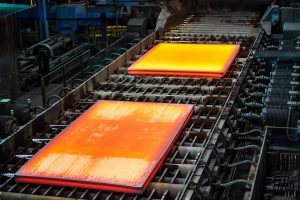
Once wintery weather gives way to sunnier spring conditions, plate sources foresee the market accepting the $50-60 per short ton spot price increases issued by Nucor Plate Group, Oregon Steel Mills, and SSAB.
US service centers’ flat-rolled steel supply declined in January, after trending higher in December. Shipping days of supply slipped to 58.5 on an adjusted basis at the end of January, according to SMU data.
Raw steel production ramped up last week to one of the highest weekly rates recorded in the last four years, according to recently released American Iron and Steel Institute (AISI) data.