
• Skip to main content

    Category: Market Data

    Drilling activity holds in the US, moves higher in Canada

    The latest tally of active drilling rigs held steady in the US for a fourth straight week, while activity rose further in Canada this week, according to oil and gas rig count data published by Baker Hughes. The US rig count remained unchanged at 603 rigs this week, maintaining a 17-month high. Compared with this time last year, 57 more rigs are in operation today. Canada’s count rose by six to 226 rigs this week, gaining ground for a second consecutive week. Activity is up from the same week of 2025, with 39 more rigs operating today.

    HR Futures: Basic story remains, but curve shifts

    In my last column, the HRC futures curve was pricing a sizable premium on near-term tightness while still pointing toward eventual normalization. Since then, that basic story has remained intact, but the shape of the curve has shifted meaningfully. Rather than simply moving higher and pushing the peak out by another month, as has largely been the pattern throughout this rally, the curve is now pricing a more pronounced and prolonged period of tightness, while the long end has remained relatively anchored, which previously had also been lifted with the rest of the curve.

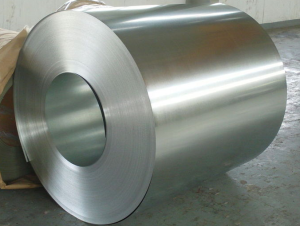
    galvalume steel coil

    SMU Survey: Mill willingness to negotiate price at lowest levels since 2021

    The majority of steel buyers responding to our latest market survey reported that mills continue to hold a firm grip on prices. The share of buyers reporting that mills were negotiable fell this week to the lowest rate seen in over five years. Every two weeks, SMU surveys service center and manufacturer buyers asking if mills are negotiable on new spot sheet and plate orders. In this week’s survey, just 3% of respondents said mills were willing to talk price to secure an order (Figure 1). This is down 11 percentage points from our mid-October survey.

    SMU flat-rolled market survey results now available

    The results of the latest Steel Market Update (SMU) flat-rolled market survey are now available on our website to all premium members. After logging in, look under the Data tab for Market Reports, and there you will find the Flat-Rolled Survey Results section. Previous survey results are also available on that page. If you need help accessing these results, or if your company would like to have your voice heard in our future surveys, contact smu@crugroup.com.

    Fall maintenance winding down, but key outages remain

    The busy fall maintenance season isn’t over yet. Mill outages have rolled along since September, squeezing an already tight sheet market heading into November and beyond. Another round of scheduled maintenance is approaching, with outages still ahead at North Star BlueScope, ArcelorMittal Calvert, and Nucor Berkeley. Much of the fall maintenance calendar is now in the rearview mirror. September and October outages included U.S. Steel’s Gary Works; Nucor’s Hickman, Decatur, Gallatin and Crawfordsville operations; Steel Dynamics’ Sinton and Columbus mills; Cleveland-Cliffs’ Dearborn hot strip mill; NLMK Portage; and Big River Steel Works.

    SSAB Americas sees strong US demand despite Q3 maintenance

    SSAB Americas delivered slightly lower shipments and operating results in the third quarter of 2026 due to a planned maintenance outage. Still, the company saw strong demand in key US end markets, specifically in heavy industrial segments. The Swedish steelmaker’s Americas division shipped 446,000 metric tons (mt) in Q3’26, down from 473,000 mt in the previous quarter but up from 440,000 mt in Q3’25, according to its 2026 third quarter report. SSAB President and CEO Johnny Sjöström described stable shipments vs. year-ago results. On an earnings conference call, he highlighted strong underlying demand and higher prices, “up higher than we guided for, by roughly 8%.” Results came in despite maintenance-related volume fluctuations related to a planned outage at the company’s mill in Montpelier, Iowa, during the quarter.

    US steel output falls 5.1% to lowest level since January: AISI

    Domestic raw steel production fell last week, dropping to the lowest output since January, according to the latest American Iron and Steel Institute (AISI) figures. The seesaw pattern continued for US production this past week, maintaining a trend seen for the past few months. Fluctuations have been so significant that in just the past two months, output has hit both a six-year high and a six-month low. And despite the week-to-week variations, output has mostly trended lower. Still, despite that overall decline, output to date in 2026 remains strong compared with recent years. AISI estimated total US raw steel mill output to be 1,774,000 short tons (st) in the week ending Oct. 24 (Figure 1). Production was 96,000 st (5.1%) below the prior week, driven by cuts in two of the five regions tracked by AISI.

    Global raw steel output down again in September

    Global raw steel production slowed for the fourth straight month in September, according to the latest figures from the World Steel Association (worldsteel). After falling 3.4% month over month (m/m) in August, the total volume of raw steel produced around the globe ticked down 1.2% to an estimated 142.4 million metric tons (mt) in September. Output was down just 0.1% year over year (y/y). On a 12-month moving average (12MMA) basis, annual production has averaged 149.3 million mt per month across the past year. This was down 1.6% y/y and was the lowest 12MMA since May (Figure 1). Before September 2025, annual output had generally hovered between 152 million mt and 154 million mt for over three years, similar to pre-pandemic levels.

    Drilling activity is flat again in the US, recovers in Canada

    The latest tally of active drilling rigs held steady in the US for a third straight week, while activity rose in Canada this week, according to oil and gas rig count data published by Baker Hughes. The US rig count remained unchanged at 603 rigs this week, maintaining a 17-month high. Compared to this time last year, there are 53 more rigs in operation today. Canada’s count rose by three to 220 rigs this week, recovering after a short-lived easing the prior week. Activity is up compared to the same week of 2025, with 21 more rigs operating today.

    Final Thoughts: Is the steel market now tighter than in 2021?

    "Now, the problem is no longer the price. The problem is having access to steel." That would have made a good lead. But I can’t take credit for it. Those (very quotable) words are from Cleveland-Cliffs Chairman and CEO Lourenco Goncalves during the steelmaker’s quarterly earnings conference call on Monday. For a while, I thought the shortages we'd been hearing about might be mostly a problem for small- and mid-sized buyers. But we’re seeing even some of the biggest steel buyers talking openly about supply problems.

    Metalformers grow more cautious in October

    Metalformers’ economic outlook softened in the Precision Metalforming Association (PMA) October Business Conditions Report. Still, the bulk of respondents continued to expect stable conditions. The monthly survey of 80 metalforming companies in the US and Canada provides an economic indicator for manufacturing over the next three months. “While this month’s survey reflects increased caution about the near-term economic outlook, the energy and investment on display at FABTECH this week tell a broader story about our industry’s resilience,” commented Mark Getsay, PMA’s managing director. Participation at the event, Getsay said, “demonstrates metalformers’ continued commitment to investing in new technologies, developing their workforce and strengthening their competitiveness for the future.”

    AIA: Architecture business conditions weaken further in September

    Architecture firms reported weaker business conditions in September, according to the latest Architecture Billings Index (ABI) release from the American Institute of Architects and Deltek. The share of firms reporting declining billings was the largest since May. The September ABI fell two and a half points from August to a four-month low of 44.7. The ABI has been in contraction for all but two months since August 2022, indicating continually weakening business conditions following the post-pandemic rally. The ABI is a typical leading indicator of nonresidential construction activity, leading construction spending by approximately 9–12 months.

    Steel market chatter this week

    The majority of buyers SMU polled this week expect prices to continue rising from here, supported by limited supply. Demand is said to be strong, with most remarking that it is stable to improving. Most say inventories are moving faster this year than last, attributed to tight supply, late mill deliveries, and generally leaner supply chains. Imports continue to appeal to many buyers on both price and availability, but lead times, tariffs, and other risks remain. Buyers are split on whether President Trump’s tariff policies are helping their businesses and whether they’re seeing manufacturing reshoring.

    Sheet and plate price gains accelerate as 2026 tons dry up

    Sheet and plate prices continue to push higher as mills charge a premium for what little spot tonnage remains for 2026, market participants said. SMU’s price assessment for hot-rolled (HR) coil now stands at $1,290 per short ton (st) on average, up $10/st week over week. HR price gains averaged $5/st w/w throughout July and August, with no changes in prices some weeks and gains of at most $15/st w/w. In September and October to date, in contrast, prices have increased every week—with the average gain at $11.25/st w/w and w/w gains as high as $20/st. Prices for cold-rolled and coated products continued to increase as well. SMU's price assessment for cold-rolled (CR) coil clocked in at...

    Drilling activity holds in the US, eases in Canada

    The latest tally of active drilling rigs held steady in the US and slowed in Canada this week, according to oil and gas rig count data published by Baker Hughes. The US rig count remained unchanged at 603 rigs this week, maintaining a 17-month high. Compared to this time last year, there are 55 more rigs in operation today. Canada’s count decreased by five to 217 rigs this week, slowing for the first time in four weeks. Still, activity is up compared to the same week of 2025, with 19 more rigs operating today.

    Fed Beige Book finds stronger steel, machinery demand but rising cost pressure

    Manufacturing activity improved in several Federal Reserve districts, but conditions remained mixed nationwide, according to the Fed’s Oct. 14 Beige Book report. Demand was strongest in steel, machinery, defense-related products, and data center infrastructure. Steel producers in the Cleveland District reported firm spot market demand. Data center, power-generation, defense, and aerospace projects supported orders. Long mill lead times kept customer inventories lean and prices high. Producers also reported higher orders from truck-trailer and light-vehicle manufacturers. International demand for hydrogen vehicle parts increased.

    SMU flat-rolled market survey results now available

    The results of the latest Steel Market Update (SMU) flat-rolled market survey are now available on our website to all premium members. After logging in, look under the Data tab for Market Reports, and there you will find the Flat-Rolled Survey Results section. Previous survey results are also available on that page. If you need help accessing these results, or if your company would like to have your voice heard in our future surveys, contact smu@crugroup.com.

    supply

    September service center shipments and inventories report

    US service centers’ flat-rolled steel supply increased marginally in September, gaining ground for only the second time all year. Shipping days of supply rose to 45.9 last month, according to SMU data. That figure marks a 3.7% increase from August. September’s result represents a modest gain after inventories hit a five-year low the previous month. But it’s nearly 16% below September 2025 levels. Sheet inventories have averaged ~45 shipping days of supply over the past six months. Flat-rolled inventories represented 2.18 months of supply in September, up 3.7% from August. However, the figure was 15.5% below September 2025. The month-on-month (m/m) gain in inventories resulted from a boost (+21.2%) in intake that was partially offset by a 5% increase in shipments.

    New York manufacturing activity reaches highest level since late 2021

    Manufacturing activity in New York State expanded sharply in October, according to the Federal Reserve Bank of New York's latest Empire State Manufacturing Survey. New orders, shipments, and unfilled orders rose, while delivery times lengthened and supply availability deteriorated further. The survey’s headline general business conditions index rose 18 points from September to 25.5 in October, the highest reading since December 2021. The new orders index climbed 21 points to 23.2, while shipments increased 16 points to 13.1. Unfilled orders also rose, with the index up eight points to 14.0. The delivery-times index reached 19.8, indicating significantly longer lead times.

    Apparent steel supply remains historically strong through August

    The volume of finished steel that entered the US market increased 1% from July to August to the second-highest monthly level recorded in the past four years, according to SMU’s analysis of recently released Department of Commerce and American Iron and Steel Institute data. Apparent steel supply is calculated by combining domestic mill shipments and finished US steel imports, then subtracting total US exports. It can be used as a proxy for domestic steel demand. Supply has remained historically strong since May, when it surpassed the 9 million st mark it had previously been beneath for four years.

    US shipments of heating and cooling equipment slow further in August

    Total shipments of heating and cooling equipment cooled further in August, according to the latest figures from the Air-Conditioning, Heating, and Refrigeration Institute (AHRI). After falling 11% month on month (m/m) in July, shipments slipped another 10% in August. The monthly pace marks the third-slowest shipment rate year-to-date. Shipments of water heaters, air conditioners, and heat pumps declined m/m, while warm-air furnace shipments picked up. Compared with a year earlier, only air conditioners and heat pumps increased.

    The words "Aluminum Market Update" in white against a dark blue background

    AMU: Edward Meir’s week in review and thoughts for the week of Oct. 12, 2026

    Base metals had a mixed week. Tin lost almost 4% on the week, finishing at $53,000/ton. Prices dropped to a low of $51,259/ton at one point. Aluminum was another loser, off by about 1.6% on the week. Investors are expecting more aluminum supply going forward, especially out of China and Indonesia. Copper prices tacked on 1.1%. They have now recovered more than half of the $700/ton loss sustained (over the course of a week) following reports/rumors in mid-September that US tariffs on refined copper imports might not proceed after all.

    worldsteel expects steady global steel demand in 2026, growth in 2027

    The World Steel Association (worldsteel) forecasts flat steel demand in 2026, as contraction in China and disruption in the Gulf region offset growth in India and other markets, including the US. Global demand is expected to rise slightly in 2027. The Brussels-based association’s Short Range Outlook (SRO) for 2026 pegs global steel demand at 1,722 million metric tons (mt), essentially unchanged from 2025. For 2027, worldsteel forecasts 1.7% growth to 1,752 million mt. “The trajectory we set out in April holds, but the anticipated recovery is proving slower and more gradual than we had expected,” commented Alfonso Hidalgo de Calcerrada, chair of the worldsteel Economics Committee. “Global steel demand is now forecast to be flat in 2026 rather than to grow modestly, and to grow by 1.7% in 2027 rather than 2.2%. Almost the whole of that revision is a China story,” Calcerrada added.

    AISI: US steel production slips again

    Domestic raw steel output declined last week, moving lower for a second straight week after seeing notable swings over the prior several weeks, according to the latest American Iron and Steel Institute (AISI) figures. Over the past six weeks, US production has fluctuated significantly, hitting a multi-year high and a six-month low. While the seesaw pattern has been extreme, output has mostly trended lower since peaking in May. And despite repeated declines in recent weeks, output remains strong compared to recent years. AISI estimated total US raw steel mill output to be 1,769,000 short tons (st) in the week ending Oct. 10 (Figure 1). Production was down 5,000 st (0.3%) from the prior week, driven by a decline in just one of five regions. So far this year, we have seen weekly production rise as high as 1,900,000 st in early September (a six-year high) and fall as low as 1,704,000 st at the start of the year.

    October scrap market chatter

    Every month, SMU polls scrap market participants on a variety of topics—including prices, business conditions, and what they think the future holds. We received the data and comments below last week, before the October market had entirely settled. And as it turns out, survey respondents mostly got it right. Broadly speaking, all survey respondents said demand was stable (56%) or improving (44%). None reported a decline in demand. We haven't seen this many people reporting improving demand since February.