
SMU Steel Demand Index falls back, remains in contraction
The SMU Steel Demand Index slackened from late October, remaining below expansion territory, according to SMU's mid-November indicators.


The SMU Steel Demand Index slackened from late October, remaining below expansion territory, according to SMU's mid-November indicators.

SMU’s price indices increased across the board this week, reaching new multi-month highs.
Flack Global Metals announced two leadership appointments to drive the commercial strategy of the Scottsdale, Ariz.-based service center and industrial platform.
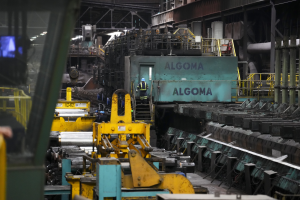
Algoma Steel plans to continue its transition to electric-arc furnace (EAF) steelmaking using the CA$500 million in loans from the Ontario provincial and Canadian federal governments.
SMU’s Mill Order Index (MOI) surged in October after a notable decline the month prior. The recovery came as service center on order inventory totals picked up, supported by a slight uptick in shipments, according to our latest service center inventories data.
U.S. Steel’s Arkansas facilities provided more than $2 billion to local and state economies in fiscal year 2024, according to a newly released economic impact report.

Domestic steel production dipped last week, but was still above the year-to-date weekly average and the same week a year earlier.

Manufacturing activity in New York state was slightly elevated in early November.

US service centers’ flat-rolled steel supply edged lower for the third straight month, reaching 53.3 shipping days of supply on an adjusted basis at the end of October, according to SMU data.

The Latin American Steel Association (Alacero) has chosen Máximo Vedoya as its new president.
A Tenaris subsidiary, Steel Recycling Services, has acquired the Beaver Falls, Pa., scrap processing yard of SA Recycling.

Nucor has increased its consumer spot price (CSP) for hot-rolled (HR) coil for a fourth consecutive week. Now at $910 per short ton (st), up $15/st from last week.

US shipments of heating and cooling equipment fell 7% in September from August to the lowest monthly rate of the year, according to the latest data released by the Air-Conditioning, Heating, and Refrigeration Institute (AHRI).

The latest Baker Hughes rig count report showed oil and gas drilling improved in the US this past week, while Canada saw its rig count decline.

Contract talks for U.S. value-added aluminum products are reaching a critical stage, with billet, primary foundry alloys, and wire rod upcharges diverging as buyers and producers race to finalized 2026 pricing.
SMU’s latest steel buyers market survey results are now available on our website to all premium members. After logging in at steelmarketupdate.com, visit the pricing and analysis tab and look under the “survey results” section for “latest survey results.” Past survey results are also available under that selection. If you need help accessing the survey results, or if […]

US sheet market participants say demand for hot- and cold-rolled coils has not increased, leaving them confused by mill price increases and average lead times.
Steel mill lead times extended marginally this week on most sheet products but declined for plate, according to responses from SMU’s latest market survey.
Just over half of the steel buyers who responded to our market survey this week reported that domestic mills are willing to talk price on new spot orders. Mills have begun to hold a firmer stance on prices over our last two surveys.
NLMK USA is aiming to increase base prices on all products, effective immediately.

The price spread between HRC and prime scrap has widened for a second month, based on SMU’s most recent pricing data.
Plate market participants anticipated price increases from domestic producers. For weeks, sources predicted an increase. No one, however, was sure of timing due to subdued demand. Following the news that JSW increased its spot market plate prices by $40 per short ton (st), sources said they anticipate more mills will begin rolling out increases. From […]

US-flagged shipments of iron ore on the Great Lakes are on the decline. Ore shipments in October were the lowest they’ve been for that month in five years.
SMU's sheet and plate steel prices moved higher in unison this week.
US steel and manufacturing industries say they face a new set of uncertain market factors due to the government’s shutdown and the potential repeal of “reciprocal” tariffs.

ArcelorMittal sees green shoots in North America despite tepid demand.
Steel Dynamics Inc. announced Matt Bell as the new head of the company’s metals recycling platform, OmniSource.
JSW Steel USA aims to increase steel plate prices by at least $40/short ton.
Flat-rolled metals processor and pipe manufacturer Friedman Industries achieved record sales volume in its fiscal second quarter.
Domestic steel production increased last week, according to the latest figures from the American Iron and Steel Institute (AISI). Production has trended higher since mid-October, though it is not as strong as output seen over the summer months.