
Canada

April 30, 2026
ArcelorMittal reports Q1 sales supported by higher prices in North America
Written by Kristen DiLandro
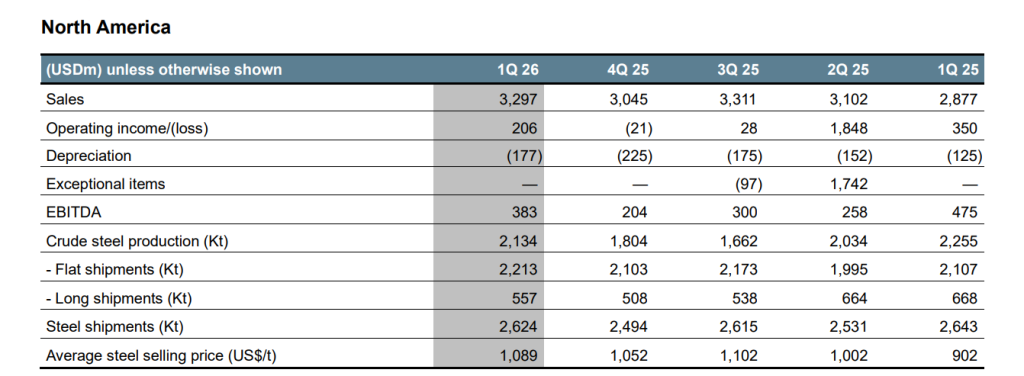
ArcelorMittal’s North American operations posted higher sales results sequentially and year over year (y/y) in its Q1 earnings report.

The North American segment of the Luxembourg-based steelmaker reported 8.3% higher sales in Q1’26 compared with the previous quarter. The steelmaker credits higher average selling prices, up 3.5% from Q4, and a jump in steel shipments, up 5.2%.
The company’s operating income increased to $206 million in the first quarter, up from a $21 million loss in the previous quarter. However, compared to the year-ago quarter, operating income decreased by ~41%.
“The ramp-up at Calvert, the EAF is progressing. In quarter one, we were running a little bit above 20% to 25%. We are progressing,” said ArcelorMittal CFO and EVP Genuino Christino on an earnings conference call on Thursday. He added, “We believe that by the end of quarter two, we should be at much higher levels. We remain optimistic that we’re going to be getting close to ending this ramp-up phase by the end of this year.”
Christino also told callers the company is running at full capacity in North America as the Calvert EAF continues its ramp-up. The executive noted Mexico and Canada’s shipments and production will be improving.
In its earnings statement, the company noted the restart of its Mexico-based long products blast furnace, following preventive maintenance, contributed to its sequential increase in North American steel production. Its crude steel production increased by 18.3% to 2.1 million metric tons in Q1’26, as compared with 1.8 million mt in Q4’25. However, overall production slipped by 5.4% y/y.
Asked whether the company still faced headwinds from tariffs and whether it expects any relief when the USMCA is renegotiated, Christino said it was too early to comment.
“The only thing I can say is that we hope that the outcome will be one that we feel that we can operate as a single block,” he said.
Adding, “I think for us, for our business, what would be ideal is that we have Mexico, we have Canada putting the same barriers against the imports that we have similar protection as we have in the United States. Then the materials can flow.”