North American auto assemblies improve in February
After slumping in December to the lowest total since July 2021, February assemblies further expanded on January’s growth.


After slumping in December to the lowest total since July 2021, February assemblies further expanded on January’s growth.
US light-vehicle (LV) sales increased to an unadjusted 1.22 million units in February, a 9.9% gain over January but 0.7% behind year-ago totals, according to US Bureau of Economic Analysis data.

Steel prices were stable to higher this week for the second consecutive week across the sheet and plate products tracked by SMU. Three of our price indices increased from the previous week, while two held firm.

The HRC vs. prime scrap spread increased again in March.
SDI expects energy, non-residential construction, and automotive to continue to drive demand.
After a modest recovery in February, business activity in New York state’s manufacturing sector declined sharply in March, according to the latest Empire State Manufacturing Survey from the Federal Reserve Bank of New York.

Which is more important: producers or consumers? New (and arbitrary) steel and aluminum tariffs took effect last Wednesday. Based on the Section 232 trade restrictions initially imposed in 2018 – and kept by the Biden administration – they abrogate agreements between the US and Canada, Mexico, the UK, the EU, Argentina, Brazil, and Australia. They […]
US rig counts continue to hover slightly above multi-year lows, while Canadian activity is entering a seasonal decline after recently reaching a seven-year high.

International trade attorney Alan Price sat down with SMU to unpack the latest developments in Trump’s tariff merry-go-round.
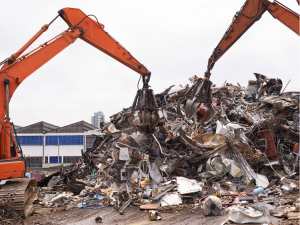
Ferrous scrap prices rose across the board in March as the market adapted to short supply and the volatile tariff situation, sources told SMU.

President Trump’s tariffs are aimed in large part at bringing manufacturing back to the United States. In theory, it’s simple enough: Want to avoid a big tariff? Make it in the US!
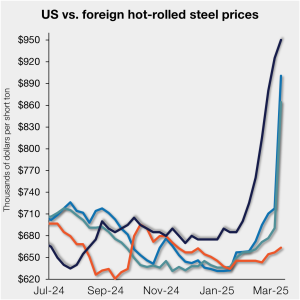
Domestic hot-rolled (HR) coil prices moved higher this week, still largely outpacing increases seen in offshore markets. But the reinstatement of undiluted Section 232 tariffs on steel on March 12 cut the ballooning premium stateside prices had gained on most imports on a landed basis. The premium stateside tags had over prices abroad stood at […]
The United States has officially reinstated undiluted Section 232 tariffs on steel and aluminum as of Wednesday, . All imports of the metals, as well as some derivative products, now face a 25% tax when entering the US.

Canada and the European Union are retaliating against what they deem to be unjustified tariffs on steel and aluminum by the United States.
Domestic steel trade associations, manufacturing groups, and the United Steelworkers (USW) union had mixed reactions to the implementation of new Section 232 tariffs without exclusions on Wednesday. Trade groups representing steel mills broadly supported President Trump’s actions, while the USW and some groups representing manufacturers were more critical. AISI Kevin Dempsey, president and CEO of […]

Uncertainty has remained a dominant theme in the US ferrous derivatives markets over the past month. And the Trump administration's tariffs on steel and aluminum are still top of mind for market participants.
What are steel buyers saying this week about prices, demand, the import market, the evolving tariff situation, and more?

Ternium Mexico wants the Commerce Department to delay making its final decision in the ongoing corrosion-resistant steel dumping investigation.

With the tariff craziness showing no signs of abating, we take you on a tour of the current situation.
After over a month of increases, steel prices paused this week for some of the products tracked by SMU. Three of our price indices continued to climb, while two held steady from the prior week.
“CBP expects full compliance from the trade community for accurate reporting and payment of the additional duties. CBP will take enforcement action on non-compliance," the agency said in a March 7 bulletin.
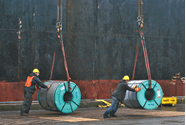
US steel exports recovered to a five-month high in January after having fallen to a two-year low in December. This growth follows four consecutive months of declining exports.
After an unusually long period of waiting for the March scrap market settlements, several mills are now actively buying ferrous scrap. And it looks like prices are ticking up.
Section 232 tariffs are expected to go into effect March 12.
The penalties are expected to be reinstated on Wednesday, March 12.
The administration’s trade rollercoaster is moving at record speeds, running along the rails of innovation and expansion. But it can be confusing and difficult to keep up with. US manufacturers that follow these developments closely could benefit from the ride. Companies that miss new updates, or fail to accurately interpret their duty liability, could be left feeling queasy. Some rollercoasters are not for the faint of heart, and this one is a bit like Space Mountain. We are all riding without much ability to see the next turn or drop.
Domestic shredded scrap has experienced a renaissance in pricing since January. And that increase had caused traditional exporters to ship their material to domestic users instead of overseas. But with recent changes, this cycle may end with the resurgence of export demand and continued foreign exchange fluctuations.
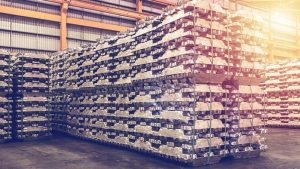
Imposing country-of-origin duties plus the upwardly revised Section 232 duties would create an untenable value for Midwest P1020. Modeling the extreme outcome of 25% country-of-origin tariffs plus 25% Section 232 tariffs could put Midwest physical premiums as high as $0.65 per pound. No, that is not a typo: $0.65 per pound! Primary aluminum supply chains would rotate from importing Canadian aluminum to importing it from India, the Middle East, or other very distant origins. That is worrisome for manufacturers.
Steel imports ended 2024 on a low note, with November trade falling to a one-year low and December seeing a modest 3% recovery. Then as the new year began, import volumes spiked.
SMU interviews JSW USA CEO Robert Simon.