CRU: Iron ore falls to a 7-month low on escalating trade war
Iron ore prices were largely steady in March, hovering around $100–102 per dry metric ton (dmt) in a quiet market.


Iron ore prices were largely steady in March, hovering around $100–102 per dry metric ton (dmt) in a quiet market.

Nearly half of the steel buyers responding to this week’s SMU market survey say domestic mills are showing increased willingness to negotiate pricing on new spot orders. This marks a significant shift from the firmer stance mills held in prior weeks.

Current Sentiment Index dropped six points to +42 this week compared to two weeks earlier. It has fallen in every successive survey since reaching a 2025 high of +66 on Feb. 19.

A modest week-to-week change in HR price understates a huge swing in expectations.
Steel prices slipped again this week, with all five of SMU’s sheet and plate indices trending lower for the second week in a row.
Steel service center shipments and inventories report through March 2024.

Water heater and air conditioner/heat pump shipments climbed higher in February, while warm-air furnace shipments eased month over month, according to the latest data released by the Air-Conditioning, Heating, and Refrigeration Institute (AHRI)
Raw steel mill production is now at the second-highest weekly total recorded so far this year, nearing one of the strongest levels logged over the past six months, according to the American Iron and Steel Institute (AISI).
There are several other tariffs implications concerning the ferrous raw materials sector. In addition to tariffs on DRI/HBI imports, there will be also be a tariff on raw materials imported to domestically based metallics producers.
Nucor lowered its weekly consumer spot price (CSP) for hot-rolled (HR) coil this week after holding prices steady for the past two weeks.

What happens when ChatGPT meets SMU's Market Chatter? No, this is not an idea for the latest Hollywood blockbuster. Then again, with what Hollywood is putting out these days, Chatter Meets Chat might just turn out to be a hit. Rather, it’s that old idea of putting theory into practice. Recently, I conducted an interview with Doug Schrock, managing principal of AI at public accounting and consulting firm Crowe. He gave some tips on how to implement AI into your business.
The constant flow of information we all receive can be a bit overwhelming, but SMU is here to help with a weekly snapshot.
Oil and gas drilling activity eased for the third consecutive week in both the US and Canada this week, according to Baker Hughes. US rig counts remain just above multi-year lows, while Canadian activity continues its seasonal slowdown.
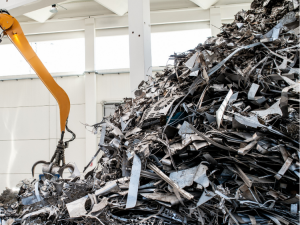
The price spread between hot-rolled coil (HRC) and prime scrap narrowed in April after widening since January, according to SMU’s most recent pricing data.
The amount of finished steel that entered the US market in February receded from January’s peak, according to our analysis of Department of Commerce and American Iron and Steel Institute (AISI) data.
Cleveland-Cliffs opened its May order book for spot material at $975 per short ton (st).
The Trump tariff drama continues.
The volume of steel exported from the US declined in February, reversing January’s surge, according to the latest US Department of Commerce figures. This comes just two months after export levels had fallen to a two-year low.
SMU polled steel buyers on an array of topics this week, ranging from market prices, demand, and inventories to imports and evolving market events. We are sharing some of the comments we collected.
Let’s just say the impact of the latest tariffs on the domestic steel market is uncertain at best.
This week is the first time all of our indices have moved lower in unison since July 2024.
US steel imports returned to normal levels in February after climbing to a near three-year high in January, according to finalized trade data published by the US Commerce Department. March license data suggests imports have remained within this normal range.
The imposition of reciprocal tariffs by President Trump as explained on Wednesday afternoon has rattled virtually every market. This policy has some advantages for the steelmaking sector, but there may be some disadvantages that were not considered, especially for the EAF producers of flat-rolled.
Domestic steel mill production was estimated at 1,656,000 short tons (st) for the week ending April 5 (Figure 1), down 41,000 tons or 2.4% from the previous week.
Nucor’s consumer spot price (CSP) for hot-rolled (HR) coil remains unchanged again this week. The pause over the past two weeks stands in contrast to the nine-week rally that saw the company increase prices regularly by double-digits. The Charlotte, N.C.-based steelmaker told customers on Monday that this week’s consumer spot price (CSP) for HR coil […]

Respondents to the SMU Survey weigh in on the steel landscape.
The constant flow of information we all receive can be a little overwhelming, but SMU is here to help with a snapshot of the week.
SMU’s Buyers’ Sentiment Indices experienced multi-point declines this week, though both remain positive and continue to reflect optimism among steel buyers for their companies' ability to be successful.
The number of active oil and gas drill rigs declined this week in both the US and Canada, according to the latest data from Baker Hughes. US rig counts remain just above multi-year lows, while Canadian activity continues its seasonal slowdown.
Scrap buyers sound off on prices, demand, etc., in SMU's monthly scrap survey.