• Skip to main content

    Market Segment

    Big River Steel Grand Opening


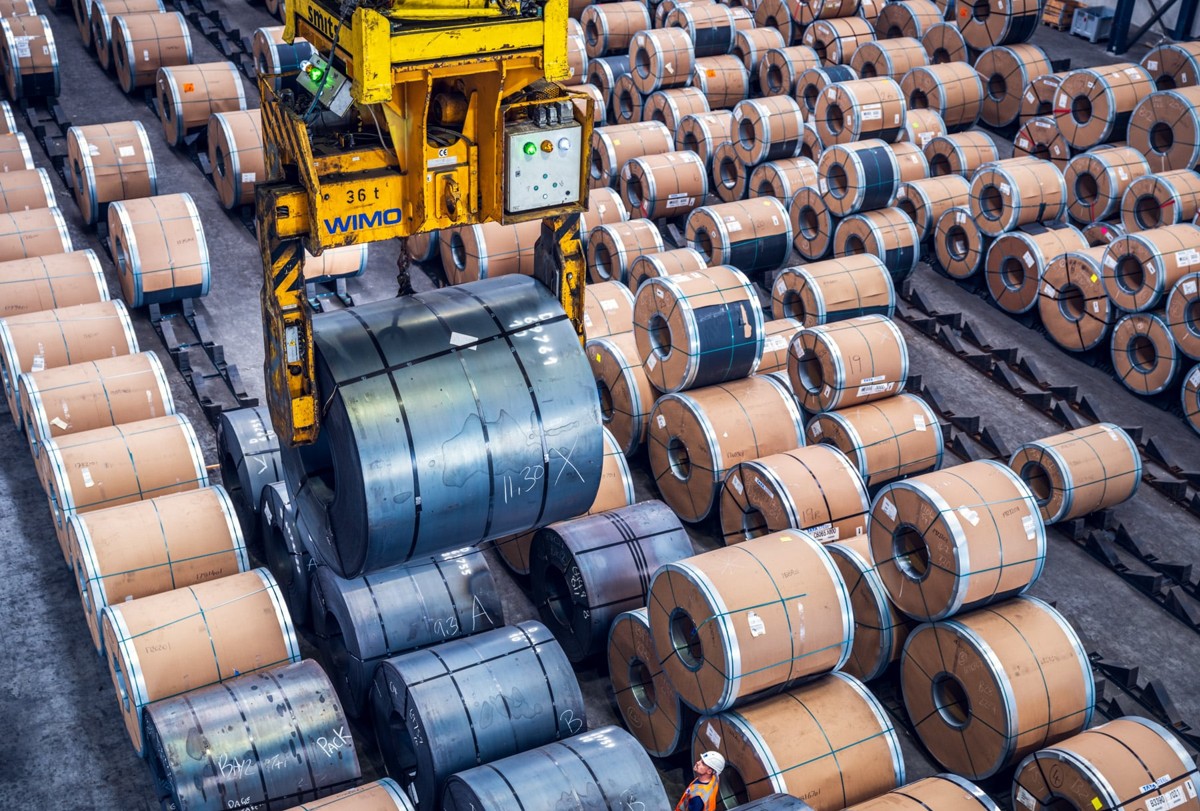
    Big River Steel, the newest and most technologically advanced scrap recycling and steel production facility in the world, is officially open for business.  

    According to David Stickler, Chief Executive Officer of Big River Steel, the first line went operational nineteen months after groundbreaking: “A world record time to start up a mill. We’ve invested $1.3 billion in property, plant and equipment and this is the largest investment in the state of Arkansas history. We also are the first steel mill in the world to be a member of the Center for Collision and Safety Analysis…we’re sitting in the same room with the likes of Ford, General Motors, Hyundai, Kia, Mercedes, helping them design their next generation of cars, using the next generation of steels.”


    Latest in Market Segment

    Mesabi Metallics chooses Midrex for Iowa mill DRI module

    Mesabi Metallics, part of the Essar Group, has picked Midrex Technologies to supply the direct-reduced iron (DRI) component of its planned $15 billion steelmaking complex in Iowa. Recall the company announced plans to build a 10-million-ton-per-year mill, which would make it by far the largest steel plant in the US. The first phase is planned for 7.5 million tons of steel per year, with first production planned for 2030. Midrex’s Flex technology will be used for the DRI portion of the project, producing hot DRI for direct feed to the adjacent electric-arc furnaces (EAFs), as well as hot briquetted iron (HBI).

    Fed Beige Book finds stronger steel, machinery demand but rising cost pressure

    Manufacturing activity improved in several Federal Reserve districts, but conditions remained mixed nationwide, according to the Fed’s Oct. 14 Beige Book report. Demand was strongest in steel, machinery, defense-related products, and data center infrastructure. Steel producers in the Cleveland District reported firm spot market demand. Data center, power-generation, defense, and aerospace projects supported orders. Long mill lead times kept customer inventories lean and prices high. Producers also reported higher orders from truck-trailer and light-vehicle manufacturers. International demand for hydrogen vehicle parts increased.

    Nucor Plate Group doubles fuel surcharge to $40/ton for November

    Nucor Plate Group said it will increase its fuel surcharge to $40 per short ton (st) next month, effective for all shipments beginning Nov. 1. The Charlotte, N.C.-based steelmaker first said in April that the fuel surcharge was necessary to address rising costs, initially setting the surcharge at $10/st on April 16. The company had previously maintained the $10/st surcharge rate for four straight months through Aug. 17. But it has since doubled its rate in back-to-back months—increasing its surcharge to $20/st in September, followed by its Oct. 15 notice to $40/st. “We remain committed to providing reliable service and transparency as we adapt to changing market dynamics,” Nucor said in a letter to customers on Thursday evening. Nucor announces the surcharge amount on or about the 15th of each month for shipments beginning the following month.

    SMU Survey: Mill negotiation rates rise on sheet, fall for plate

    Sheet buyers found mills slightly more negotiable on price this week, while plate buyers thought mills were less flexible on spot price tags, according to our latest survey data. Every two weeks, SMU surveys service center and manufacturer buyers to see whether mills will negotiate on new spot sheet and plate orders. In this week’s survey, 14% of respondents said mills were willing to talk price to secure an order, up three percentage points from two weeks earlier (Figure 1). This is the highest reading since July 8, when the rate stood at 18%.

    supply

    September service center shipments and inventories report

    US service centers’ flat-rolled steel supply increased marginally in September, gaining ground for only the second time all year. Shipping days of supply rose to 45.9 last month, according to SMU data. That figure marks a 3.7% increase from August. September’s result represents a modest gain after inventories hit a five-year low the previous month. But it’s nearly 16% below September 2025 levels. Sheet inventories have averaged ~45 shipping days of supply over the past six months. Flat-rolled inventories represented 2.18 months of supply in September, up 3.7% from August. However, the figure was 15.5% below September 2025. The month-on-month (m/m) gain in inventories resulted from a boost (+21.2%) in intake that was partially offset by a 5% increase in shipments.