• Skip to main content

    Mexico

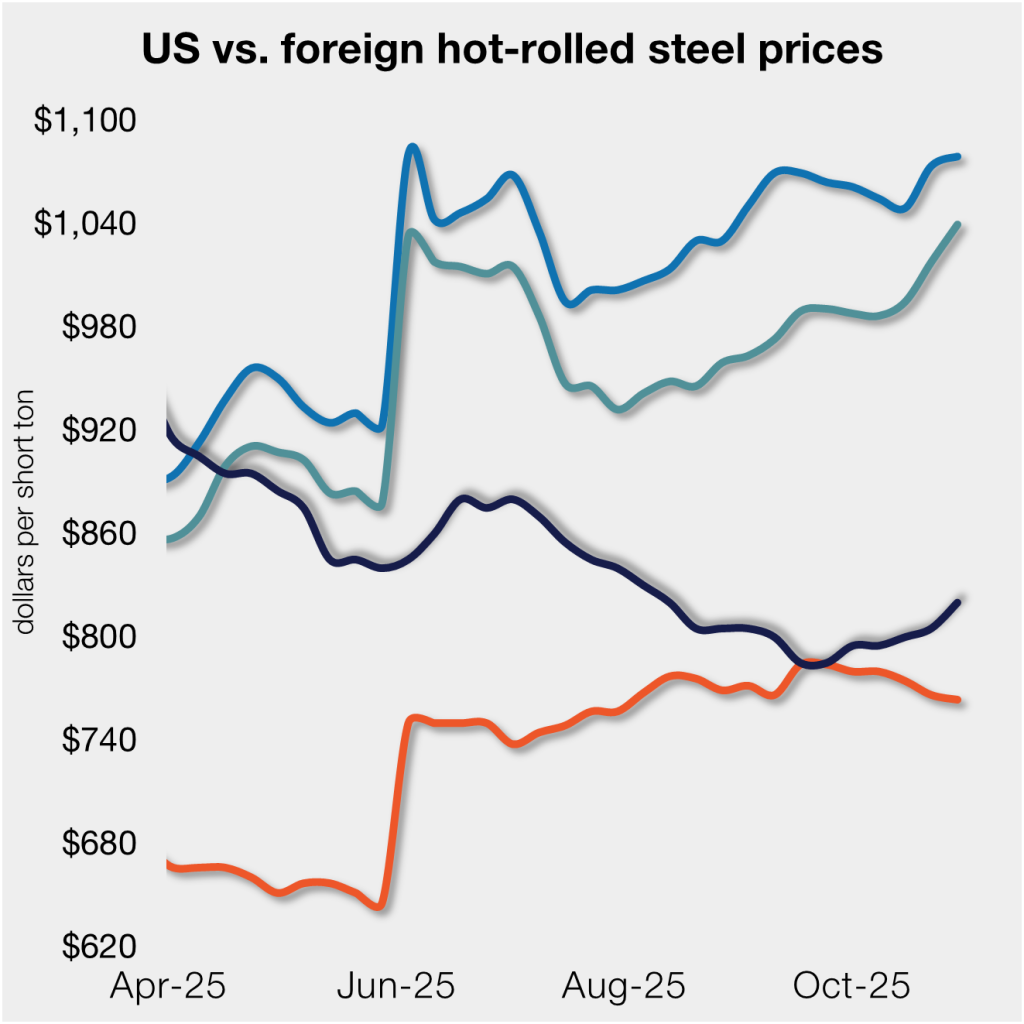
    Price gap between US HRC, most imports narrows slightly

    Written by David Schollaert


    SMU’s average price for domestic hot-rolled (HR) coil was $820 per short ton (st) this week, $15/st higher week over week (w/w). In offshore markets last week, prices were either down or didn’t rise by as much.

    The dynamic slightly narrowed the price gap between stateside hot band and landed offshore product. But with the 50% Section 232 tariffs, most imports remain more expensive than domestic material.


    David Schollaert

    Read more from David Schollaert

    Latest in Mexico

    Court turns to creditor consortium after AHMSA auction bid falls through

    The leading bidder for bankrupt Mexican steelmaker Altos Hornos de Mexico (AHMSA) failed to provide the required earnest money guarantee to confirm its $1.4 billion bid for the steelmaker and its Minera del Norte (MINOSA) mining assets. The court will now consider selling the assets to a consortium of creditors. After the bankruptcy auction on Sept. 25, the court overseeing the proceedings granted the leading bidder, Construcciones e Ingenierías Electromecánicas SA de CV (CIESA), ten days to provide a bid bond of $56.3 million. The Oct. 13 deadline passed without any prequalified bidders, including CIESA, providing the required amount. In fact, the court said CIESA deposited only 5,000 Mexican pesos (US$271).

    US steel imports reach 15-month high in August, rise further in September

    Steel imports into the US crept higher in August and continued climbing in September, according to the Department of Commerce's latest import license data. August imports rose 3.4% from July to a 15-month high. September license data collected through Oct. 5 shows another 6.2% month-on-month increase. Imports continue to recover from some of the lowest levels since 2020, seen late last year through February this year.

    Price on Trade: Milwaukee Framework is a step forward on steel excess capacity

    Members of the Global Forum on Steel Excess Capacity (GFSEC) met in Wisconsin last week and unveiled an updated plan to combat market-distorting excess capacity. The Milwaukee Framework adds color to the 2017 “Berlin Principles.” It is also a positive step in the ongoing battle against global steel market distortions. However, the Framework is only a guidepost. It must be implemented correctly to make an impact as new problems loom.