
Final Thoughts: SAFE and supply chains
I attended the SAFE Summit in Washington, D.C., earlier this week. It was an out-of-this world event – and I mean that quite literally. There were serious discussions around building data centers in space.


I attended the SAFE Summit in Washington, D.C., earlier this week. It was an out-of-this world event – and I mean that quite literally. There were serious discussions around building data centers in space.
The US Department of Commerce has released new procedures allowing certain steel and aluminum producers in Canada and Mexico to qualify for reduced Section 232 tariffs – but only if they commit to building new primary production capacity inside the United States.

USMCA provides strong support for North American competitiveness. US manufacturing has lost considerable capabilities over the last few decades. “Cheating” by other countries is not the only reason. Nor is it even the most important reason

Core to the negotiations will be the need for a fundamental rebalancing of the relationship between the United States, Mexico, and Canada - especially when it comes to the steel and autos supply chain.
The Commerce Department has determined that allowing anti-dumping and countervailing duties on non-oriented electrical steel (NOES) imports from a handful of countries to expire would result in continued dumping and subsidization at significant levels.
Remember the “Got Milk?” advertising campaign of the 1990s. Maybe we should start a “Got Steel?” campaign. Or maybe “Got Spot Tons?” would be more accurate, if less catchy.
No doubt, events will scramble the status quo. Meanwhile, the global systems that have prevented major wars for 80 years are sagging.

A coalition of US wire rod producers has filed a petition seeking countervailing duties on carbon and alloy steel wire rod from Algeria.
U.S. Steel and the United Steelworkers filed anti-dumping and countervailing duty petitions with the US Department of Commerce and the US International Trade Commission on Thursday.
The trade case investigating large-diameter graphite electrodes is progressing after an International Trade Commission (ITC) vote.
The US Court of International Trade (CIT) has upheld the Commerce Department’s decision to apply adverse facts available to Nippon Steel in the 2018-2019 administrative review of hot-rolled steel from Japan.
The Commerce Department has set final anti-dumping and countervailing duties (AD/CVDs) on rebar from Algeria, according to filings in the Federal Register.
The president’s April 2 proclamation restructures how derivative products are classified, valued, and tariffed – a shift that industry groups say will close loopholes but could raise costs for certain downstream imports.
The petitions allege that foreign producers are selling seamless and welded OCTG at unfairly low prices and, in Austria’s case, benefitting from countervailable subsidies.
The Trump administration has implemented changes to its steel and aluminum tariff framework that alter how duties are applied to imported manufactured goods, according to an April 2 presidential proclamation.
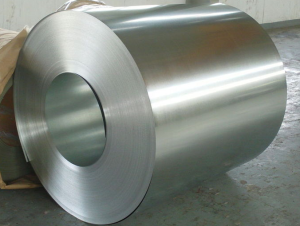
The Commerce Department has launched another duty circumvention inquiry targeting coated steel imports at the request of two US mills.
With global capacity projected to increase by 138 million mt by 2028, the gap between capacity and demand will continue to grow over the next three years. And that assumes the conflict in Iran does not stifle global demand.
The US Department of Commerce has launched two trade investigations to determine if certain corrosion-resistant (CORE) steel imports are being transshipped through Indonesia to avoid paying anti-dumping and countervailing duties (AD/CVDs).
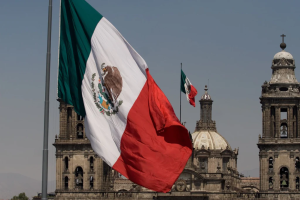
Mexico’s Ministry of Economy issued a preliminary ruling in its anti-dumping case on hot-rolled steel from China and Vietnam. The government found evidence of price discrimination and imposed provisional duties on a wide range of hot-rolled flat products, including coils, sheet, strip, and plate.
The public will soon have the opportunity to request Section 232 tariff coverage on imports of automobile parts.
The ongoing Middle East conflict, the resurgence of broad-based tariffs under Section 122 of the Trade Act of 1974, and the looming US midterm elections are not isolated developments. Rather, they form a kind of feedback loop in which each issue influences, and is influenced by, the others.
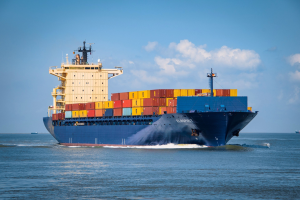
The UK will reduce steel import quotas and raise outside caps to 50%.
The Steel Manufacturers Association’s (SMA's) Philip K. Bell believes President Trump’s steel tariffs have been effective so far, and thinks we should remain “solution-focused” regarding the upcoming USMCA review.
The office of the US Trade Representative has opened a major Section 301 investigation into structural excess capacity across global manufacturing, with steel and aluminum at the center of the inquiry.
With the Iran war approaching its third week, the future course and scope of the conflict remain uncertain. Even so, while the human costs are the most immediate and tragic, the global economic implications have already proven to be significant.
An administrative review of the anti-dumping duty (AD) order on heavy-walled rectangular pipe and tube from Mexico has found evidence of continued dumping by Mexican companies.
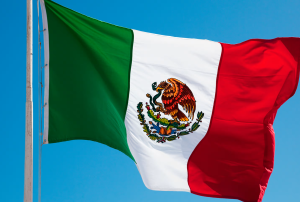
Mexico’s Secretary of Economy is conducting ‘Operation Clean-Up,” inspecting suspicious steel companies to verify compliance with rules of origin.
Since the Supreme Court struck down President Trump’s use of IEEPA tariffs, a judge at the Court of International Trade (CIT) has ordered refunds of all IEEPA tariffs. Still, Trump is trying again with a Section 122 global tariff.
The Council on American Steel Trade (CAST) introduces itself as “pro-USA steel manufacturing and is led by trade experts representing every level of the American steel supply chain – from iron ore mining and integrated and mini-mills to processors, downstream steel-derivative producers, and the hardworking men and women of America’s steel workforce.”
Last week, the California Air Resources Board (CARB) conducted a public hearing where it ratified the state’s initial greenhouse-gas (GHG) emissions reporting and climate risk disclosure regulations.