US declines to renew USMCA agreement in current form
The US government did not agree to renew the USMCA agreement in its current form, US Trade Representative Jamieson Greer said on Wednesday.


The US government did not agree to renew the USMCA agreement in its current form, US Trade Representative Jamieson Greer said on Wednesday.

As all these initiatives unfold, one is left with the feeling that disruption of the global order is their primary purpose. As the old order is destroyed, it is time to think carefully about what will take its place.
Domestic steelmakers told the Congressional Steel Caucus that strong trade enforcement and Section 232 tariffs continue to drive higher production, new investment, and facility restarts nationwide.

Mexico’s federal government is moving to implement its new steel-industry promotion pact. Officials held a high-level plenary session to align public procurement plans with domestic steel capacity.

SMU’s June 12 Flat-Rolled Steel Buyers’ Survey shows a divided steel community on the effects of President Trump’s tariff policies, emerging but uneven signs of reshoring, and near-universal cost pressures tied to the Iran conflict.
President Donald Trump signaled Wednesday that he may not renew the US-Mexico-Canada agreement.
The Trump tariffs have driven the mundane world of traditional “trade remedies” off the front pages. But antidumping and countervailing duty measures are still with us, and new cases are on the upswing lately.

The United States has repeatedly called for stronger action to protect North American manufacturing. Canadian steel agrees. We are ready to do the work necessary. Now Washington must remove the tariffs that stand in the way.

One possible reason for the lull in activity is the ambiguity of the tariff treatment of Brazilian pig iron following an announcement last week from the Office of the US Trade Representative (USTR) about Section 301 tariffs.

The next few months are poised to be momentous for US trade and tariff policy. Of note, the United States, Mexico, and Canada are beginning the six-year review of the US-Canada-Mexico Agreement (USMCA).

Prime Minister Mark Carney asserted the Canadian and US governments should cooperate more closely on auto manufacturing, steel, critical minerals and aluminum.
The forced-labor and Brazil 301 actions are aimed more at finished goods supply chains, not raw metals.
President Donald Trump issued a June 1 proclamation modifying Section 232 tariffs on steel, aluminum, and copper. He pointed to new Commerce Department recommendations and “recent circumstances” affecting US users of industrial and agricultural equipment.
If an industry suffers from high labor and energy costs, inefficient facilities, or lower productivity, tariffs do not solve those problems. They only mask them, transferring costs from inefficient producers to consumers.
Steel imports could become even more prohibitive, facing even higher tariffs, pending the outcome of the Trump administration’s Section 301 investigation.
The tin mill trade case brought by U.S. Steel and the United Steelworkers is moving forward after a key vote.
Two Ontario-based steel importers and their president have agreed to pay $19 million to settle US allegations that they avoided customs duties on flat-rolled steel by falsely declaring its origin, the Department of Justice said.
The Commerce Department's International Trade Administration recently concluded several administrative reviews of the anti-dumping and countervailing duties (AD/CVDs) on various steel imports. The reviews resulted in the following duty adjustments.

Unsurprisingly, the Trump-Xi Beijing summit ended without a major announcement on trade. Behind the celebratory mood and photo-ops are years of economic harm from China’s predatory trade practices that cannot be overcome in a single meeting.
US Commerce Secretary Howard Lutnick said the US should pursue separate, bilateral trade negotiations with Canada and Mexico instead of renewing the US-Mexico-Canada Agreement (USMCA).
Lewis Leibowitz: Recent rulings suggest courts are reinforcing legal limits on tariff authority.

The Iran war and the blockade of the Strait of Hormuz have sent oil and aluminum prices soaring higher. The impact on steel has been mostly indirect but hardly insignificant – especially when it comes to the costs of moving metal.
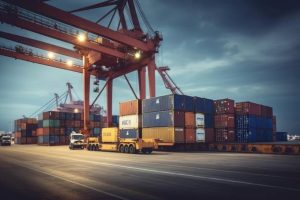
The process to reduce Section 232 steel and aluminum tariffs for producers in Mexico and Canada garnered mixed reactions from steel and metals’ supply chain advocacy groups.
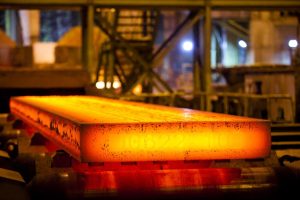
A panel of steel executives said bolstering trade also protects it from the Iran war and other geopolitical risks.

OCTG imports from China will continue to face US anti-dumping and countervailing duties for at least another five years.
The agency found sufficient evidence to support the petitioners' allegations of dumping and subsidization and thus took up the case.
The Trump administration's invocation of the Defense Production Act authorizes the Department of Energy to use DPA tools to accelerate construction, expand domestic manufacturing capacity, and shore up critical supply chains – all areas with direct implications for steel.
President Donald Trump has threatened to raise tariffs on auto imports from the European Union to 25% from 15%.
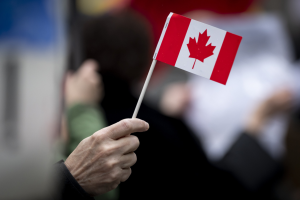
The Canadian government has announced CAD$1.5 billion (USD$1.1 billion) in funding available to help companies impacted by US metals tariffs.
It's cliche to say it. But spring traditionally brings new hope and green shoots—whether that's looking forward to vacations or increased business activity. While I viscerally share these positive feelings, I can’t help but thinking of three areas where I'm not feeling very hopeful. Namely, the US electrical grid, the national debt, and the Iran war.