US, Canada trade deal could see steel tariffs halved: Report
A trade deal between the US and Canada is reportedly pending that could halve Canada’s Section 232 steel and aluminum tariffs and see automobile tariffs lowered from 25% to 15%.


A trade deal between the US and Canada is reportedly pending that could halve Canada’s Section 232 steel and aluminum tariffs and see automobile tariffs lowered from 25% to 15%.

S232 tariffs of 50% provide a signal to domestic producers. Domestic prices have risen by approximately 50%. Similarly, the tariffs have simply moved the competitive threshold for imports 50% higher.
The US Commerce Department is seeking additional comments on 14 derivative items for possible Section 232 duties.
Canadian steel producers will get new help moving material across the country under a federal freight rebate plan launched on Aug. 10.
The Commerce Department has postponed making its preliminary margin determinations in the tin mill products trade case vs. Taiwan and Turkey.

US anti-dumping and countervailing duties (AD/CVDs) on light-walled rectangular pipe and tube from four countries will remain in place for another five years after a key injury determination.
The US Court of International Trade (CIT) has ordered the Commerce Department to redo its final dumping determination for Mexico’s Galvasid SA de CV in the corrosion-resistant (CORE) steel investigation.
The US Department of Commerce has set final duties in the trade case investigating rebar imports from Vietnam, Egypt, and Bulgaria.
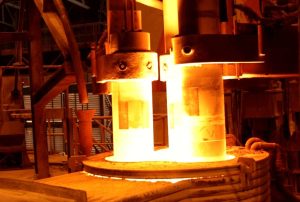
The Commerce Department has preliminarily assigned significant countervailing duties (CVDs) in the trade case investigating large-diameter graphite electrode imports from China and India.
The US government has requested that Mexico impose tariffs similar to Section 232 on steel and aluminum imports from outside North America, according to a report in Bloomberg on Sunday.
The US Department of Commerce is adjusting the import duties on Korean cold-rolled and galvanized steel after two administrative reviews.
Steel and many steelmaking raw materials have been spared from additional forced labor Section 301 tariffs.

A wrap-up following USMCA review columns from SMA, AISI, and the CSPA.
SMA's Philip K. Bell gives his perspective on the latest news regarding the USMCA review process.
US Trade Representative (USTR) Jamieson Greer will travel to Mexico from Wednesday to Friday this week to continue bilateral discussions related to the USMCA joint review.
Downstream consumers of steel account for many times the employment in steel production. Yet the tariff manufacturers in the federal government have paid scant attention to the needs of most manufacturers.

The British government has taken longs producer British Steel back into public ownership, arguing it will protect the future of steel production in the UK.
The US Senate Finance Committee has advanced the nominations of five nominees to the US the International Trade Commission. They will now be considered by the full Senate.
CSPA says the global challenge of steel overcapacity is no longer simply a trade issue as it looks to the current USMCA review.
The Office of the US Trade Representative has finalized a 25% Section 301 tariff on all goods imported from Brazil. Importantly for the US steel industry, pig iron has received an exemption from the tariff.
Testimony at last week’s Section 301 hearing put Brazilian pig iron in the spotlight. Domestic steelmakers and Brazilian suppliers warned that proposed forced labor tariffs would hit a critical US input for which there is no domestic substitute.
The Commerce Department has opened a new Section 232 national security investigation of anthracite and metallurgical coal imports. The department is seeking detailed input from the industry on supply risks, import dependence, and potential national security impacts.

Notably, pig iron is not excluded from the proposed Brazil measures. This would represent a change from the Brazil EEPA tariffs, which excluded pig iron.
The Mexican government is pushing to have steel and auto tariffs removed in its next round of USMCA negotiations with the US, according to a report in El Pais.

Wire rod imports from Algeria face new countervailing duties (CVDs) in the US.
The Canadian government has selected a German firm to build submarines, passing on a contract from a South Korean company linked with Algoma Steel.
The investigation follows requests from US producers Nucor and Steel Dynamics.
Rebar imports from Algeria are now subject to stiff countervailing duties (CVDs).
Steel trade groups and unions in the US have weighed in on the USMCA review process, as the US announced it would not renew the trade pact in its current form.
We asked our readers what they thought the outcome of the ongoing USMCA talks might be as far as Section 232 tariffs go. Very few see an elimination of tariffs as likely.