Steel trade groups urge President Trump to keep S232 tariffs intact
Several steel trade organizations have called on President Trump to resist weakening Section 232 steel tariffs.


Several steel trade organizations have called on President Trump to resist weakening Section 232 steel tariffs.
The US Commerce Department has raised the anti-dumping duties (AD) on imports of oil country tubular goods (OCTG) from South Korea.
After an annual administrative review, the Commerce Department increased the anti-dumping duties on large-diameter welded pipe from Turkey.
The US Department of Commerce has preliminarily determined that critical circumstances exist in the countervailing duty (CVD) investigation of imports of large-diameter graphite electrodes (LDGEs) from China.

The American Iron and Steel Institute (AISI) is pressing President Donald Trump to raise the issue of China’s steel exports and industry subsidies during his upcoming summit with Chinese President Xi Jinping.

The proposed Hyundai-POSCO steel mill in Louisiana has been approved for up to $1.3 billion in bond financing, according to state records and local media reports.

The phrase “Fortress North America” seems to resurface anytime US, Canada, and Mexico trade negotiations roll around. The idea of an economic Fortress North America burst onto the scene in the late 1980s and early 1990s in the lead up to NAFTA. In theory...
The Commerce Department has found high dumping rates of Chinese tin mill products in the US market.
In the trade case investigating subsidized wire rod imports from Algeria, the Commerce Department set final subsidy rates and officially issued the countervailing duty (CVD) order.
The US Department of Commerce has raised the anti-dumping duties (AD) on imports of oil country tubular goods (OCTG) from Vietnam.
United Steelworkers (USW) International President Roxanne Brown urged US and Canadian trade representatives to reach an agreement that puts working families first. Her words come as trade talks between the two nations remain at an impasse, and escalating tensions have led to new tariffs on both sides. “This conflict is hurting jobs. It’s hurting facilities. It’s hurting communities. And it’s creating uncertainty for workers and families in both countries,” Brown said at a press event on Tuesday.

The Canadian Steel Producers Association (CSPA) has named Blair Dickerson as its new president and CEO, effective Sept. 17.
The Commerce Department has issued its preliminary countervailing duty (CVD) determination in the trade case investigating tin mill products from China.

A policy that protects steel production while making downstream American manufacturing less competitive internationally merely moves the injury along the domestic supply chain.

The US International Trade Commission (ITC) has voted not to sunset anti-dumping and countervailing duties (AD/CVDs) on imports of oil country tubular goods (OCTG) from a handful of nations.
Canada’s retaliatory tariffs on US goods have drawn support from Canadian steel producers and labor groups. Meanwhile, US manufacturers and trade officials are calling for renewed negotiations as the dispute adds costs and uncertainty to cross-border supply chains.
The US Department of Commerce has made a preliminary subsidy determination in the trade case targeting imports of oil country tubular goods (OCTG), while also postponing the initial decision in the dumping portion of the case.
The US Department of Commerce has adjusted the countervailing duties on cold-rolled steel products from Korea. In the final results of an administrative review of the 2023 calendar year, Commerce assigned subsidy rates of 1.28% for Hyundai Steel and 3.64% for Posco. These differ slightly from the previous rates of 2.21% for Hyundai and 1.47% for Posco. Last year, South Korea sent 87,928 metric tons of cold-rolled sheet to the US, according to US import data. Year-to-date shipments through July are 56,331 mt.
The Commerce Department believes notable dumping and illegal subsidies would continue if import duties on welded line pipe from Turkey and Korea were allowed to expire.
Mexico has formally opened an anti-dumping investigation into imports of cut-to-length steel plate from Japan. Mexico’s Ministry of Economy launched the trade case after a complaint by Grupo Acerero (GASA). GASA, a San Luis Potosi-based steel producer, alleges price discrimination and injury to the Mexican industry, according to the announcement in Mexico’s Official Gazette of the Federation. The case targets hot-rolled, uncoated, non-coil carbon steel plate in sheet form, at least 4.75 mm thick and 600 mm wide.
Rather than recruiting other countries to help, the US appears intent on threatening to punish countries, including its closest friends. In my experience, this strategy has never proved productive.
Panelists on the trade panel at SMU Steel Summit 2026 reflect on issues affecting the industry.

New anti-dumping and countervailing duties (AD/CVDs) on rebar imports from three nations will officially take effect after a key vote.
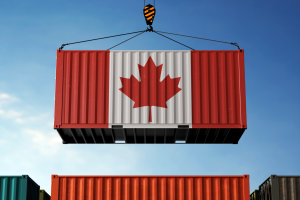
Canada has moved to impose new tariffs on US goods, matching tariffs the US has imposed on it.
Canada’s government on Monday announced the largest shipbuilding contract in Quebec’s history.

Barry Schneider, Steel Dynamics’ president and COO, and chairman of the Steel Manufacturers Association (SMA), said transshipment is a central trade policy concern. Speaking during a fireside chat Monday afternoon at the SMU Steel Summit 2026 in Atlanta, he identified steel, fabricated products, and pipe as areas exposed to potential leakage through the two USMCA partners.
The Canadian Steel Producers Association (CSPA) has voiced its concern over the latest US tariffs on the country and the lack of a trade deal.
The SMU Steel Summit kicks off on Monday in Atlanta, and we could spend the entire time just discussing trade developments since the last Summit.
Trade talks between the US and Canada collapsed late on Friday, just hours after media reports that an accord was near.
The Department of Commerce is adjusting the anti-dumping duties on light-walled rectangular pipe and tube from Mexico.