
Sheet sources comforted by stable market, hopeful for summer
Sheet market participants found modest spot price increases this past week, but conceded that overall market conditions remained stable.


Sheet market participants found modest spot price increases this past week, but conceded that overall market conditions remained stable.

US and Canadian drilling activity both ticked higher this week, according to recently released data from Baker Hughes.

Plate market participants expect additional base price hikes from domestic mills, something that has some eyeing imports.
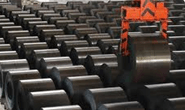
Following the historical lows seen in recent months, steel import volumes marginally increased in March and April.

Earlier this week, SMU polled steel buyers on an array of topics, ranging from market prices, demand, and inventories to tariffs, imports, and evolving market events.

SMU’s April ferrous scrap market survey results are now available on our website to all premium members.

Steel traders continue to report strong interest from North American buyers, with their import orders ticking higher, according to our latest survey results. Many manufacturers and service centers, however, report that they have not yet taken the bait.

Sheet and plate prices remained on an upward trend as industry sources increasingly asked whether improved demand might be driving the market as much as limited supply.

US steel shipments increased in March from February as well as year over year, the American Iron and Steel Institute said Monday.
Most manufacturing indicators strengthened through March and showed strong positive annual growth.
SMU’s Mill Order Index (MOI) recovered in March, gaining some momentum after a marginal decline in February.
Domestic raw steel production increased to a new multi-year high last week, per AISI figures.

I haven’t done a deep dive into our sentiment data for a little while. And it’s timely to do so now. Why? Because we’re seeing what I’ll call the inverted yield curve of steel buyers’ sentiment.

US manufacturing activity grew for the fourth straight month in April, according to the latest report from the Institute for Supply Management (ISM). April marked the 18th month of overall economic expansion.
Domestic sheet market participants found business conditions remarkably consistent this week.
Drilling activity increased in the US this week but declined in Canada, per Baker Hughes.
SMU’s latest steel buyers market survey results are now available on our website to all premium members.
Steel buyers remain highly optimistic about their businesses’ chances of success today and in the near future, according to SMU’s Steel Buyers’ Sentiment Indices.

AMU: Ford and GM's results show earnings supported by tariff timing and mix, while volumes, inventory, and cash flow point to a constrained supply and uneven demand.

CRU: 62% Fe iron ore prices remained rangebound in April following the surge in the first half of March.

Steel mill lead times continue to hold at or near multi-year highs for both sheet and plate products, territory they have been in two months.
This week we saw low negotiation rates across all products, though coated products are the most negotiable and plate products are the least.

The Chicago Business Barometer eased for a second consecutive month in April. The 3.6-point slip to 49.2 for the month represents a fall back into contractionary territory.

Turner Industries said it's dedicating two state-of-the-art nuclear fabrication facilities in New Iberia and Port Allen Louisiana to producing high-precision modules and nuclear-grade piping.

Market sources say 2026 could be a stronger year for plate market participants than 2025 if this week’s conditions are indicative of how the rest of the year plays out.
The volume of raw steel produced by US mills eased last week but remains within earshot of the multi-year high set one week prior
Recent conversations with plate market participants across the US revealed a wide range of experiences contingent on a variety of factors.

Sheet market participants reported steady to elevated demand over the past week. But while spot prices continued to edge up, some sources said lead times were becoming more closely aligned to industry norms.

World crude steel production for the 69 countries reporting to the World Steel Association (worldsteel) totaled an estimated 159.9 million metric tons in March. Production jumped 12.8% from a shorter February, but was down 4.0% from March 2025, according to newly released data.
Baker Hughes' latest data shows the US rig count inching up by one while the Canadian count held steady in the week ended April 24.