
CRU: Middle East conflict poses energy cost risk to ferrous value chain
The main impact on the ferrous value chain from the Middle East conflict will be the higher energy costs in a prolonged scenario.


The main impact on the ferrous value chain from the Middle East conflict will be the higher energy costs in a prolonged scenario.

Gerdau’s North American operations closed the fourth quarter of 2025 with another solid performance, according to its parent company’s most recent financial report. Supporting the steelmaker are resilient demand in key end-use markets and a continued rebalancing of domestic supply and imports.
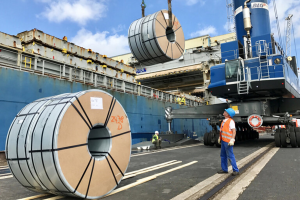
Steel imports slowed further in December and January to some of the lowest volumes recorded in recent years.

Steel imports remain weak in November and December according to recently released final US Commerce Department data. Many of the sheet and plate products we follow slipped to multi-year lows.
Lower finished steel imports continued to support US domestic prices this month. HR coil prices are up more than $40 per metric ton (mt) month-on-month (m/m) due to higher seasonal demand in January and tightening domestic supply.

According to recently released final US Commerce Department data, US steel imports rebounded 11% month on month (m/m) in October 2025 after falling to a multi-year low one month earlier. The latest license figures suggest imports eased back by 3% in November and by another 2% in December, with trade again nearing historical lows.

CMC’s earnings jumped in the company's first fiscal quarter of 2026 on strong market conditions in North America.
According to recently finalized US Commerce Department data, US steel imports tumbled to a near five-year low in September
US longs prices diverged in early December, with rebar and structurals prices rising on data center demand while wire rod remained flat, as domestic mills balanced the market. Import volumes, in November, declined sharply across all longs.

US steel imports declined considerably in September and October, with trade falling to reduced levels not seen in nearly five years.

Republic Steel’s shuttered facilities in Lorain, Ohio, could find new life as international steelmakers, citing US tariffs, explore restarting operations there.
Gerdau’s North American profits rose in the third quarter, boosted by a decline in imports due to Section 232 steel tariffs.
Nucor has pulled the plug on a planned rebar micro mill in the Pacific Northwest.
CMC reported higher net earnings in its fiscal fourth quarter on "better market conditions" across its segments.
Gerdau is repositioning its North American business to capitalize on a sharp shift in steel trade flows driven by elevated tariffs across the US, Canada, and Mexico.

US steel imports declined for the second consecutive month in July, according to recently finalized US Commerce Department data.
Domestic sheet prices in the US remained under pressure, limiting interest in imports, while domestic prices for longs products continued to rise.
Following January’s pre-tariff surge, imports have remained low since February compared to post-pandemic volumes
Following one of the lowest levels seen in more than two years, US steel imports rebounded from April to May. However, trade remains low relative to recent years. Preliminary license data suggests another fall in June.
CRU Senior Steel Analyst Alexandra Anderson discusses current market and pricing dynamics for long steel products in the US.
Stronger steel demand in the Western US, rising scrap flows, and improved rolling mill utilization drove sequential gains for Portland, Ore.-based Radius Recycling.
CMC entered the back half of its fiscal year with improving steel margins, steady rebar demand, and confidence in long-term construction fundamentals

The latest SMU Community Chat webinar reply featuring Timna Tanners, managing director of equity research for Wolfe Research, is now available on our website to all members. After logging in at steelmarketupdate.com, visit the community tab and look under the “previous webinars” section of the dropdown menu. All past Community Chat webinars are also available under that selection. If […]
April now represents the third-lowest monthly import rate witnessed in nearly two and a half years, with several steel products falling to multi-year lows
US steel imports rebounded from February to March, rising to the second-highest monthly rate witnessed in the past ten months, according to final data recently released by the US Commerce Department. April license data shows that gain has likely been erased, with trade falling to the lowest rate of the year and several product categories hitting multi-year lows.
US steel imports returned to normal levels in February after climbing to a near three-year high in January, according to finalized trade data published by the US Commerce Department. March license data suggests imports have remained within this normal range.
Steel imports ended 2024 on a low note, with November trade falling to a one-year low and December seeing a modest 3% recovery. Then as the new year began, import volumes spiked.

MPG Canada is laying off 140 workers across its facilities in Ontario and Quebec.
Following the one-year low recorded in November, steel imports rose by 3% in December to 2.14 million short tons (st) according to final US Commerce Department data. January could be the highest month for steel imports witnessed in nearly three years.
Domestic steel imports fell 14% from October to November to a one-year low of 2.07 million short tons (st), according to final US Commerce Department data. While steel trade has declined from early-2024 highs, November imports are slightly higher than volumes seen one year prior.