• Skip to main content

    Prices

    Ferrous scrap prices poised for August gains

    Written by Stephen Miller


    It’s buy week again for ferrous scrap. US steelmakers are expected to offer their prices for August shipment this week. Most of the dealers and brokers RMU has quizzed believe the market has enough traction to hold sideways and even go up. Prime scrap seems to be the most likely to gain in August as it was a bit short last month when some mills attempted to buy down from June and met resistance. They eventually had to raise their prices.

    On the obsolescent side, many think shredded and P&S can also achieve a raise. However, when RMU contacted several large companies with multiple shredders, they indicated their inbound flow of shredder feed had not decreased to any appreciable extent. This may be able to limit the market on shredded to sideways from July. So, at this point, it is a toss-up.


    Stephen Miller

    Read more from Stephen Miller

    Latest in Prices

    HR Futures: Basic story remains, but curve shifts

    In my last column, the HRC futures curve was pricing a sizable premium on near-term tightness while still pointing toward eventual normalization. Since then, that basic story has remained intact, but the shape of the curve has shifted meaningfully. Rather than simply moving higher and pushing the peak out by another month, as has largely been the pattern throughout this rally, the curve is now pricing a more pronounced and prolonged period of tightness, while the long end has remained relatively anchored, which previously had also been lifted with the rest of the curve.

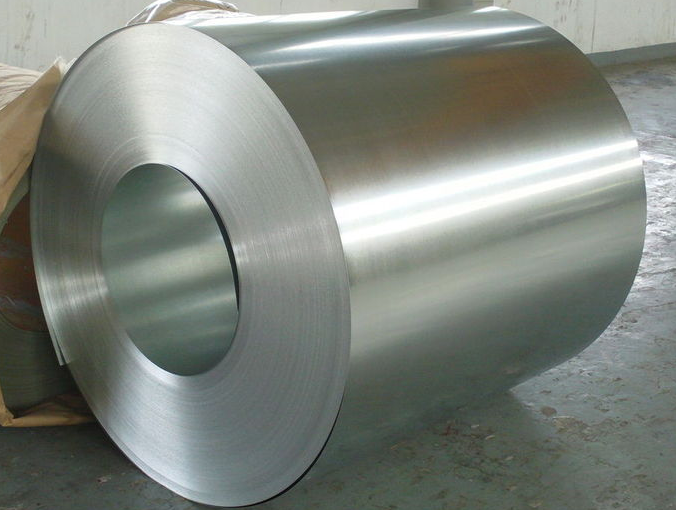
    galvalume steel coil

    SMU Survey: Mill willingness to negotiate price at lowest levels since 2021

    The majority of steel buyers responding to our latest market survey reported that mills continue to hold a firm grip on prices. The share of buyers reporting that mills were negotiable fell this week to the lowest rate seen in over five years. Every two weeks, SMU surveys service center and manufacturer buyers asking if mills are negotiable on new spot sheet and plate orders. In this week’s survey, just 3% of respondents said mills were willing to talk price to secure an order (Figure 1). This is down 11 percentage points from our mid-October survey.

    SMU Price Ranges: Sheet and plate up, buyers see strength into ’27

    Sheet and plate prices continued to press higher this week as the current supply squeeze shows no signs of letting up even as contract season winds down and lead times tip into 2027. The historic rally marks a sharp reversal from last year, when the consensus was that prices would drift lower on uneven demand and new capacity. Steel buyers said it remains difficult to find a domestic mill with spot availability in a market that some said is tighter than in 2021, even if prices haven't spiraled as high as they did then. SMU's price assessment for spot hot-rolled (HR) coil stands at...

    Nucor increases spot HR coil by $15/ton

    Nucor said on Monday, Oct. 26, that its consumer spot price (CSP) for hot-rolled (HR) coil will be $1,270 per short ton (st) this week, up $15/st from the prior week. The CSP for HR coil from California Steel Industries (CSI) on the West Coast will be $1,340/st, up $20/st from last week. Nucor continues to offer lead times of three to five weeks, according to its letter to customers. You can track mill price announcements on our website. Steel Market Update (SMU) published a weekly price assessment on Tuesday, Oct. 20, showing HR coil prices averaging $1,290/st, up $10/st from the previous week. We will update our prices on the evening of Tuesday, Oct. 27.

    Final Thoughts: Is the steel market now tighter than in 2021?

    "Now, the problem is no longer the price. The problem is having access to steel." That would have made a good lead. But I can’t take credit for it. Those (very quotable) words are from Cleveland-Cliffs Chairman and CEO Lourenco Goncalves during the steelmaker’s quarterly earnings conference call on Monday. For a while, I thought the shortages we'd been hearing about might be mostly a problem for small- and mid-sized buyers. But we’re seeing even some of the biggest steel buyers talking openly about supply problems.