Analysis

June 11, 2026
Final Thoughts: World Cup edition
Written by David Schollaert
It’s official: the 2026 FIFA World Cup is underway. Mexico kicked off the festivities Thursday afternoon with a win against South Africa in Mexico City.
The US squad will begin its campaign for soccer’s—football, fútbol, or futebol as it’s known by most—undisputed ultimate prize tomorrow when they play Paraguay in Los Angeles.

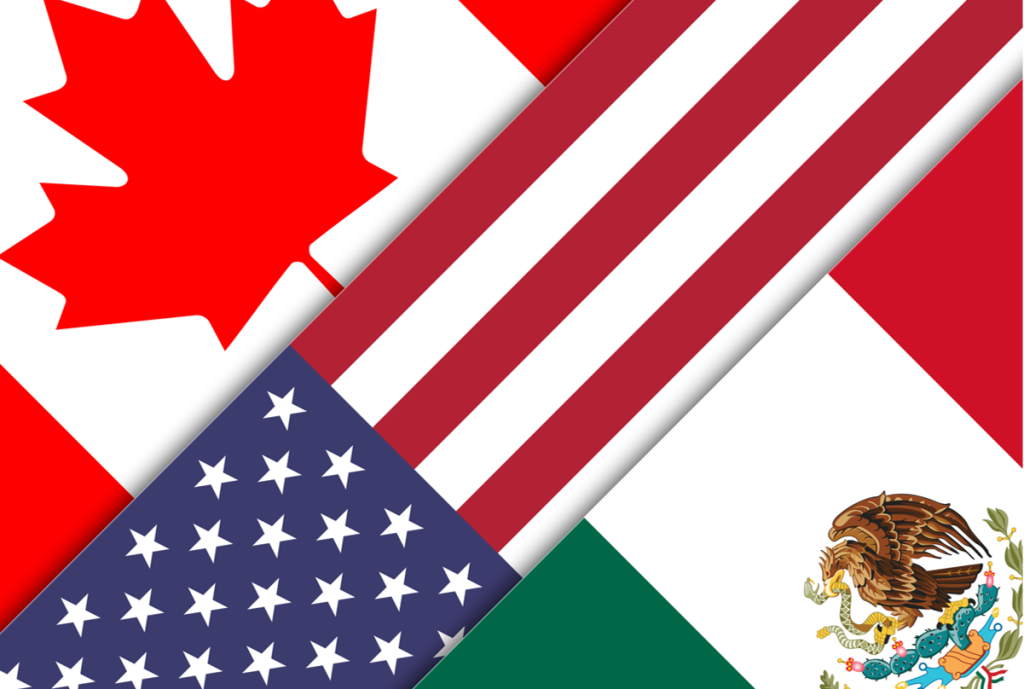
The US, Mexico, and Canada are hosting the 23rd edition of the World Cup. It’s the single biggest sporting event in the world. It’s soccer’s USMCA—maybe a sign of things to come when the USMCA joint review begins on July 1?
But I digress. Over the next 39 days, 104 matches will be played, featuring 48 nations. It is the tournament of tournaments.
Common ground
OK. I know I’m reaching a bit here—well, maybe a lot—but the connections between the FIFA World Cup and steel go far beyond the obvious fact that steel is used to build stadiums. Like the World Cup, the flat-rolled steel market is shaped by global talent, shifting power centers, and hard-edged rules.
And both depend on sprawling international supply chains, with raw materials and finished goods moving across borders as players and coaches do.
Globally, China has been a dominant force in steel, but rivals are pressing harder. Similarly, traditional soccer (football) powerhouses like Brazil, Argentina, France, and Germany constantly face emerging challengers. Could this be the US Men’s National Team’s year?
And just as the sport is governed by strict regulations—and its fair share of scandals—steel trade is increasingly defined by tariffs, quotas, and carbon border measures.
But while some of you might be thinking, “World Cup? Huh?” and don’t understand the appeal, it is the single biggest sporting event in the world. Over five billion people tuned in to watch the last tournament.
A whopping 1.5 billion tuned in to watch the final match between Argentina and France in 2022. It dwarfs the Super Bowl in global viewership. Compare that to the record 127.7 million viewers who tuned in to watch Super Bowl LIX in 2025.
OK, enough of that.
2022 vs. 2026
Like the Summer and Winter Olympics, the World Cup only comes around every four years. So, why not take a walk down memory lane to see where the steel market stood at this time four years ago?
For starters, we were trending in a completely different direction. The domestic flat-rolled market was on a precipitous fall at the time. Prices were on the way down from their post-pandemic meteoric rise of nearly $2,000/ton in September of 2021. At the time, demand snapped back faster than supply could be brought online to meet it.
And the rest is history, as they say.
Lead times were also on the decline, just a tick over four weeks on average, down from a high of 11 weeks in July 2021.
In June 2022, the month kicked off with HR prices at $1,190/st on average. They would fall by nearly $200/st over four weeks, ending the month at $995/st.
And while the tournament is traditionally played over the summer months (June and July), the 2022 World Cup, hosted by Qatar, was held in November and December to avoid the country’s severe summer weather.
On that parallel, prices reached a recent bottom of $615/st in mid-to-late November 2022. And what followed was a return to mini-cycles, leading to our current rally. But I’ll get to that in a bit.
At the time, some of the decline was attributed to seasonal factors, but inflation and rising interest rates were also hurting consumer demand. And let’s just say that things felt bleak, because the main debate—aside from the UAW and U.S. Steel negotiations— was whether prices would fall into the $500s per ton or not.
We weathered that storm. The deal got done, prices and demand recovered, and we all lived to talk about it.
1994 vs. 2026
And since we’re taking a stroll down memory lane, why not turn the dial back to 1994?
It’s been 32 years since the last time the US hosted the FIFA World Cup. A lot has changed since then, especially for this impressionable 12-year-old boy living in Brazil at the time.
Quick aside or detour. If you’re looking for a great soccer (football) documentary, I highly recommend Summer of ’94. It chronicles the crazy, and many would say improbable, journey of the USMNT as they prepared for and competed in the 1994 FIFA World Cup.
Unfortunately, our archives don’t go that far back. (SMU didn’t exist yet.) Still, Google and econstats—which, unlike SMU, I can’t guarantee the accuracy of the data—say prices for domestic hot band were roughly $330/st on average in June 1994.
That would be roughly $746/st if adjusted for inflation. And that’s about $369/st behind today’s levels. It’s safe to say the current HR coil price of $1,115/st is indeed significant.
The skinny
We’re on a ride. The current sheet price rally has been ongoing for nearly nine months. We haven’t seen that since the post-pandemic snapback. It’s even more significant given it’s not driven by a black-swan event. And prices don’t appear to be slowing down just yet.
Most still question how long it will last, but with lead times for hot-rolled coil now more than seven weeks on average, and easily into September, some are starting to believe it could carry through the balance of the year.
Mills remain very disciplined, and tariffs continue to be a barrier for imports. The upward grind appears as if it will continue, especially with few, if any, talking about the summer doldrums.
SMU Steel Summit 2026
While all eyes, some 10 billion of them, will be transfixed on the US and 2026 FIFA World Cup, the only thing more impressive than that this summer will be the SMU Steel Summit, North America’s largest gathering of the flat-rolled steel industry.
Nearly 800 steel industry professionals from nearly 300 companies and over 15 countries are already registered to attend the Summit this August in Atlanta.
It runs Monday, Aug. 24, to Wednesday, Aug. 26, at the Georgia International Convention Center (GICC) in Atlanta.
Spaces are filling up, so be sure to reserve your seat now!
We can’t wait to see you there, and as always, we appreciate all your support.