Steel exports gain momentum through February
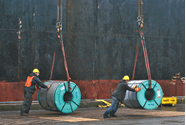
The latest US Department of Commerce data shows 840,000 short tons (st) of steel left the country in February. This is the highest monthly export rate since August 2023.


The latest US Department of Commerce data shows 840,000 short tons (st) of steel left the country in February. This is the highest monthly export rate since August 2023.
They say all’s fair in love and war. But that doesn’t seem to be the case in steel. Being deemed “unfair” could get you slapped with shiny new Section 232 tariffs these days. Then again, “unfair” implies a judge. And people on opposing sides seldom agree with the judgment. Such seems to be the current case between the US and Mexico.
Personal Consumption Expenditures (PCE) inflation data was released on Friday, March 29, despite the stock market being closed for Good Friday. The year-over-year (y/y) PCE price index rose 2.5% in February, in line with market expectations but up from the 2.4% growth seen in January. The core PCE index, which excludes food and energy prices, rose 2.8% y/y in February, also in line with expectations and slightly down from 2.9% in January.
Steel import licenses through March have now reached a nine-month high according to the latest data from the US Commerce Department.
Directors of Swedish steelmaker SSAB have decided to replace blast furnace-based steelmaking at Lulea with a ‘green steel’ mini-mill process.
Sheet prices continue to inch higher. That’s a welcome development for many. But it’s also a far cry from the price surge many predicted about a month ago. Remember the theory that supported a spring surge: Sheet prices would soar on a combination of mill outages, stable-to-strong demand, restocking, mill price increases, and (potentially) trade action against Mexico as well.
OnmiSource LLC, a subsidiary of Fort Wayne, Indiana-based steel producer and recycler, Steel Dyanmics, Inc., has acquired Toledo Shredding, LLC, in Ohio.

On Monday and Tuesday of this week, SMU polled steel buyers on an array of topics, ranging from market prices, demand, and inventories to imports and evolving market chatter.

You might have noticed that SMU has been publishing more articles about scrap in recent months. That was no accident. In fact, we’ve found enough of an audience that CRU, our parent company, has decided to launch a new publication – Recycled Metals Update, or RMU. It cover both ferrous and nonferrous scrap. RMU’s website is here. You can go there now and request a 30-day free trial. It’s that simple.
Sheet prices moved higher this week for the second consecutive week, while plate prices ticked lower, according to our latest canvas of the steel market.
US construction spending in February was mostly steady from January but showed significant gains from last year.
Midrex Technologies has named K.C. Woody as president and CEO, effective immediately.
Domestic raw steel production rebounded from the seven-week low seen last week. It now stands at a three-week high, according to the latest release from the American Iron and Steel Institute (AISI) Total steel output in the US was estimated to have been 1,722,000 short tons (st) in the week ending March 30, up 1.1% from the week prior. Raw production is up 0.2% compared to the same week last year, when production totaled 1,718,000 st.
Steel Market Update will be taking time off in observance of Good Friday and Easter.
SMU latest' steel market survey paints the picture of sheet market that has hit bottom and begun to rebound. Lead times are extending again after stabilizing earlier this month. Mills are far less willing to negotiate lower sheet prices - even if there are still deals to be had on plate, according to the steel buyers we canvassed.

After stabilizing in our last check of the market, production times for flat-rolled steel have begun to push out further, according to steel buyers responding to SMU's market survey this week.

Steel buyers report that mills are less willing to talk price on new sheet orders than they were in weeks past, according to our most recent survey data. In contrast, mills’ willingness to negotiate on plate products remains relatively high, now at the second-highest rate of the year.
SMU’s Current Steel Buyers’ Sentiment Index fell further week, now at the lowest reading recorded since October 2022
Steel companies in Mexico have lined up capex plans totaling $5.7 billion in the next three years. The focus is on replacing imports with domestic production, said David Gutierrez, outgoing president of sector association Canacero. “The investments are aimed at reducing imports, strengthening national production, and ensuring that the benefits stay in the country,” he was quoted as saying at Canacero’s annual congress by regional news service Business News Americas.
The Biden administration this week announced landmark industrial funding to support potentially transformational industrial decarbonization projects. In total, thirty-three projects across eight industrial sectors will receive up to $6 billion in federal funds from the US Department of Energy’s (DOE) Office of Clean Energy Demonstrations (OCED).
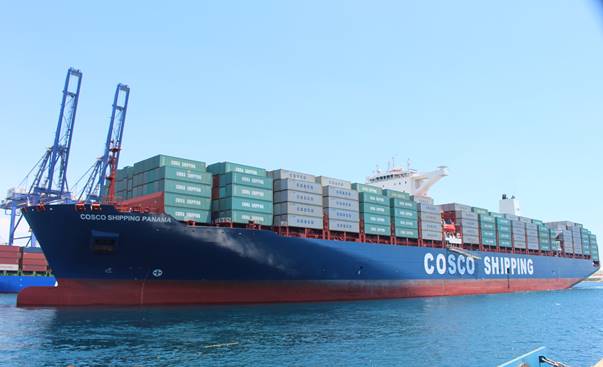
After reaching a seven-month high in January, steel imports fell back 3% in February, according to preliminary Census data released earlier this week.
The dollar premium cold-rolled coil (CRC) carries over hot-rolled coil (HRC) continues to expand according to our latest scope of the market.
A container ship collided with the Francis Scott Key Bridge in Baltimore on March 26, causing it to collapse. This has blocked sea lanes into and out of Baltimore port, which is the largest source of US seaborne thermal coal exports. The port usually exports 1–1.5 million metric tons (mt) of thermal coal per month. It is uncertain when sea shipping will be restored. But it could be several weeks or more. There are coal export terminals in Virginia, though diversion to these ports would raise costs.
SMU’s sheet prices firmed up modestly this week, even as CME hot rolled futures declined. What gives? My channel checks suggest that demand remains stable and that buyers have returned to the market following new HR base prices announced by mills earlier this month. I’m looking forward to seeing whether lead times, which have stabilized, will start extending. SMU will have more to share on that front when we release updated lead time figures on Thursday. As for HR futures, what a reversal! As David Feldstein wrote last Thursday, bulls expected mill price increase announcements. And we briefly saw the May contract climb as high as ~$1,000 per short ton (st).
Domestic raw steel production slipped for the second consecutive week, and is now at a seven-week low, according to the most recent data from the American Iron and Steel Institute (AISI).
There’s that concept from Adam Smith we all learn about in our Econ 101 classes: The Invisible Hand. A simple Google search will provide a refresh, but if memory serves I would classify it as something akin to “the market is magic” or “the market’s gonna market.” Today, obviously, we live in a mixed environment. There are a lot of hands out there, and they’re not too difficult to see. In this election year of 2024, one of the most visible hands out there probably belongs to the federal government.
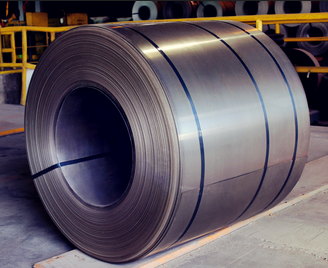
World steel output slipped in February according to World Steel Association’s (worldsteel) latest monthly report. With the exception of January’s surge, monthly production levels have declined ten out of the past eleven months.
The LME 3-month aluminum price resumed moving lower on the morning of March 22 and was last seen trading at $2,290 per metric ton. The price was unable to break through an important resistance level at $2,300/mt on March 21. EGA to acquire European recycler Emirates Global Aluminium of the UAE has signed a binding […]
With Earth Day almost a month away, the world’s attention often turns to the manufacturing sector with calls for greener production processes.
I’ve had questions from some of you lately about how we should think of the spread between hot-rolled (HR) coil prices and those for cold-rolled (CR) and coated product. Let’s assume that mills are intent on holding the line at least at $800 per short ton (st) for HR. The norm for HR-CR/coated spreads had been about $200 per short ton (st). That would suggest CR and coated base prices should be ~$1,000/st. Good luck finding anyone offering that.