
SMU Survey: Most buyers say price negotiations back on the table
Domestic mills are largely negotiable on spot prices, according to the majority of steel buyers responding to our latest market survey.


Domestic mills are largely negotiable on spot prices, according to the majority of steel buyers responding to our latest market survey.
A look at the latest developments in the ferrous scrap export market.
All of SMU’s sheet and plate steel price indices declined this week, easing by $30-40 per short ton (st) on average since early May. Prices continue to slide lower as buyers remain on the sidelines, wary of holding much excess inventory and expecting further declines.

CRU Group revised down its forecast for North American auto production by about 800,000 to 14.7 million this year.

The UK deal may signal relaxation of the heaviest tariffs. The suspension of the reciprocal tariffs greater than 10% - remember, 57 countries were hit with that - ends on July 9. But it could be extended. If more deals like the one with the UK are struck, the suspensions may continue to permit more agreements - relieving global markets of considerable worry.
Longtime Steel Dynamics Inc. (SDI) executive Glenn Pushis will be retiring from the company to become CEO of Project Aero, a company that plans to build a titanium plant in North Carolina.
The recently announced US tariffs on vehicles and key components from all markets are expected to significantly disrupt global production.
Here are highlights of what’s happened and a few things to keep an eye on this upcoming week.
Oil and gas drilling activity declined again this week in the US and Canada, according to Baker Hughes.
The volume of steel exported from the US marginally increased from February to March, according to the latest US Department of Commerce figures. Although up month over month (m/m), export levels have generally trended downward over the past year.
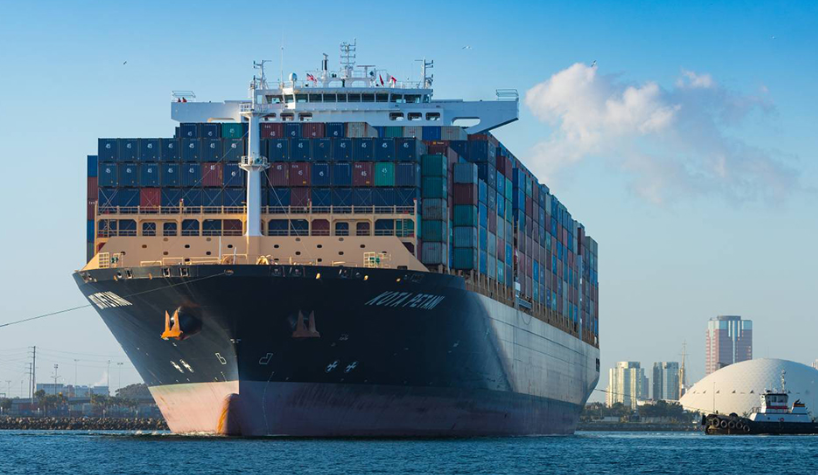
The Mexican government aims to transform Manzanillo into the largest seaport in Latin America, capable of processing some 10 million TEU (20-foot equivalent units) per year by 2030. It is already Mexico's largest port and the third largest in Latin America, handling nearly 4 million 20-foot containers in 2024.

Cliffs came tantalizing close to buying U.S. Steel in 2023. There were rumors in 2024 that Cliffs might buy NLMK USA before it ultimately purchased Stelco for $2.5 billion in November of last year. Who would have thought that asset sales would have been the focal point of discussion just six months later?

Despite the hand-wringing and head-scratching about the impact of President Trump’s tariff policy, the HRC futures market has been relatively subdued since our last writing of this article.
US steel imports rebounded from February to March, rising to the second-highest monthly rate witnessed in the past ten months, according to final data recently released by the US Commerce Department. April license data shows that gain has likely been erased, with trade falling to the lowest rate of the year and several product categories hitting multi-year lows.
Meanwhile, its Canadian operations have been hurt by the broader tariffs proposed by the United States.
Germany’s Klöckner & Co. reported a narrower loss in the first quarter as the company targets becoming the “leading” service center and metal processing firm in North America and Europe by 2030.
Cleveland-Cliffs Inc. gushed red ink in the first quarter, and pledged to stem the bleeding by idling inefficient, “loss-making operations” and increasing focus on its core automotive business.
Maximo Vedoya was awarded in recognition of Ternium’s expansion project in Pesquería, Mexico, and Ternium’s efforts to decarbonize steelmaking.
SMU polled steel buyers on an array of topics earlier this week, including market prices and demand, tariffs and reshoring, inventories and imports, and evolving market trends.

Steel buyers said Nucor’s price decrease was a public acknowledgement of what most of the market had already known - that sheet prices were moving lower in a more significant way. The question now is whether mills and service centers will manage the decline or whether prices might fall rapidly, they said.

We’ve talked about tariffs ad nauseam for much of the year. And I’m afraid this topic isn’t going away anytime soon. There’s a feeling that the tariff “can” will just be kicked down the road again and again, and again.
With so much happening in the news cycle, we want to make it easier. Here are highlights of what’s happened and a few things to keep an eye on this upcoming week.
Oil and gas drilling activity eased in both the US and Canada this week, according to Baker Hughes. US rig counts remain near multi-year lows, and Canadian activity continues its seasonal slowdown.
SMU’s Buyers’ Sentiment Indices both improved this week, reversing the decline seen two weeks ago.
Sheet and plate lead times held steady this week, according to buyers responding to the latest SMU market survey. This week we saw little change from mid-April levels, with just one product (Galvalume) showing any significant movement.
Nearly two thirds of the steel buyers who responded to this week’s SMU survey say domestic mills are negotiable on spot prices. This increasing flexibility marks a significant shift from the firmer stance mills held in recent months.
The steelmaker now expects the new steel slab mill in Pesquería will begin operations by Q4’26.

The Chicago Business Barometer declined in April, reversing March’s gains, according to Market News International (MNI) and the Institute for Supply Management (ISM).

PMA’s April report shows that only 16% of surveyed manufacturers anticipate an increase in economic activity in the next three months (down from 23% in March)
Most sheet and plate steel prices declined yet again this week, with four of SMU’s five indices moving lower.