
AMU Survey: Aluminum scrap outlook turns toward oversupply
Recycler forward expectations swung toward oversupply in September as inventory drawdowns eased and export demand lost August’s improving responses.


Recycler forward expectations swung toward oversupply in September as inventory drawdowns eased and export demand lost August’s improving responses.
Automotive aluminum demand is rising as extrusions, sheet, and castings gain ground across vehicle applications and powertrains.
Recycler demand increased while fewer respondents reported sufficient obsolete scrap, even as inventory drawdowns remained widespread.
On July 9, Aluminum Market Update published “Did aluminum markets price in peace too soon?” The article used data and events through July 8 to test whether falling prices and light financial participation had moved ahead of conditions around the Strait of Hormuz. A month later, LME aluminum positioning offers a useful checkpoint on how that trade played out.
The announcements affect two established US commercial vehicle production sites.
Mid-earnings review finds rolled product outperforming extrusions, while trade shifts and billet supply cloud demand signals.
AMU’s July survey found recyclers expecting lower prices as demand softened, while forward scrap supply views remained mixed.
Aluminum Dynamics plans to invest more than $200 million to develop a recycled slab center in Lowndes County, Miss., establishing the permanent location for a project relocated from Arizona earlier this year.
Aluminum prices have spent the past month pricing in a calmer Middle East, while developments in the Strait of Hormuz have suggested anything but.
Toyota Motor North America plans to invest $3.6 billion to expand its San Antonio manufacturing campus.
The London Metal Exchange (LME) cash aluminum settlement price fell 12% between June 2 and June 18 after reaching its highest level in more than four years, while the US Midwest Premium moved lower from record highs established in late May.
Steel Dynamics Inc. (SDI) said it expects to record a $16 million asset write-down in the second quarter after deciding to relocate a planned Aluminum Dynamics (ADI) recycled aluminum slab casting center from Benson, Ariz., to Columbus, Miss.
Survey respondents overwhelmingly said enough obsolete scrap existed to meet demand in May, even as expectations for freight and container costs moved higher and views on the direction of the Midwest premium remained relatively firm.
AMU's May aluminum market survey showed lengthier rolled product lead times coupled with shrinking extrusion and primary booking windows, though inventory building and forward demand sentiment remained cautious.
AMU: Ford and GM's results show earnings supported by tariff timing and mix, while volumes, inventory, and cash flow point to a constrained supply and uneven demand.
This piece was first published by SMU’s nonferrous sister publication, Aluminum Market Update. To learn about AMU, visit their website or sign up for a free trial. The aluminum market has spent much of the past month focused on supply risks tied to the Middle East. As more detail has emerged, the conversation has begun to shift away from aluminum […]
Toyota Motor Corp.’s $1 billion investment in its Kentucky and Indiana plants aims to expand production of aluminum-intensive vehicles, particularly across high-volume models and future battery electric platforms.
Military strikes on major aluminum facilities in the United Arab Emirates and Bahrain have introduced a new layer of uncertainty into a market that was already operating with limited flexibility.

The Trump administration has implemented changes to its steel and aluminum tariff framework that alter how duties are applied to imported manufactured goods, according to an April 2 presidential proclamation.
AMU's March survey results show lead times remaining extended as supply tightness persists, even as import competitiveness declines and logistics costs increase.
Pace Industries plans to close two Muskegon die-casting plants following news of the planned shutdown of its Arkansas facility.
February survey results showed notable shifts across measured lead times and sentiment.

Emissions rules, production limits and material substitution are reshaping steel and aluminum use in North American vehicles.
Companies are framing 2026 around backlog, mix and production discipline rather than a uniform market recovery.
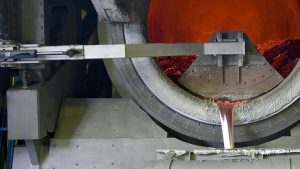
Former smelter sites have become increasingly attractive to data center developers competing for electricity to support AI.
As more contracts are up for negotiation in 2026, labor is poised play a larger role in operational planning at a time when trade issues and high prices also are in play.
A cluster of Airbus announcements reveals how quickly the OEM is tightening and rebalancing its US supply chain.
AMU's latest survey of aluminum market participants shows widening gaps in lead times, with extrusions lengthening dramatically.
Ford executives said the automaker expects aluminum supplier Novelis to restart its fire-damaged Oswego, NY hot mill by late November or early December.
While US construction markets are far from uniform, recent indicators from June and July paint an unusually fragmented picture.