• Skip to main content

    Market Data

    SMU MoMo Index Floating in Negative Territory

    Written by Brett Linton


    The Steel Market Update Price MoMo Index for flat rolled steel in the U.S. remained negative this week for the fourth week in a row after being in positive territory for the previous four weeks. MoMo, a trailing indicator, is measured as a percentage and shows the relation of the current hot rolled coil (HRC) price movements against the previous 12-week average spot price as recorded by Steel Market Update. MoMo was measured at -1.12 percent this week, meaning that the current HRC price is lower than the average price over the last 12 weeks.

    The change in MoMo can be a useful indicator in depicting the severity of price movements and evaluating the directional trend prices may be in. The week-over-week change in MoMo was 0.00 percent, following a -0.69 percent change the week before. Looking at this change on a 3-week moving average, we see that the trend in HRC price fluctuation is showing a negative direction for prices for the fourth consecutive week. The 3-week average change in MoMo is -0.21 percent, up from -0.69 last week.


    Brett Linton

    Read more from Brett Linton

    Latest in Market Data

    Global steel output holds steady in October, China’s share slips

    Global raw steel production held steady in October, pausing a four-month decline, according to the latest World Steel Association (worldsteel) figures. Output totaled an estimated 142.4 million metric tons (mt), unchanged from September but down 1.2% year over year (y/y). Global production averaged 149.3 million mt per month on a 12-month moving average (12MMA) basis through October. This was down 1.2% y/y and was the lowest 12MMA since 2017 (Figure 1). Before September 2025, the 12MMA of monthly output had generally hovered between 152 million mt and 154 million mt for over three years, similar to pre-pandemic levels.

    AISI: Southern whiplash drives US steel output up again

    US raw steel production remains wildly unpredictable, according to the latest American Iron and Steel Institute (AISI) figures. Output rose again last week, continuing the sharp fluctuations seen since late summer. Raw steel output has fluctuated sharply since late summer, reaching an 18-year high at the end of October before retreating. Last week’s reading was the second-highest in nearly a decade. Despite the fluctuations, production has generally trended lower since seeing sustained growth through May, though it remains historically strong compared to recent years.

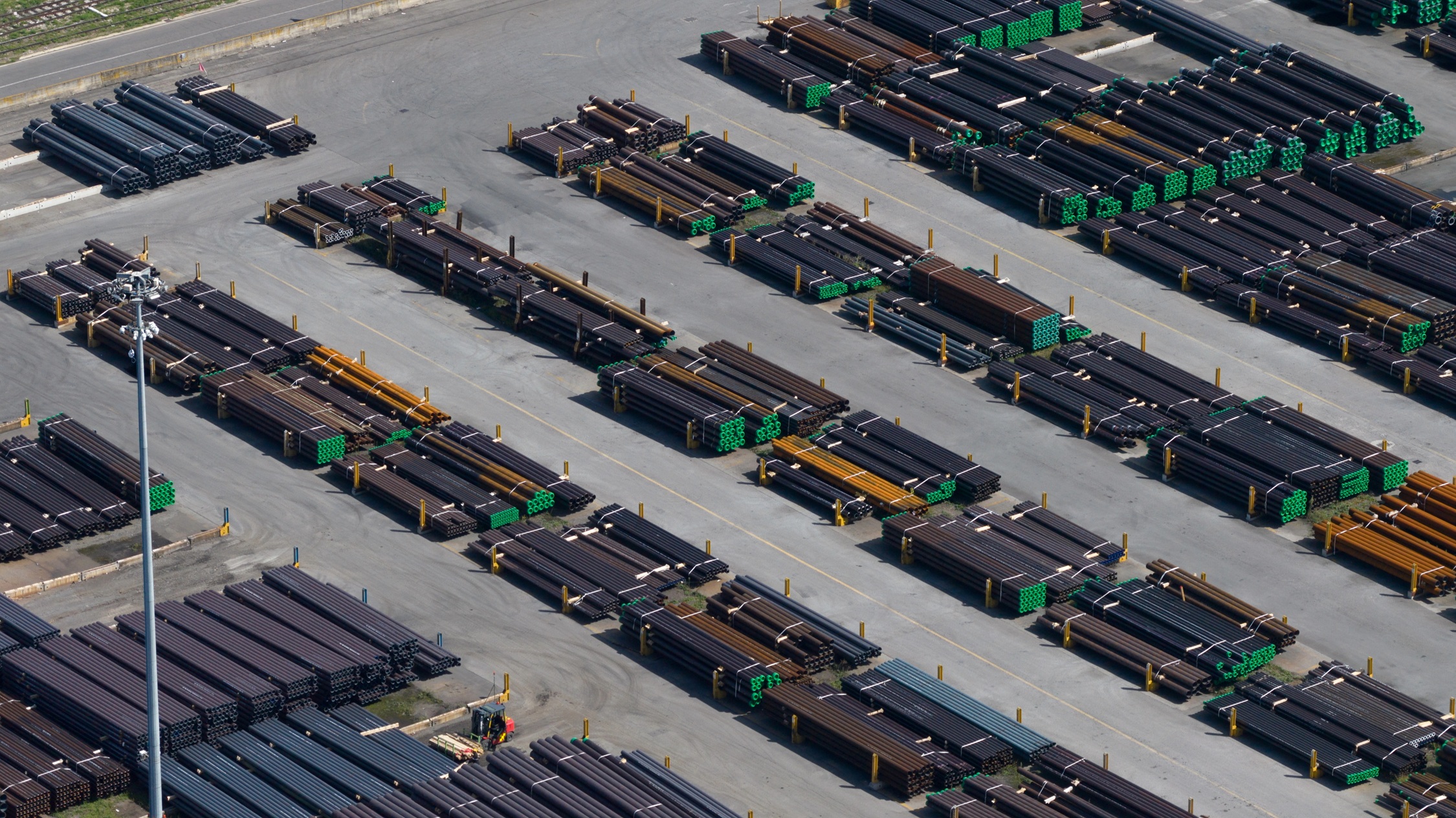
    pipe yard

    US rigs reach multi-year high, Canadian activity edges lower

    The latest count of active drilling rigs in the US rose, while activity eased in Canada this week, according to oil and gas rig count data published by Baker Hughes. The US rig count moved up to 607 rigs this week, reaching a 30-month high. Compared with this time last year, 53 more rigs are in operation today. Canada’s count slipped by two to 231 rigs this week, starting a bit of a seesaw pattern over the past five weeks. Activity is up from the same week of 2025, with 36 more rigs operating today.