
• Skip to main content

    Analysis

    Final Thoughts

    Written by John Packard


    As flat rolled steel prices move higher, we need to remember that prior to the price increases there was an abnormally large spread between hot rolled based prices and those of cold rolled and coated. Instead of being $100-$140 per ton, they had been running as high as $180-$200 per ton. The spread was created due to a weak hot rolled market. From my perspective, it appears the HRC market is moving higher and shrinking the price premium being charged for CR and GI/AZ products. Again, from my perspective, this is a good thing and healthy for the market.
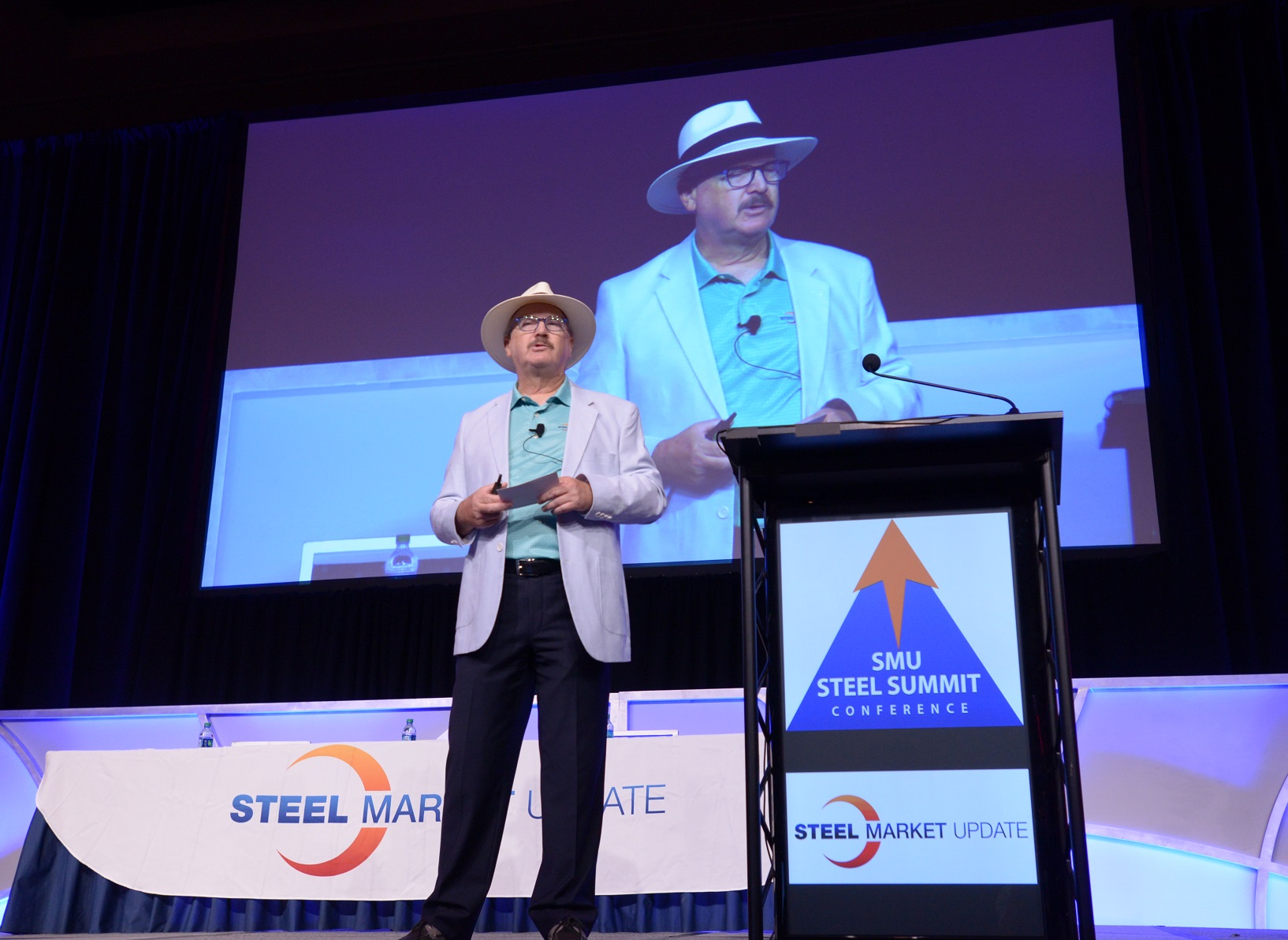
    John Packard SMU Summit 2017When looking at imports for the month of October, you will see a jump. This should be expected due to October being the beginning of the fourth quarter and the first month more imports can come in from those countries with quotas (especially slabs from Brazil). It is interesting to note that even though there is a surge in slabs (semi-finished if you are looking at the government import license data), they are not as high as they were in January, April and July of this year. Some of the slabs appear to be coming in during the month of November from Brazil based on the data. I would expect slab imports in December to be minimal.


    Latest in Analysis

    Price: Blue wave may rock tariff boat, but some ships like Section 232 aren’t sinking

    The midterms are over, and Democrats will control both chambers of Congress in January. In this space last week, Lewis Leibowitz predicted that President Trump's tariffs, including Section 232, may not last much longer. We disagree. To be sure, the new Congress will change trade policy. It will hold hearings, write bills, and almost certainly revisit the trade dispute with Canada. But the foundation of US trade policy is unlikely to be disturbed. Section 232 and Section 301 are established, court-tested authorities that both parties have used. They are also working.

    SMU Survey: Current and Future Steel Buyers’ Sentiment Indices rise

    SMU’s Current and Future Steel Buyers’ Sentiment Indices increased this week, according to our latest market survey.   Every two weeks, SMU polls thousands of steel-industry executives, asking them to rate their companies’ chances of success today and also three to six months down the road. We use their responses to calculate our proprietary Current and Future Steel Buyers’ Sentiment Indices, measures tracked since 2008.

    US heating and cooling shipments fall for third straight month

    US shipments of heating and cooling equipment slipped in September for a third consecutive month, according to the latest data from the Air-Conditioning, Heating, and Refrigeration Institute (AHRI). Shipments declined 2.6% month on month (m/m) in September, after having fallen 10% m/m in August. The monthly pace marks the third-slowest shipment rate year to date. Historically, shipments are strongest in early summer and weakest around the turn of the year, driven by seasonal air conditioner and heat pump volumes. AHRI's data shows September shipments totaled 1,687,240 units, down 2.6% m/m but up 7.7% year over year (y/y) (Figure 1, left). From August to September, shipments of warm air furnaces, A/C, and heat pumps declined, while water heater shipments rose. Compared with a year earlier, only air conditioners and heat pump shipments were higher.