
SMU Price Ranges: Sheet prices tick lower, but floor remains high vs. '24
Sheet prices slipped again this week amid discounting from certain mills and ongoing concerns about demand.


Sheet prices slipped again this week amid discounting from certain mills and ongoing concerns about demand.
Chief executive of the Institute for Supply Management (ISM), Tom Derry highlighted how reactive buying behavior has shifted the market into a quiet demand period. Derry presented ISM data during the weekly SMU community chat.
SMU’s Steel Buyers’ Sentiment Indices eased this week, both approaching multi-year lows.
SMU’s latest steel buyers market survey results are now available on our website to all premium members.
US tariff expansion to stainless material in imported downstream products will not be enough on its own to incentivize capital investment
Steel mill lead times on sheet products contracted across the board this week compared to early July, while plate production times moderately extended, according to steel buyers responding to this week’s market survey.
More than nine out of every ten steel buyers polled by SMU this week reported that mills are negotiable on new order prices. Negotiation rates have increased in each of our last three surveys following the early-June lull, reaching a record high this week.
The Architecture Billings Index (ABI), a leading indicator for non-residential construction activity, declined for an eighth straight month in June.
Steel prices continued to decline this week across all of the sheet and plate products tracked by SMU, pressured by short lead times and the typical summer slowdown.
SMU’s Mill Order Index (MOI) rebounded in June after declining for three straight months. The gain complemented a modest boost in service center shipments for the month, according to our latest service center inventories data.

Tariff threats on Brazil aren't just hitting steel products. Aluminum is also feeling the heat.
Earlier this week, SMU polled steel buyers on an array of topics, ranging from market prices, demand, and inventories to imports and evolving market events.

The volume of finished steel entering the US market remained elevated in May, in line with April figures, according to SMU’s analysis of Department of Commerce and American Iron and Steel Institute (AISI) data
Flat rolled = 55.8 shipping days of supply Plate = 59.4 shipping days of supply Flat rolled US service centers’ flat-rolled steel supply edged down in June with a modest boost to shipments month on month (m/m). At the end of June, US service centers carried 55.8 shipping days of flat roll supply, down from […]
US sheet and plate prices were flat or lower as reduced import volumes were offset by so-so demand.
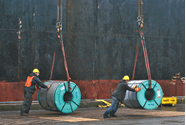
US steel exports rose 10% from April to May but remained low compared to recent years. This came just one month after exports fell to the lowest level recorded in nearly five years.
Turkish scrap prices were unchanged week over week (w/w), with HMS and Shredded grades assessed at $340 and $355 per metric ton (mt) CFR, respectively.
The volume of raw steel produced by US mills inched higher last week, according to the American Iron and Steel Institute (AISI). After steadily increasing in April and May, domestic mill output stabilized in early June and has remained historically strong since.
Both current and future scrap sentiment jumped this month, though survey participants reported responses before key trade news was announced.
CRU Principal Analyst Shankhadeep Mukherjee expects a restocking cycle for steel sheet products in most parts of the world due to either low inventories or seasonally stronger demand.
The commercial vehicle sector is showing signs of fatigue, but you wouldn’t know it at first glance of the latest government figures.
SMU’s Steel Buyers’ Sentiment Indices moved in opposite directions this week. After rebounding from a near five-year low in late June, Current Sentiment slipped again. At the same time, Future Sentiment climbed to a four-month high. Both indices continue to show optimism among buyers about their company’s chances for success, but suggest there is less confidence in that optimism than earlier in the year.
SMU’s ferrous scrap market survey results are now available on our website to all premium members. After logging in at steelmarketupdate.com, visit the pricing and analysis tab and look under the “survey results” section for “ferrous scrap survey” results. Past scrap survey results are also available under that selection. If you need help accessing the survey results […]
SMU’s latest steel buyers market survey results are now available on our website to all premium members. After logging in at steelmarketupdate.com, visit the pricing and analysis tab and look under the “survey results” section for “latest survey results.” Past survey results are also available under that selection. If you need help accessing the survey results, or if […]
Mill lead times for sheet products were steady to slightly longer this week compared to our late June market check, while plate lead times contracted, according to steel buyers responding to this week’s market survey.
Domestic mills are more open to talk price on new orders than they were in June, according to most steel buyers responding to our market survey this week. Negotiation rates have recovered from the early-June lull and are now just a few percentage points shy of the high levels seen late last year.
Sheet and plate prices slipped this week on so-so demand, sideways scrap prices, and chatter that certain mills were making unsolicited calls looking for tons.
CRU Senior Steel Analyst Alexandra Anderson discusses current market and pricing dynamics for long steel products in the US.
Steel trade groups praised the passage of the Big Beautiful Bill (BBB) in Congress on Thursday.
Following the onset of the war in Ukraine in March 2022, concerns about import availability and expectations of rising demand from President Biden’s Infrastructure Bill pushed US rebar prices to record highs. In response, a flurry of new mills and capacity expansions were announced to meet the rise in demand from growth in the construction […]