
Active rig counts slip in US and Canada
The number of active rigs in the US is now at the lowest level seen in over two years, while Canadian rigs have fallen to a four-month low.


The number of active rigs in the US is now at the lowest level seen in over two years, while Canadian rigs have fallen to a four-month low.
The latest SMU market survey results are now available on our website to all premium members. After logging in at steelmarketupdate.com, visit the pricing and analysis tab and look under the “survey results” section for “latest survey results.” Historical survey results are also available under that selection. If you need help accessing the survey results, or if […]

SMU’s Steel Buyers’ Sentiment Indices both rose this week to reach some of the highest levels seen this year.
GrafTech is reporting weak near-term demand for graphite electrodes as economic uncertainty constrains steel production globally.

Hot-rolled coil and plate lead times contracted this week, with most other products remaining flat, according to SMU's most recent survey data. Cold-rolled products, however, saw lead times extend 0.1 weeks to an average of 7.5 weeks vs. two weeks earlier. Hot rolled and plate lead times both contracted 0.3 weeks from our last market check.
I’ve gotten some questions lately about whether the huge gap between domestic hot-rolled coil (HR) prices and those for cold-rolled (CR) and coated is sustainable. I remember being asked similar questions about the wide spread between HR and plate that developed in early 2022. I thought at the time that there was no way that spread could hold. Turned out, I was wrong. That was humbling. And so I’m not going to make any bold predictions this time.
Sheet steel buyers said mills are more willing to talk price on spot orders, according to our most recent survey data.
We've used the word "unprecedented" a lot over the last four years to describe steel price volatility. Over the last two months – despite earlier predictions of a price surge - we've seen unprecedented stability.
I was in Las Vegas last week for ISRI’s annual convention. I like Vegas. I’ve had some fun there over the years. (I was married there nearly 20 years ago. We're still together.) And last week was no exception. So let’s start with the big news from Sin City. When the recycled materials industry meets for the big event next year, it will be under the banner of "ReMA" – not "ISRI".
To the surprise of many — myself included — flat-rolled steel prices appear to be in a holding pattern… again. This is not familiar territory for hot-rolled (HR) coil, at least not over the past few years. Its pricing volatility (as my colleague Michael Cowden has noted in past columns) may rival the elastic moves […]
Prices of steelmaking raw materials have moved in different directions over the last 30 days, according to Steel Market Update’s latest analysis.
In this Premium analysis we cover North American oil and natural gas prices, drilling rig activity, and crude oil stock levels.
Earlier this week, SMU polled steel buyers on an array of topics, ranging from market prices, demand, and inventories to imports and evolving market chatter.
I’m writing these Final thoughts from the 2024 ISRI Convention and Exposition in Las Vegas. I wasn’t the only one with the good idea to attend. Approximately 6,625 others did – a new record for the event. So, a big congratulations to ISRI.
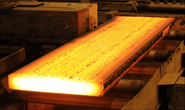
Domestic raw steel production slipped from last week’s multi-month high, according to the American Iron and Steel Institute (AISI).
Flat Rolled = 58.3 shipping days of supply Plate = 60.6 shipping days of supply Flat Rolled US service center flat-rolled steel inventories edged up in March as shipments remained low. At the end of March, service centers carried 58.3 shipping days of supply on an adjusted basis, up from 56.6 shipping days in February. […]

As the ISRI 2024 conference unfolds in Las Vegas, attendees are diving into crucial discussions shaping the future of the recycling industry. Here are the main topics being discussed: New steelmaking capacity coming online this year Export demand during this period Infrastructure spending Supply of pig iron and HBI Current logistics challenges May scrap prices […]
Last week was a newsy one for the US sheet market. Nucor’s announcement that it would publish a weekly HR spot price was the talk of the town – whether that was in chatter among colleagues, at the Boy Scouts of America Metals Industry dinner, or in SMU’s latest market survey. Some think that it could Nucor's spot HR price could bring stability to notoriously volatile US sheet prices, according to SMU's latest steel market survey. Others think it’s too early to gauge its impact. And still others said they were leery of any attempt by producers to control prices.
SMU’s Steel Buyers’ Sentiment Indices both rose this week.
The latest SMU market survey results are now available on our website to all premium members. After logging in at steelmarketupdate.com, visit the pricing and analysis tab and look under the “survey results” section for “latest survey results.” Historical survey results are also available under that selection. If you need help accessing the survey results, or if […]
For something that wasn’t on the agenda in Washington this week, the proposed Nippon Steel deal for U.S. Steel is getting a lot of attention.

The market appears to be taking a pause after the heavy buying that occurred in March.
Steel buyers said mills are more willing to talk price on spot orders on all the products SMU covers, according to our most recent survey data.
Steel prices continued to ease lower in early March – a trend seen since mid-January – before showing signs of bottoming and inflecting up. The SMU Price Momentum Indicator for sheet products shifted from lower to neutral mid-way through the month after Nucor, Cleveland-Cliffs, and ArcelorMittal all targeted new base minimums between $825-840 per short […]
The spread between hot-rolled coil (HRC) and prime scrap prices has widened this month after narrowing for three months, according to SMU’s most recent pricing data.
Next week, Las Vegas will host the largest recycled materials industry event. ISRI’s annual gathering at the Mandalay Bay Resort and Casino will unite more than 6,000 industry professionals to explore the latest trends in ferrous and nonferrous markets, provide networking opportunities, and support business growth. SMU and RMU eagerly anticipate participating, connecting with fellow attendees, and […]
Nucor made waves in the sheet market when it announced on Friday that it would begin publishing a weekly hot-rolled (HR) coil price. The Charlotte, N.C.-based steelmaker arguably made even bigger waves on Monday when it posted its first weekly HR number: $830 per short ton. That’s $70/st lower than the $900/st HR price Cliffs announced in late March. It’s also lower than prices in the mid-$800s that other mills were (less publicly) seeking.

The apparent supply of steel in the US fell 6% from January to February, according to data compiled from the Department of Commerce and the American Iron and Steel Institute (AISI).
Global steel demand will reach roughly 1.793 million metric tons (1.976 million short tons) this year, an increase of 1.7% over 2023, the World Steel Association (worldsteel) said in its updated Short Range Outlook report. The gain will come after a 0.5% contraction in steel demand in 2023. Demand is forecasted to increase another 1.2% […]
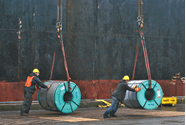
The latest US Department of Commerce data shows 840,000 short tons (st) of steel left the country in February. This is the highest monthly export rate since August 2023.