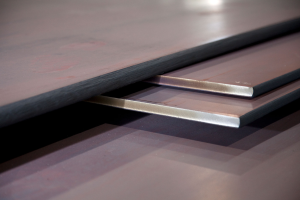
US plate spot tons scarce, mills flex contract leverage
The US plate market is increasingly challenging. Spot tons remain constrained as demand gains momentum and lead times continue to stretch out—double what they were a year ago.


The US plate market is increasingly challenging. Spot tons remain constrained as demand gains momentum and lead times continue to stretch out—double what they were a year ago.

Sheet and plate prices continue to push higher on increasingly tight supplies and solid demand, market participants said. The domestic market remains characterized by both limited spot availability and limited contract availability. Buyers continue to report having difficulty finding spot material and being held below their contract maximums and sometimes to their contract minimums.
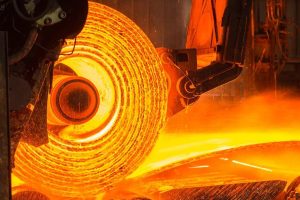
Most steel buyers responding to our latest market survey reported that mills continue to hold a firm grip on prices. Negotiation rates remain low on all sheet and plate products. In late August, the share of buyers reporting that mills were negotiable fell to the lowest rate seen in almost five years, and that rate was unchanged through this week.
Steel mill lead times held steady for sheet products this week and extended further on plate, according to buyers responding to our latest market survey. Production times have been historically long for most of the summer, currently at or near multi-year highs on each of the products we measure. Over two-thirds of the buyers responding to this week’s survey (68%) believe lead times will be flat two months from now, similar to recent surveys. Of the remainder, 19% predict lead times will extend further, and 13% expect contractions.
Algoma Steel has restarted electric-arc furnace (EAF) production in Sault Ste. Marie, Ontario, after a turbine failure at its Lake Superior Power (LSP) plant.

Mexico has formally opened an anti-dumping investigation into imports of cut-to-length steel plate from Japan. Mexico’s Ministry of Economy launched the trade case after a complaint by Grupo Acerero (GASA). GASA, a San Luis Potosi-based steel producer, alleges price discrimination and injury to the Mexican industry, according to the announcement in Mexico’s Official Gazette of the Federation. The case targets hot-rolled, uncoated, non-coil carbon steel plate in sheet form, at least 4.75 mm thick and 600 mm wide.
Flat-rolled steel prices inched higher again this week, continuing a trend that has characterized the market for most of this year. SMU’s hot-rolled (HR) coil price now stands at...
The 45-day outage will now take place in September instead of August, as initially planned, JSW Steel CEO Robert Simon said.

Nucor said on Friday its Plate Group plans to maintain base plate prices with the opening of its October orderbook.
Sheet prices mostly ticked upward again this week on a series of factors long familiar to the market: long lead times, limited spot availability, and solid demand.
SSAB Americas plans to increase plate prices by at least $40 per short ton (st), according to a letter sent to customers on Monday.

Canada’s government on Monday announced the largest shipbuilding contract in Quebec’s history.

CRU: Global finished steel prices have diverged in August, with longs softening while sheet and plate firmed in most regions. Weak construction demand persisted across most longs markets, with the US the notable exception. Higher sheet prices were driven by tightening supply in the US and reduced import attractiveness in Europe, even as APAC sheet prices declined. Plate prices were mostly firmer across APAC, stable to down in Europe, and continued climbing in the US.
Steel mill lead times remained extended on both sheet and plate products this week, according to buyers responding to our latest market survey. Production times have been historically long for most of the summer, remaining at or near multi-year highs across all of the products we track.

Most steel buyers who responded to our market survey this week reported that mills are holding a firm grip on sheet and plate prices. The share of buyers reporting that mills were negotiable fell to the lowest rate seen in almost five years. Negotiation rates for three sheet products are down to multi-year lows.
Sheet prices and plate prices continued their relentless march higher over the last week as more participants said they were effectively on allocation, especially when it comes to hot-rolled (HR) coil.
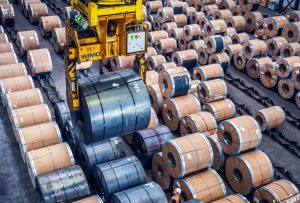
Premium Report: US service centers’ flat-rolled steel supply rose marginally in July, reversing course for the first time all year. Shipping days of supply ticked up to 45.6, according to SMU data. Service center shipments in were more than 4% below intake, noticeably trailing inbound volumes.
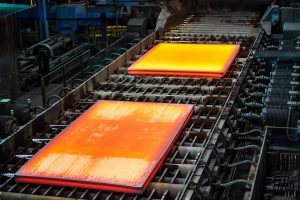
The domestic plate market is increasingly constrained as lead times spill well into Q4 and mills talk allocation. Speaking with buyers across the US, from the Midwest and East Coast to the South and West, there’s a shared theme: What spot tons?!
Sheet and plate prices either held their ground or increased this week amid what remains an historically tight spot market.
US steel exports recovered 7% in June, marking the highest monthly rate recorded since January 2025. Despite the recoveries seen over the last six months, trade has been historically weak for over a year and remains weak compared to 2022-2024 volumes.

Licenses to import steel into the US surged in July to the highest level since June 2025, according to recently released US Commerce Department data. Final June figures show a 3.8% month-on-month decline, while July licenses show a 9% recovery.

In recent conversations, some participants predict mill maintenance outages and scheduled updates will crimp an already constricted market.
Steel mill lead times held steady on sheet products this week and extended further on plate, according to buyers responding to our latest market survey. Production times remain at or near multi-year highs across all products, roughly three to four weeks longer than they were last summer.
Most steel buyers report that mills are unwilling to budge on new sheet and plate spot order prices this week. Negotiation rates have been low for most of this year, having recently fallen to one of the lowest measures recorded in almost five years.

Sheet and plate prices continue to rise on extremely limited spot availability, long lead times, and solid demand, according to market participants.
Algoma’s CEO touted the company’s plate production and its focus on the Canadian market.
Algoma Steel narrowed its earnings loss by 13.2% in the second quarter as the company's electric-arc furnace (EAF) steelmaking ramped up further.
SMU’s sheet and plate price indices were steady to higher this week, with all products at multi-year highs.
Foreign steel is gaining traction with US buyers, according to SMU's most recent Flat-Rolled Steel Survey. Most manufacturers and service centers now report competitive pricing, and more are placing new foreign orders.
Steel mill lead times have trended upward since last November and now stand at or near multi-year highs for all products.