• Skip to main content

    Product

    Commerce Applies Duties on Vietnamese Steel Linked to China

    Written by Tim Triplett


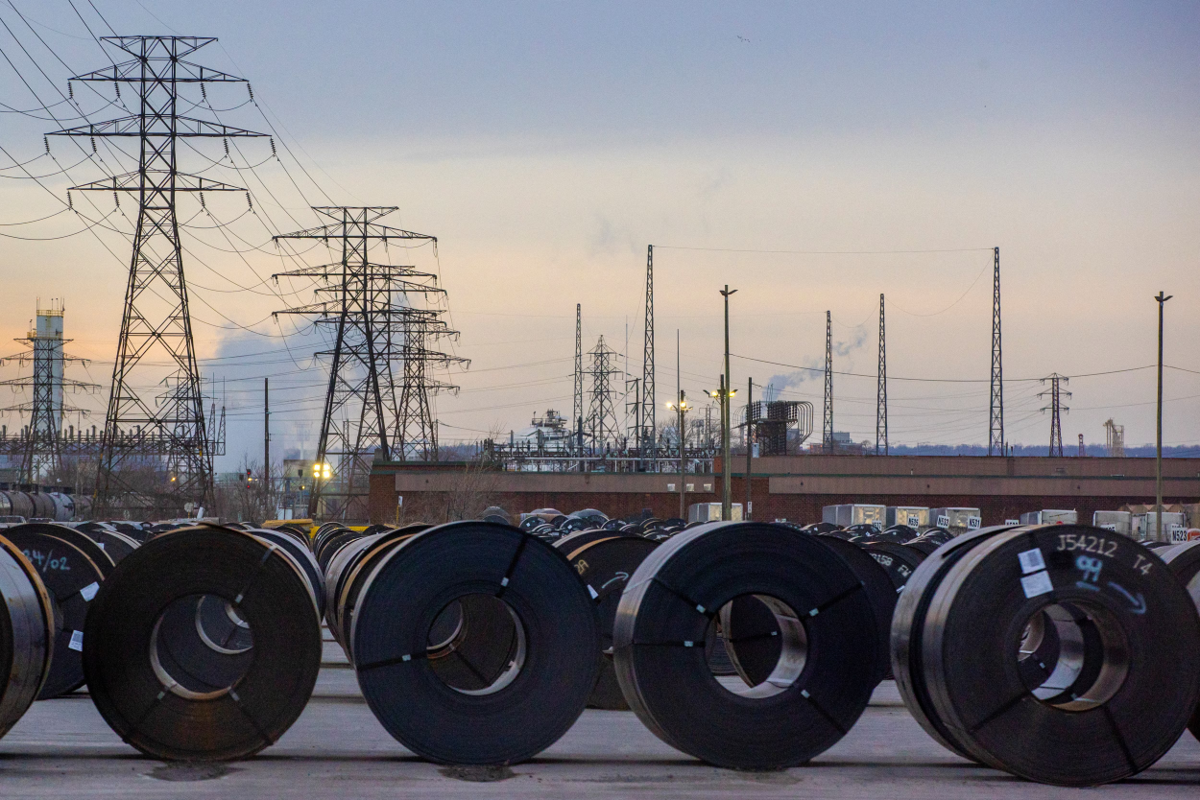
    Marking a win for U.S. steelmakers, the Commerce Department on Monday officially slapped duties on corrosion-resistant steel (CORE) and certain cold rolled steel products imported from Vietnam that were produced from substrate originating in China. Commerce determined that even though the products underwent some processing in Vietnam, they should still be subject to the same antidumping and countervailing duty orders as if they had been exported directly from China.

    Domestic steelmakers who filed the case argued China was seeking to circumvent U.S. duties by shipping steel through a third country, in this case Vietnam. Shipments of CORE from Vietnam to the United States increased from $2 million to $80 million after preliminary duties were imposed on Chinese products in 2015. Likewise, shipments of cold-rolled steel from Vietnam to the United States increased from $9 million to $215 million.


    Latest in Product

    November scrap prices rise as market nears settle

    November scrap procurement has commenced in the US with buyers divided on the price increases from the previous month. Several mills reportedly sought a rise of $20 per gross ton (gt) while others saw $30/gt as the number. The $30/gt price tag mainly applies to the obsolete grades, like shredded, P&S and #1 HMS, with prime grades pulling up the rear at $20. SMU spoke to a Chicago-based source who said that market was up $30/gt and 20/gt on shredded and busheling, respectively. He also mentioned the integrated mills in this district are after heavier grades like P&S and railroad grades, like wheels. These grades have been in short supply since last summer. Our source believes they commanded prices up $30/gt while busheling was at plus $20.

    Drilling activity ticks up in the US, eases in Canada

    The latest tally of active drilling rigs moved marginally higher in the US, up for the first time in five weeks. Activity eased in Canada this week, according to oil and gas rig count data published by Baker Hughes. The US rig count increased to 604 rigs this week, setting an 18-month high watermark. Compared with this time last year, 56 more rigs are in operation today. Canada’s count declined by three to 223 rigs this week, easing for the first time in three weeks. Activity is up from the same week of 2025, with 32 more rigs operating today.

    Nucor temporarily halted secondary offers, rattling a tight US market

    Nucor opened its secondary and excess product bid list across all its flat-rolled mills last Monday, as it typically does, market participants told SMU. But by Wednesday, when bidding was scheduled to close, Nucor notified buyers it would not be awarding any bids that week. The abrupt close sent a shock through the secondary market, they said. “There will be no awards this week,” emails from Nucor sales representatives to customers confirmed. “Effective immediately, we are placing a temporary hold on all secondary sales.”

    SMU scrap market survey results now available

    SMU’s November ferrous scrap market survey results are now available on our website to all premium members. After logging in at steelmarketupdate.com, visit the Pricing and Analysis tab and look under the “survey results” section for Ferrous Scrap Survey results. Past scrap survey results are also available under that selection. If you need help accessing the survey results or if your company would like to have your voice heard in our future surveys, contact smu@crugroup.com.

    Scrap export market activity perks up

    There has been an upsurge in Turkish deep-sea scrap buying over the last week for December shipment. Prices paid increased but not as much as the trade expected.cDuring the last week, Turkey-based steelmakers bought at least seven cargoes, largely from the UK and Northern European suppliers, while virtually shunning higher priced US scrap. The initial wave of sales of HMS 80/20 ranged from $395-$398.50 per metric ton (mt) on a CFR basis. This equated to an average increase of less than $5/mt. The was one cargo bought later at $401/mt from this region.