SSAB Americas revenue dips in Q1 despite higher steel prices
SSAB Americas’ revenue fell in the first quarter as negative currency effects outweighed higher steel prices.


SSAB Americas’ revenue fell in the first quarter as negative currency effects outweighed higher steel prices.

Nucor's new, 3-million-ton-per-year sheet mill in Apple Grove, W.Va., has reached "about 85%" completion, with commissioning now underway.

The volume of raw steel produced by US mills eased last week but remains within earshot of the multi-year high set one week prior

Each of SMU’s sheet and plate price indices climbed higher this week, with most products rising further to new multi-year highs

North American steel buyers are signaling stronger interest in foreign material amid a tight market and rising global substrate costs, which are complicating purchasing decisions.
Domestic mill production ticked up to a new multi-year high last week, according to recently published American Iron and Steel Institute (AISI) figures.

Cleveland-Cliffs Inc. executives on Monday detailed a series of operational moves aimed at improving efficiency, lowering costs, and tightening the company’s production footprint.
Apparent steel supply declined 3% from January to February to the third-lowest rate recorded in the past two years, just 5% above the near-five-year low set last November.
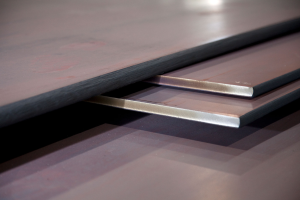
Factors like fluctuating demand, import availability, domestic product lead times, fuel surcharges, and end-user consumption left plate sources feeling unsettled.

MU’s latest steel buyers market survey results are now available on our website to all premium members.

Conditions in the US market remain tight as domestic demand is holding up with support from border wall projects and data center investments. The supply side has struggled to keep pace with weak import volumes, impacting the market.
Steel mill lead times remained elevated this week, according to buyers responding to our latest market survey.
Nucor announced its fuel surcharge for plate will be at least $10 per short ton, effective with shipments beginning May 1.
Most sheet and plate buyers continue to report that mills are not negotiable on new order spot prices, according to our latest market survey conducted this week.
US service centers’ flat-rolled steel supply declined for a third straight month in March, with shipping days of supply slipping to 49.3 on an adjusted basis, according to SMU data.
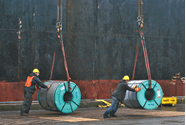
US steel exports held steady from January to February and remain near historical lows.
Sheet and plate prices increased yet again this week on an increasingly tight spot market. It's gotten so tight that some market participants say they're becoming more concerned about availability than about price.

Ken Simonson, chief economist for The Associated General Contractors of America (AGC), will join SMU for a Community Chat webinar on Wednesday, April 15, at 11 a.m. ET.
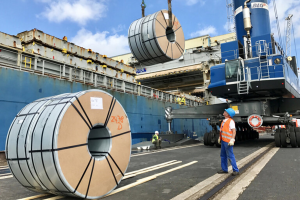
Steel imports remain near some of the lowest volumes recorded in over five years.

U.S. Steel and the United Steelworkers filed anti-dumping and countervailing duty petitions with the US Department of Commerce and the US International Trade Commission on Thursday.
Plate market participants we spoke to this week offered a long list of concerns: escalating fuel and freight expenses, consolidated sources of end-market demand, tariff-related complications, as well as long lead times and delivery delays from US mills. The cherry on top? An ever shrinking availability of spot tons from domestic mills.
Algoma Steel aims to increase plate prices by US$60 per short ton (CA$80/st), effectively immediately, according to a letter to customers dated Thursday.

Sheet and plate prices continued to hold steady or tick upward once again this week. And the factors behind the gains are familiar ones: limited spot tonnage, stable demand, limited import competition, and outages (planned or otherwise) at domestic mills.
Steel mill production times for sheet and plate products remain at or near multi-year highs, according to buyers responding to our latest market survey.
Spot market participants worry that limited availability for certain grades of domestically produced plate will extend lead times even further.
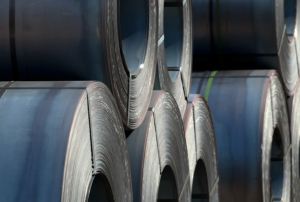
Most steel buyers report that mills are not willing to negotiate on new order spot prices, according to our latest market survey. Mill negotiability is now down to one of the lowest rates measured in over a year.
Sheet and plate prices were flat or modestly higher this week, continuing a trend we’ve seen since the beginning of Q4. The big question: How much longer can the trend hold?

Most steel buyers see prices continuing to inch higher on stable or improving demand. But some are concerned higher energy prices stemming for the Iran war could dent the overall economy.
The pace of sheet and plate price increases slowed this week, with most products holding at some of the highest levels seen in over a year.

Mexico’s Ministry of Economy issued a preliminary ruling in its anti-dumping case on hot-rolled steel from China and Vietnam. The government found evidence of price discrimination and imposed provisional duties on a wide range of hot-rolled flat products, including coils, sheet, strip, and plate.