
AISI: Raw steel production slows to two-month low
Total US raw steel output declined last week for the third-consecutive week but remains historically strong.


Total US raw steel output declined last week for the third-consecutive week but remains historically strong.

Wells Fargo's Timna Tanners thinks the steel price rally will be falling off as we get further into the second half.

Both Steel Buyers’ Sentiment Indices continue to indicate that steel buyers are confident in their companies’ prospects today, as well as in the months ahead.

Drilling activity accelerated this week in both the US and Canada, according to recently released rig count figures from Baker Hughes.

The results of the latest SMU flat-rolled market survey are now available on our website to all premium members.
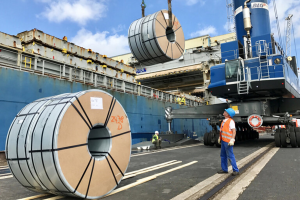
Cold-rolled coil prices moved higher in the US this week, as offshore prices trended lower. Imports are, as a result, increasingly more competitive, even with the 50% Section 232 tariff.
Steel mill lead times remained extended this week on both sheet and plate products. Current production times three to four weeks longer than levels seen last summer.
Steel buyers negotiation rates remain at or near historic lows across most sheet and plate products.

The American Institute of Architects (AIA) said architecture billings showed signs of cooling in May, with the headline index reading notably below 50.
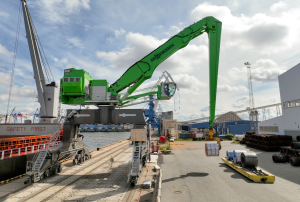
SMU’s average price for domestic HR was $1,145 per short ton (st) this week, $15/st higher week over week (w/w). In offshore markets last week, prices moved down, largely maintaining a trend seen since late April.

Total raw steel produced around the globe rebounded 3% in May to an estimated 157.9 million metric tons (mt), according to the World Steel Association (worldsteel).
US raw steel production has eased over the past month following the multi-year high seen in May, according to recent American Iron and Steel Institute (AISI) data

CRU: Tight market balance will drive up US steel plate prices, while weak demand and lower CBAM costs will pull European prices down. Weather risks will shape Asian markets, from Chinese rain disruptions to uneven Indian monsoons.

Nucor announced on Monday, June 22, that its consumer spot price (CSP) for hot-rolled coil will be $1,130 per short ton for the week, up $5/st from last week.
Cold-rolled (CR) coil prices ticked up in the US this week, as offshore prices mostly trended lower.

South Korea has overtaken Canada as the top foreign supplier of steel to the US market.
For the next month, CRU forecasts that iron ore demand will fall m/m while metallurgical coal to be stable.

The US HRC futures curve has continued to move higher, particularly in the deferred months, suggesting the market is pricing a slower return to balance.

Earlier this week, SMU polled steel buyers on an array of topics, ranging from prices, demand, and inventories to tariffs, imports, and evolving market conditions.

Manufacturing activity in New York state increased modestly in June, easing after posting strong growth the month prior, according to the Empire State Manufacturing Survey.
Drilling activity ticked higher this week in both the US and Canada, according to recently released rig count figures from Baker Hughes.
SMU’s average price for domestic HR was $1,130 per short ton (st) this week, $15/st higher week over week (w/w). In offshore markets last week, prices were largely down, following a trend seen since late April.
SMU’s Steel Demand Index ticked back up from late May, remaining in elevated territory, according to mid-June indicators.

May was the fifth consecutive month of expansion for the US manufacturing sector, according to the most recent Institute for Supply Management (ISM) report.

Canada’s steel production dropped sharply in May, falling 15% year over year and running 14% lower year-to-date, according to Earth-i’s Savant Global Monitoring Index. May’s production was just under 900,000 metric tons.
SMU’s Mill Order Index recovered in May, reclaiming some momentum lost the month prior.

SMU’s sheet price indices increased further this week, while plate held steady, all at multi-year highs.

Apparent steel supply eased from March to April on reduced mill shipments per recent Department of Commerce and American Iron and Steel Institute (AISI) data.
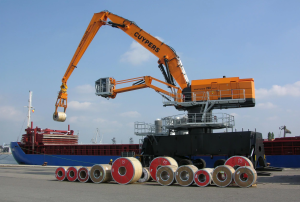
US steel exports improved 2% from March to April to the highest monthly volume seen in 13 months. Although up, trade remains historically low
SMU and AMU are pleased to announce that Wells Fargo Managing Director Timna Tanners will be joining us for a Community Chat webinar on Wednesday, June 24, at 11 am ET.