
Housing starts increase in April but remain muted
US housing starts ticked up through April following March’s dip, according to the latest data release from the US Census Bureau.


US housing starts ticked up through April following March’s dip, according to the latest data release from the US Census Bureau.
The recent decline in US hot-rolled (HR) coil and longs prices has further restricted demand for imported material. Despite the decline in US sheet prices, CR coil and HDG imports remain attractive. While demand for imports of longs products has been limited, buyers have increased imports of wire products to avoid wire rods’ higher tariffs. […]
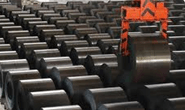
US hot-rolled (HR) coil prices saw further declines this week, while foreign prices were steady to slightly higher in the three regions we monitor
SMU surveyed our market contacts this week about steel prices, demand, and the overall marketplace. Below are some of the buyers' responses in their own words to help you get a feel for current and future market conditions. Demand is a big topic of discussion currently. Is it steady, falling, or on the upswing with summer construction heating up? As you can see from the answers below, it depends on who you ask. One buyer’s response sums it up pretty well: “I still see the marketplace as soft/stable with some segments busy, while others tread water.”
Steel Market Update is pleased to share this Premium content with Executive members. For information on how to upgrade to a Premium-level subscription, contact info@steelmarketupdate.com. Flat Rolled = 57.8 shipping days of supply Plate = 58.3 shipping days of supply Flat Rolled US service center flat-rolled steel supply edged lower in April, though shipments continue to […]
New York state continues to see deteriorating manufacturing business conditions through May, according to the latest Empire State Manufacturing Survey
The China Iron and Steel Association (Cisa) has urged steel producers to cut back on record high inventories while the sector struggles with oversupply.
Prices for hot-rolled (HR) coil in recent weeks have been declining faster than those for galvanized sheet, resulting in a growing price spread between the two steel products.
Steel Market Update’s Steel Demand Index fell eight points, and back into contraction territory, an indication demand might be slipping as prices have trended lower, according to our latest survey data.
The latest SMU market survey results are now available on our website to all premium members. After logging in at steelmarketupdate.com, visit the pricing and analysis tab and look under the “survey results” section for “latest survey results.” Historical survey results are also available under that selection. If you need help accessing the survey results, or if […]
Japanese steelmaker JFE Holdings will invest abroad as part of a drive to lift income, says group president Yoshihisa Kitano.

SMU’s Steel Buyers’ Sentiment Indices both declined this week, with Current Sentiment tumbling over 10 points, according to our most recent survey data.
Hot rolled, cold rolled, and plate buyers said mills are more willing to talk price on spot orders this week, while the overall negotiation rate for products SMU surveys remained level, according to our most recent survey data.
Most steel products tracked by SMU saw lead times contract this week from two weeks earlier, according to SMU’s most recent survey data.
Brazil-based Gerdau has announced it will carry out a feasibility study into the greenfield development of a 600,000 metric-ton-per-year (mt) special steel plant in Mexico.
Turkish scrap import prices were stable last week. CRU’s assessment for HMS1/2 80:20 and shredded was unchanged at $384 per metric ton (mt) CFR and $408/mt, respectively.
Construction spending in the US in March was basically steady from the previous month but showed notable year-on-year (y/y) growth.
Brazil’s chamber of foreign trade, Camex, has approved quotas on imports of 11 steel products and a 25% levy on shipments 30% above a product’s average import volume between 2020 and 2022.
SunCoke's earnings soared in the first quarter, with the company citing strong performances in its cokemaking and logistics segments.

The Index had briefly showed expansion in March, but has indicated a contracting manufacturing sector for 17 of the last 18 months.

On Monday and Tuesday of this week, SMU polled steel buyers on an array of topics, ranging from market prices, demand, and inventories to imports and evolving market chatter.

The Chicago Business Barometer slipped further in April, now at the lowest measure recorded since November 2022.
An important economic indicator for the nonresidential construction industry declined in March to its lowest point in more than three years.
The latest SMU market survey results are now available on our website to all premium members. After logging in at steelmarketupdate.com, visit the pricing and analysis tab and look under the “survey results” section for “latest survey results.” Historical survey results are also available under that selection. If you need help accessing the survey results, or if […]

SMU’s Steel Buyers’ Sentiment Indices both rose this week to reach some of the highest levels seen this year.
If successful in its overtures to Anglo American, BHP will create the world’s largest diversified miner by a country mile. The rationale for this merger is scale and in mining, size matters.
Hot-rolled coil and plate lead times contracted this week, with most other products remaining flat, according to SMU's most recent survey data. Cold-rolled products, however, saw lead times extend 0.1 weeks to an average of 7.5 weeks vs. two weeks earlier. Hot rolled and plate lead times both contracted 0.3 weeks from our last market check.
Sheet steel buyers said mills are more willing to talk price on spot orders, according to our most recent survey data.
Steel is a foundation of the global economy. It is an essential raw material for nearly every industry, from automotive and construction to transportation, machinery, and energy.
Steel sheet prices in many regions of the world were steady week over week in the week ended April 17.