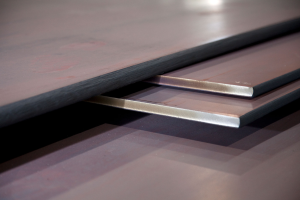
Market fears shortages of domestically produced plate products
Spot market participants worry that limited availability for certain grades of domestically produced plate will extend lead times even further.


Spot market participants worry that limited availability for certain grades of domestically produced plate will extend lead times even further.

The Trump administration has implemented changes to its steel and aluminum tariff framework that alter how duties are applied to imported manufactured goods, according to an April 2 presidential proclamation.
Most steel buyers report that mills are not willing to negotiate on new order spot prices, according to our latest market survey. Mill negotiability is now down to one of the lowest rates measured in over a year.
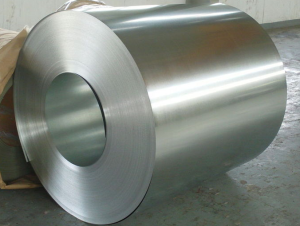
The Commerce Department has launched another duty circumvention inquiry targeting coated steel imports at the request of two US mills.

Ryerson Holding Corp. announced a series of leadership changes to fully align the organization after its recent acquisition of Cleveland-based Olympic Steel.

What impact could the war in Iran have on the steel raw materials supply chain and prices?

Sheet and plate prices were flat or modestly higher this week, continuing a trend we’ve seen since the beginning of Q4. The big question: How much longer can the trend hold?

Winter is over now and the scrap landscape is looking a bit less challenging.

POSCO has reiterated its interest in expanding in the US market. The South Korean steelmaker also confirmed it remains in talks with Cleveland-Cliffs Inc.

U.S. Steel has confirmed the restart of the B blast furnace at its Granite City Works near St. Louis.

Raw steel production recovered for the second-consecutive week and is now just 14,000 short tons below the four-year high production rate witnessed in mid-February.

Could we see prices continue to inch higher, plateau, and then start to slide back? A lot hinges on whether and how long it takes mills to catch up on orders.

Prices for iron ore, aluminum, pig iron, and shredded scrap have all risen in the last 30 days. Busheling scrap held steady, while zinc and coking coal declined.

The latest count of operational drilling rigs declined in both the US and Canada this week, according to recently released data from Baker Hughes.
U.S. Steel confirmed it is in the process of restarting one of its two Granite City Works blast furnaces. Local media reports suggest iron- and steelmaking will have resumed over weekend.

We just wrapped up another Steel 101 workshop. But this time, we had the privilege to take the most hands-on industry workshop on steelmaking and market fundamentals abroad.

Worthington Steel reported steady progress on its planned acquisition of Kloeckner & Co., calling the deal a major strategic step as steel markets show early signs of tightening in the US and remain under pressure in Europe.

Most steel buyers see prices continuing to inch higher on stable or improving demand. But some are concerned higher energy prices stemming for the Iran war could dent the overall economy.

The US Department of Commerce has launched two trade investigations to determine if certain corrosion-resistant (CORE) steel imports are being transshipped through Indonesia to avoid paying anti-dumping and countervailing duties (AD/CVDs).
Worthington Steel reporter lower FY Q3 earnings on what its CEO described as "challenging" macroeconomic conditions.

The galvanized sheet market continued to tighten in March as distributors and service centers reported firm demand, low inventory levels, and rising transportation costs. Participants on the monthly HARDI sheet metal and air-handling call on Wednesday described a market defined by constrained supply and steady upward pricing pressure.
Sheet prices continue to inch higher. And people who once thought hot-rolled coil (HR) prices couldn’t go above $1,000 are now saying $1,100 doesn’t seem out of the question.
The pace of sheet and plate price increases slowed this week, with most products holding at some of the highest levels seen in over a year.

The bulk scrap export market into Turkey is starting to form after several weeks of inactivity.
The public will soon have the opportunity to request Section 232 tariff coverage on imports of automobile parts.
Domestic mill production was estimated at 1.78 million short tons last week, near the four-year high set one month ago.

A precipitous decline in nonbuilding starts led to an overall slowdown in total construction starts from January to February, even as the nonresidential and residential sectors showed marked improvement.
Construction spending edged down slightly in January, slipping for the first time in three months.
Oil and gas drilling in the US was basically steady in the week ended March 20, based on Baker Hughes' latest report on the number of rotary rigs in operation. Drilling in Canada, however, continued to slide, with the country seeing a steep decline in its rig count.
Plate market sources say the week has been quiet, but that overall, business remains consistent.