
AMU: Aluminum Association urges tariff harmonization with Canada, Mexico
The Aluminum Association is pushing for tariff rates to be aligned in Canada, the US and Mexico.


The Aluminum Association is pushing for tariff rates to be aligned in Canada, the US and Mexico.

SMU’s November ferrous scrap market survey results are now available on our website to all premium members. After logging in at steelmarketupdate.com, visit the Pricing and Analysis tab and look under the “survey results” section for Ferrous Scrap Survey results. Past scrap survey results are also available under that selection. If you need help accessing the survey results or if your company would like to have your voice heard in our future surveys, contact smu@crugroup.com.
The latest tally of active drilling rigs moved marginally higher in the US, up for the first time in five weeks. Activity eased in Canada this week, according to oil and gas rig count data published by Baker Hughes. The US rig count increased to 604 rigs this week, setting an 18-month high watermark. Compared with this time last year, 56 more rigs are in operation today. Canada’s count declined by three to 223 rigs this week, easing for the first time in three weeks. Activity is up from the same week of 2025, with 32 more rigs operating today.
The US Department of Commerce recently made adjustments to the anti-dumping duties (AD) on certain steel pipe and tube imports after annual administrative reviews, according to notices in the Federal Register. Commerce reviewed the AD order on imports of oil country tubular goods (OCTG) from Mexico and lowered the dumping rate for one company. Tubos de Acero de Mexico received a 1.87% dumping rate for the year ended Oct. 31, 2024. The rate is down notably from 26.1% in the previous year. The all-others cash deposit rate remains set at 44.93%.

After an annual administrative review, the US Department of Commerce is adjusting the countervailing duties (CVDs) on imports of cut-to-length carbon-quality steel plate from South Korea. For the 2024 calendar year, Commerce set CVDs of 1.89% for Dongkuk Steel Mill and 1.39% for Hyundai Steel, according to a Federal Register announcement. The rates have changed slightly from the prior year review: Dongkuk's is down from 2.21% and Hyundai's is up from 1.31%. The cash deposit rate for all other companies remains 3.26%.
The Steel Manufacturers Association (SMA) and the American Iron and Steel Institute (AISI) have weighed in on yesterday’s midterm elections that saw Democrats gain control of both the Senate and the House of Representatives. “Last night's elections delivered historic gains for Democrats in Congress,” SMA EVP Brandon Farris said in a statement to SMU on Wednesday. “Thankfully, a strong American steel industry transcends party lines." He said SMA's mission remains clear. It includes defending “the policies that have helped drive historic investment, strengthen American manufacturing, secure reliable and affordable energy, and ensure domestic steelmakers can compete on a level playing field.”
On Monday and Tuesday of this week, SMU polled steel buyers on an array of topics, ranging from market prices, demand, and inventories to tariffs, imports, and evolving market events. We are sharing a selection of the comments we received below, in each buyer’s own words. Before diving in, we reviewed all the responses collected and compiled these key takeaways: Respondents overwhelmingly anticipate further increases. Buyers cite limited supply, mill delays, low inventories, and steady-to-strong demand. Most say demand is generally stable to improving, with some purchasing driven by fears of higher prices or unavailable material rather than stronger underlying consumption. Most respondents report faster inventory turnover, while shortages are constraining sales and, in some cases, prompting customer allocations. Buyers increasingly see imports as a way to secure scarce material, though domestic-origin requirements, delivery timing, and pricing risks remain obstacles.
Sheet prices soared this week as market participants increasingly predict that the strong market characterizing 2026 will stretch well into 2027. And with extremely limited spot availability, mills that have spot tons to sell are charging a significant premium, they said. The result: Sheet prices saw their highest week-over-week gains since March 2025, according to SMU's pricing records. That's when President Trump shocked the market by expanding Section 232 tariffs to cover traditional US allies such as Canada, Mexico, and the EU.
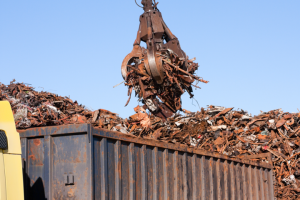
Most SMU scrap sources are predicting a stronger scrap market for November. The increase in prices is generally thought be $20-30 per gross ton (gt) in most districts. However, there are differences of opinion about the upcoming price settlements. SMU spoke with a trading source in the Great Lakes region who told us mills in the Eastern Ohio and Western Pennsylvania regions are short on scrap. At least one buyer is offering to buy scrap at a $30/gt increase from October levels. He said most dealers have elected to wait to see where things settle before making commitments.
Gerdau announced on Nov. 2 that it will raise special bar quality (SBQ) prices by $60 per short ton ($3/cwt). The increase is effective for all new orders and shipments starting Jan. 1, 2027, according to a letter sent to customers. It applies to all hot-rolled carbon and alloy SBQ products, including rounds, squares, flats, special sections, and thermally processed products.
Metallus reported improved year-over-year profitability in the third quarter, but expects seasonal softness and planned maintenance to weigh on fourth-quarter results. The specialty metals producer pointed to continued demand and a new defense contract as supports for growth.
The US Department of Commerce has determined sizable dumping rates against Austria, Taiwan, and the United Arab Emirates in the trade case investigating imports of oil country tubular goods (OCTG). Recall the dumping investigations and a companion subsidy investigation were launched in April at the request of the US OCTG Manufacturers Association (USOMA), U.S. Steel, and the United Steelworkers.
US manufacturing activity expanded for the 10th consecutive month in October, according to supply executives in the Institute for Supply Management's latest report. The October ISM Manufacturing Purchasing Managers’ Index registered 55.5%, up one percentage point from the prior month. An index reading above 50% indicates the manufacturing economy is growing, while a reading below that indicates contraction. ISM noted that the overall economy continued to expand in October for the 24th consecutive month, emphasizing that a PMI reading above 47.5% over a period of time generally indicates that the overall economy is growing.
Construction has been an uneven market over the last year, but data centers have been a bright spot. Ken Simonson, chief economist for the Associated General Contractors of America (AGC) sat down with SMU Editor-in-Chief Michael Cowden last week for a Community Chat. In a far-ranging conversation, Simonson spoke on the current state of construction and wider issues in the economy. (For SMU Premium subscribers, you can watch replay of the entire interview here.)

Buyers in SMU’s latest Flat-Rolled Steel Survey increasingly expect hot-rolled (HR) coil prices to keep climbing into year-end and beyond. But competitive import offers have not yet eased concerns about tight availability: most surveyed manufacturers and service centers said foreign suppliers were quoting competitive prices, while many service centers said they were still buying imports to secure additional tons. As of Tuesday, Oct. 27, current spot prices for HR coil range from $1,280 per short ton (st) to $1,330/st, averaging $1,305/st, according to SMU’s market survey. Looking two months ahead, 41% of respondents to our Oct. 28 survey expected HR coil prices to be $1,300-1,349 per short ton (st) in two months, down from 47% in our survey two weeks earlier.

Domestic raw steel production surged last week, reaching its highest output in almost two decades, according to the latest American Iron and Steel Institute (AISI) figures. While the seesaw pattern continued for US production this past week, production swelled to its highest reading since Aug. 23, 2008, driven by a massive swing in the South. The increase reversed the recent downward trend, with a sharp rebound in the South accounting for nearly all the weekly gain. Production has fluctuated considerably over the past two months, reaching both an 18-year high and its lowest level since January.

Nucor said on Monday, Nov. 2, that its consumer spot price (CSP) for hot-rolled (HR) coil will be $1,280 per short ton (st) this week, up $10/st from last week. The CSP for HR coil from California Steel Industries (CSI) on the West Coast will be $1,350/st, also up $10/st from a week earlier. Nucor continues to offer lead times of three to five weeks, according to its letter to customers. You can track mill price announcements on our website. Steel Market Update published a weekly price assessment on Tuesday, Oct. 27, showing HR coil prices averaging $1,305/st, up $15/st from the previous week.

National Material Company has completed its acquisition of Arlington Metals Corp., the companies said in a joint press release. National Materials, a service center based in East Chicago, Ind., said the acquisition of Arlington Metals, a Franklin Park, Ill.-based toll processor, will allow it to serve customers across a broader range of markets and metals. "Arlington Metals is a great fit for us," said Blake Johnson, president of National Material.

In this week's Steel Market Chatter, we explore manufacturing and service center buyers' comments about demand, prime scrap, the Iran War, and expectations for Section 232 tariffs in USMCA negotiations. We'll share a selection of the comments we received in each buyer's own words. Dive in with us into the results and findings of our latest Flat-Rolled Steel Survey.

The Chicago Business Barometer slipped in October but remained in expansion for a second month. The Barometer reading from ISM Chicago and MNI Indicators came in at 55.3 in October, down 3.5 points from September but up 8.2 points from contraction in August. The Barometer is a diffusion index. Readings above 50 indicate improving business conditions. Those below 50 indicate a contraction in activity.
The latest tally of active drilling rigs held steady in the US for a fourth straight week, while activity rose further in Canada this week, according to oil and gas rig count data published by Baker Hughes. The US rig count remained unchanged at 603 rigs this week, maintaining a 17-month high. Compared with this time last year, 57 more rigs are in operation today. Canada’s count rose by six to 226 rigs this week, gaining ground for a second consecutive week. Activity is up from the same week of 2025, with 39 more rigs operating today.

In my last column, the HRC futures curve was pricing a sizable premium on near-term tightness while still pointing toward eventual normalization. Since then, that basic story has remained intact, but the shape of the curve has shifted meaningfully. Rather than simply moving higher and pushing the peak out by another month, as has largely been the pattern throughout this rally, the curve is now pricing a more pronounced and prolonged period of tightness, while the long end has remained relatively anchored, which previously had also been lifted with the rest of the curve.
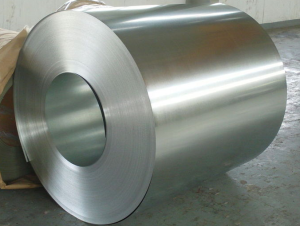
The majority of steel buyers responding to our latest market survey reported that mills continue to hold a firm grip on prices. The share of buyers reporting that mills were negotiable fell this week to the lowest rate seen in over five years. Every two weeks, SMU surveys service center and manufacturer buyers asking if mills are negotiable on new spot sheet and plate orders. In this week’s survey, just 3% of respondents said mills were willing to talk price to secure an order (Figure 1). This is down 11 percentage points from our mid-October survey.
The results of the latest Steel Market Update (SMU) flat-rolled market survey are now available on our website to all premium members. After logging in, look under the Data tab for Market Reports, and there you will find the Flat-Rolled Survey Results section. Previous survey results are also available on that page. If you need help accessing these results, or if your company would like to have your voice heard in our future surveys, contact smu@crugroup.com.
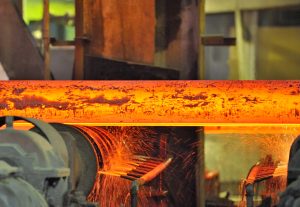
Lead times for sheet and plate products continued to lengthen amid historically tight supply, according to the latest SMU steel market survey data. Average lead times now extend into January 2027, with some mills quoting availability well into February. Lead times for all sheet products except Galvalume stand at their highest point since the post-Covid demand snapback in 2021. Plate lead times exceed their 2021 peak, setting a record in our data series, which dates to 2018. (We started collecting sheet lead times earlier, in 2011.)
Ryerson Holding’s third-quarter sales and net income rose as shipments outperformed the company’s seasonal expectations. Management pointed to demand from data centers and power generation projects, gains in transactional business, and improving contract volumes, while describing demand across end markets as uneven. Chicago-based Ryerson’s latest earnings report released on Thursday shows third-quarter sales rose 8.6% sequentially to $2.18 billion. Shipments rose 1.2% despite the company's guidance for a seasonal decline. Net income attributable to Ryerson was $32 million, compared with $15.5 million in the second quarter. Compared with last year, sales were 87.5% higher and net income rose 316.2%.

Audi announced plans to invest $4 billion to build its first US production plant in Georgia, creating ~4,500 jobs. Construction is scheduled to begin in 2027. The facility is designed to produce up to 200,000 vehicles annually, with production expected to start in the early 2030s.

The busy fall maintenance season isn’t over yet. Mill outages have rolled along since September, squeezing an already tight sheet market heading into November and beyond. Another round of scheduled maintenance is approaching, with outages still ahead at North Star BlueScope, ArcelorMittal Calvert, and Nucor Berkeley. Much of the fall maintenance calendar is now in the rearview mirror. September and October outages included U.S. Steel’s Gary Works; Nucor’s Hickman, Decatur, Gallatin and Crawfordsville operations; Steel Dynamics’ Sinton and Columbus mills; Cleveland-Cliffs’ Dearborn hot strip mill; NLMK Portage; and Big River Steel Works.

Cleveland-Cliffs Chairman and CEO Lourenco Goncalves said Stelco is not for sale, but he might sell it after operating the company for a period. He said he had come to understand that he was unwelcome in Canada. Separately, in a statement to SMU on Wednesday, Goncalves said he would consider a sale only after Stelco records one year of higher production and brings back all laid-off workers. He clarified it was 175 workers, not 500. He also said he would speak with no potential buyers “real or imaginary” now or during the next calendar year.
SSAB Americas delivered slightly lower shipments and operating results in the third quarter of 2026 due to a planned maintenance outage. Still, the company saw strong demand in key US end markets, specifically in heavy industrial segments. The Swedish steelmaker’s Americas division shipped 446,000 metric tons (mt) in Q3’26, down from 473,000 mt in the previous quarter but up from 440,000 mt in Q3’25, according to its 2026 third quarter report. SSAB President and CEO Johnny Sjöström described stable shipments vs. year-ago results. On an earnings conference call, he highlighted strong underlying demand and higher prices, “up higher than we guided for, by roughly 8%.” Results came in despite maintenance-related volume fluctuations related to a planned outage at the company’s mill in Montpelier, Iowa, during the quarter.