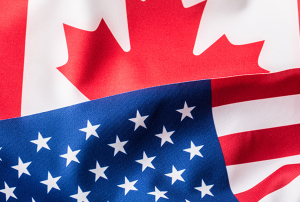
US, Canada trade deal could see steel tariffs halved: Report
A trade deal between the US and Canada is reportedly pending that could halve Canada’s Section 232 steel and aluminum tariffs and see automobile tariffs lowered from 25% to 15%.


A trade deal between the US and Canada is reportedly pending that could halve Canada’s Section 232 steel and aluminum tariffs and see automobile tariffs lowered from 25% to 15%.

S232 tariffs of 50% provide a signal to domestic producers. Domestic prices have risen by approximately 50%. Similarly, the tariffs have simply moved the competitive threshold for imports 50% higher.

We’re a little over a week away from the opening of SMU Steel Summit, one of the largest gatherings of flat-rolled steel professionals in the world. If you’re registered, I encourage you to download the conference app. You’ll use it not only for networking but also to ask questions to our speakers. You’ll also need […]

The US Commerce Department is seeking additional comments on 14 derivative items for possible Section 232 duties.
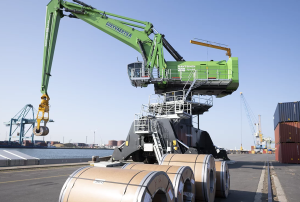
SMU’s average price for domestic hot rolled was unchanged week on week at $1,180 per short ton. In offshore markets, prices mainly moved up.

Earlier this week, SMU polled steel buyers on an array of topics, ranging from market prices, demand, and inventories to tariffs, imports, and evolving market events. We are sharing a selection of the comments we received below, in each buyer’s own words.
It’s tough to find a new angle to write about in a market that continues to be characterized by the same trends. You know the ones: extremely limited spot tons, long lead times, low inventories, and high prices.
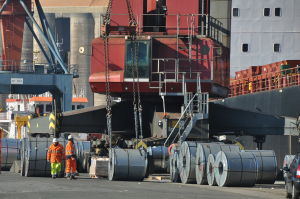
SMU’s average price for domestic HR rose to $1,180 per short ton (st) this week, $15/st higher vs. the prior week. In offshore markets last week, prices mainly moved up.

Ternium reported higher sales, profit, and shipments in the second quarter. Mexico remains the company’s strongest market even as US trade measures add uncertainty across North America.
Editor’s note This is an opinion column. The views in this article are those of an experienced trade attorney on issues of relevance to the steel market. They do not necessarily reflect those of SMU. We welcome you to share your thoughts as well at smu@crugroup.com. My colleague and friend Alan Price wrote last week about […]
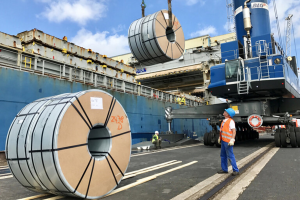
The decisive factor remains the 50% Section 232 tariffs. Still, imports from Europe remain largely near parity with domestic material, while Southeast Asian products are at a considerable discount.
Algoma Steel narrowed its earnings loss by 13.2% in the second quarter as the company's electric-arc furnace (EAF) steelmaking ramped up further.
Earlier this week, SMU polled steel buyers on an array of topics, ranging from market prices, demand, and inventories to tariffs, imports, and evolving market events.

The US Trade Representative (USTR) exempted Brazilian pig iron from Section 301 tariffs for faced labor concerns, so what's the story now?
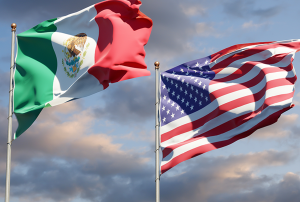
The US government has requested that Mexico impose tariffs similar to Section 232 on steel and aluminum imports from outside North America, according to a report in Bloomberg on Sunday.

Foreign steel is gaining traction with US buyers, according to SMU's most recent Flat-Rolled Steel Survey. Most manufacturers and service centers now report competitive pricing, and more are placing new foreign orders.

The busy summer for US trade, which we wrote about previously, is heating up with new Section 301 forced labor duties of 10-12.5% imposed on 60 countries and new Section 338 duties of 50% announced on certain Canadian imports.
Steel and many steelmaking raw materials have been spared from additional forced labor Section 301 tariffs.

SMU’s Steel Demand Index saw a slight decline in growth, slightly behind early July, but remaining in elevated territory, according to mid-to-late July indicators.
Downstream consumers of steel account for many times the employment in steel production. Yet the tariff manufacturers in the federal government have paid scant attention to the needs of most manufacturers.
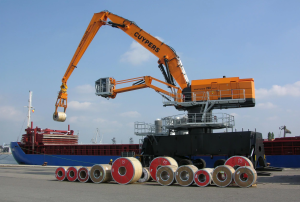
SMU’s average price for domestic HR remained flat, holding firm for the past three weeks. In offshore markets last week, prices mainly moved higher.
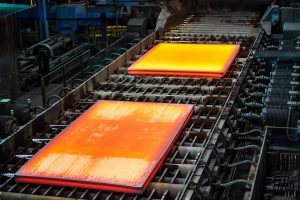
Some domestic plate market sources expect spot price rises through the end of the year due to prolonged supply constraints.
CSPA says the global challenge of steel overcapacity is no longer simply a trade issue as it looks to the current USMCA review.
The Office of the US Trade Representative has finalized a 25% Section 301 tariff on all goods imported from Brazil. Importantly for the US steel industry, pig iron has received an exemption from the tariff.

Earlier this week, SMU polled steel buyers on an array of topics, ranging from market prices, demand, and inventories to tariffs, imports, and evolving market events.
SMU’s July 10 Flat-Rolled Steel Survey results paint a picture of a steel market being squeezed from every direction. Tariffs are holding prices up and giving mills a clear advantage, while manufacturers and traders say the policy is pushing their costs higher.
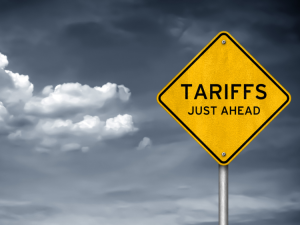
Testimony at last week’s Section 301 hearing put Brazilian pig iron in the spotlight. Domestic steelmakers and Brazilian suppliers warned that proposed forced labor tariffs would hit a critical US input for which there is no domestic substitute.

The Commerce Department has opened a new Section 232 national security investigation of anthracite and metallurgical coal imports. The department is seeking detailed input from the industry on supply risks, import dependence, and potential national security impacts.
Notably, pig iron is not excluded from the proposed Brazil measures. This would represent a change from the Brazil EEPA tariffs, which excluded pig iron.

The Mexican government is pushing to have steel and auto tariffs removed in its next round of USMCA negotiations with the US, according to a report in El Pais.