
Drilling activity increases in US and Canada
The latest tally of active drilling rigs increased in both the US and Canada this week, according to oil and gas rig count data published by Baker Hughes.


The latest tally of active drilling rigs increased in both the US and Canada this week, according to oil and gas rig count data published by Baker Hughes.

The US Commerce Department has raised the anti-dumping duties (AD) on imports of oil country tubular goods (OCTG) from South Korea.

After an annual administrative review, the Commerce Department increased the anti-dumping duties on large-diameter welded pipe from Turkey.

Private equity firm SCF Partners announced it has acquired American Piping Products (APP), a pipe and tube distributor headquartered in Chesterfield, Mo.
U.S. Steel held a ceremonial groundbreaking on Monday for its new $475-million quench-and-tempering facility at its Fairfield Tubular Operations in Alabama.

Domestic raw steel output fell to a six-month low last week after hitting a multi-year high one week earlier, according to the latest American Iron and Steel Institute (AISI) figures.
Drilling activity increased in the US this week but declined in Canada, according to active oil and gas rig count figures recently released from Baker Hughes. The US rig count rose by four to 595 rigs this week, now at the highest level recorded in over two years. Canadian counts eased to a 10-week low of 197 this week, down 10 rigs from the prior week.
The US Department of Commerce has raised the anti-dumping duties (AD) on imports of oil country tubular goods (OCTG) from Vietnam.
U.S. Steel said it has obtained the air permit necessary to enter the next phase of construction of the new quench and tempering (Q&T) facility at its Fairfield Tubular Operations in Alabama.

US steel imports increased 7.8% in July and, based on US Department of Commerce license data, rose even higher in August.

Apparent steel supply eased 2% from June to July but remained at one of the higher levels recorded in recent years, according to SMU’s analysis of recently released Department of Commerce and American Iron and Steel Institute (AISI) data. This measure is calculated by combining domestic mill shipments and finished US steel imports, then subtracting total US exports. It can also be used as a proxy for domestic steel demand.
The latest Baker Hughes rig count figures show that oil and gas drilling increased in both the US and Canada through this week. Drilling is substantially higher than it was this time last year.
Totten Tubes has opened a new facility in Cedar City, Utah. The steel tubing distributor and processor, based in Azusa, Calif., recently celebrated the facility’s grand opening.

The US International Trade Commission (ITC) has voted not to sunset anti-dumping and countervailing duties (AD/CVDs) on imports of oil country tubular goods (OCTG) from a handful of nations.
Total US raw steel mill output declined last week to the lowest rate seen since March, according to the latest figures published by the American Iron and Steel Institute (AISI). Production has trended lower since peaking in May but remains historically strong.
The US Department of Commerce has made a preliminary subsidy determination in the trade case targeting imports of oil country tubular goods (OCTG), while also postponing the initial decision in the dumping portion of the case.

The Commerce Department believes notable dumping and illegal subsidies would continue if import duties on welded line pipe from Turkey and Korea were allowed to expire.

Bull Moose Tube Co. has completed its acquisition of Hanna Steel Corp., a producer of structural and mechanical steel tubing.
Domestic steel production declined last week to the lowest weekly measure recorded since March, according to recently published American Iron and Steel Institute (AISI) figures. Although down, production has been historically strong for most of this year. This year we have seen weekly production levels as high as 1,898,000 st in May (six-year high) and as low as 1,704,000 st in the first week of the year.
Baker Hughes’ latest data shows US oil and gas drilling activity was steady this week at a multi-month high, while activity slowed slightly in Canada.

The total volume of raw steel produced by mills around the globe eased for the second month in a row in July to an estimated 149.2 million metric tons (mt), according to the latest World Steel Association figures.

Barry Zekelman supports durable, predictable steel trade protection—and the Section 232 tariffs in particular—as a foundation for reinvestment in domestic manufacturing capacity.
Welspun Corp. has bagged a $1.8 billion order to supply line pipes from its US manufacturing facility.
US raw steel production increased last week, further recovering from the four-month low seen in early August, according to recently published American Iron and Steel Institute (AISI) data. Production has been historically strong for most of this year.
Drilling activity eased in both the US and Canada this week, receding from multi-month highs, according to recently released Baker Hughes rig count data.

The Department of Commerce is adjusting the anti-dumping duties on light-walled rectangular pipe and tube from Mexico.
Domestic raw steel production rose by 13,000 short tons (st) last week, a marginal recovery from the four-month low set one week prior, according to recently published American Iron and Steel Institute (AISI) figures.
The latest Baker Hughes data shows drilling activity picked up in the US last week while edging higher in Canada.
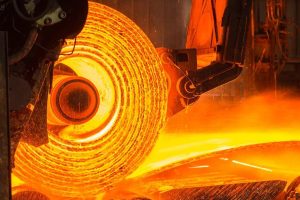
Apparent steel supply rose 3% from May to June to the highest rate recorded in over four years, according to recent Department of Commerce and American Iron and Steel Institute (AISI) figures. June’s supply increased to 9.31 million short tons, driven primarily by higher domestic shipments, and partly offset by lower finished imports and increased exports.
The amount of raw steel produced by US mills declined last week to the lowest rate recorded in over four months, according to recently released American Iron and Steel Institute (AISI) data. Domestic production has been historically strong for over five months now, recently touching a six-year high.